Morinj, Montenegro: Springs, Stone Mills and What to See
Morinj sits between Risan and the Kamenari ferry, where karst springs, stone mills and a Roman villa ruin make an easy half-day stop on the Bay of Kotor.
On this page
Morinj is worth half a day rather than a full one: a small village on the north shore of the Bay of Kotor between Risan and the Kamenari ferry, built where a strong karst spring below Mount Orjen meets the sea. Its draw is a freshwater landscape of mills, stone bridges and green fields, plus a shingle beach and the ruin of a Roman villa. This guide covers what there is to see, how the lower and upper villages differ, and how to fit Morinj into a drive around the bay.
Where Morinj sits on the bay
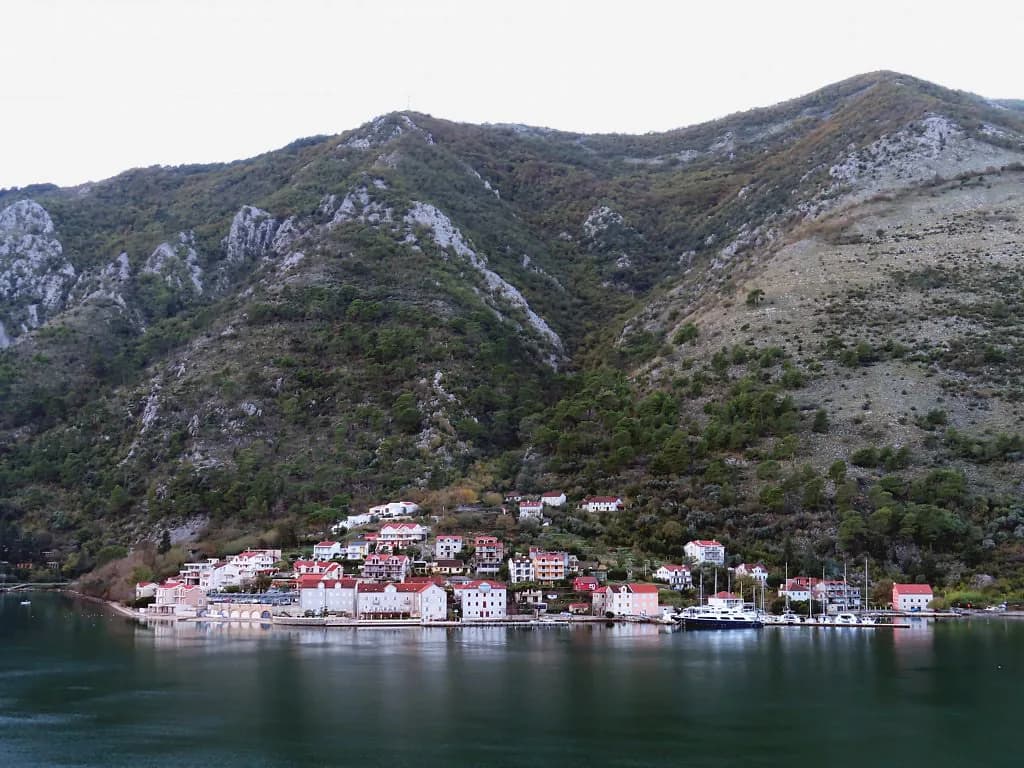
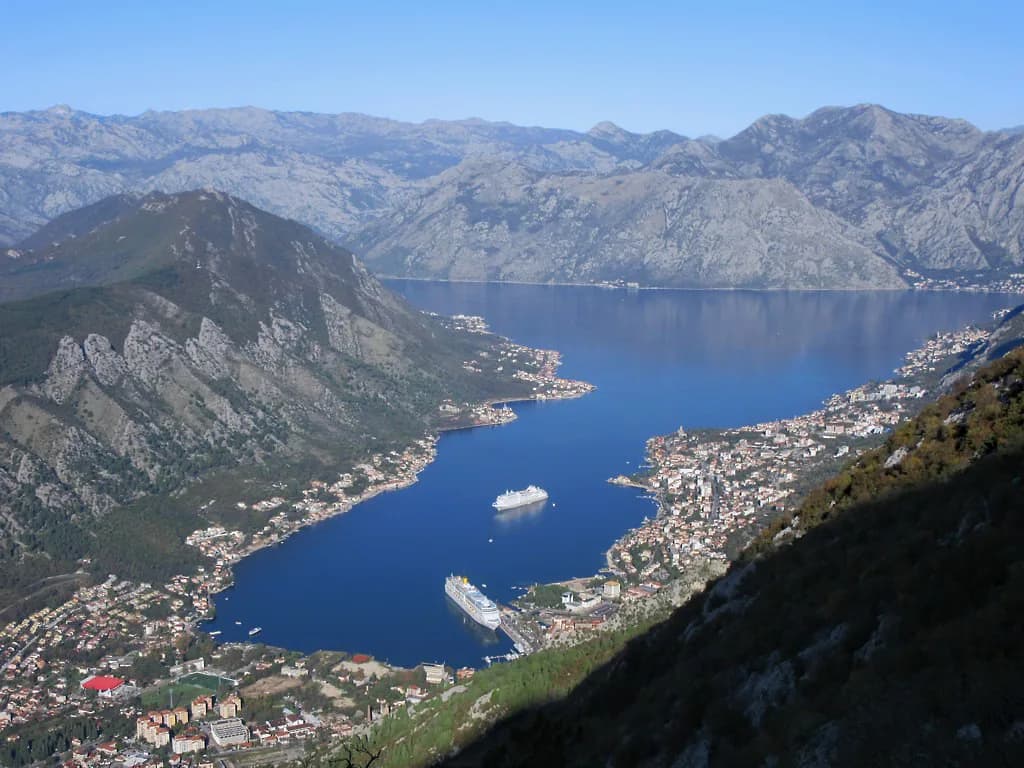
Morinj lies at the head of the Risan bay, on the coastal road between Risan and the Kamenari ferry, below the Verige strait where the bay narrows. Most travellers pass through it on the way between Herceg Novi and Kotor, which is why it reads as a shady roadside stop rather than a destination. Treating it as a deliberate pause is what turns the village into a place you actually see.
Its position makes it easy to combine with Risan, a short drive south along the same shore, or with the ferry crossing at Kamenari if you are heading to the Herceg Novi side. Plan the stop around the road rather than around a fixed itinerary, because the village has no single headline sight that demands a timed slot.
Donji Morinj and Gornji Morinj
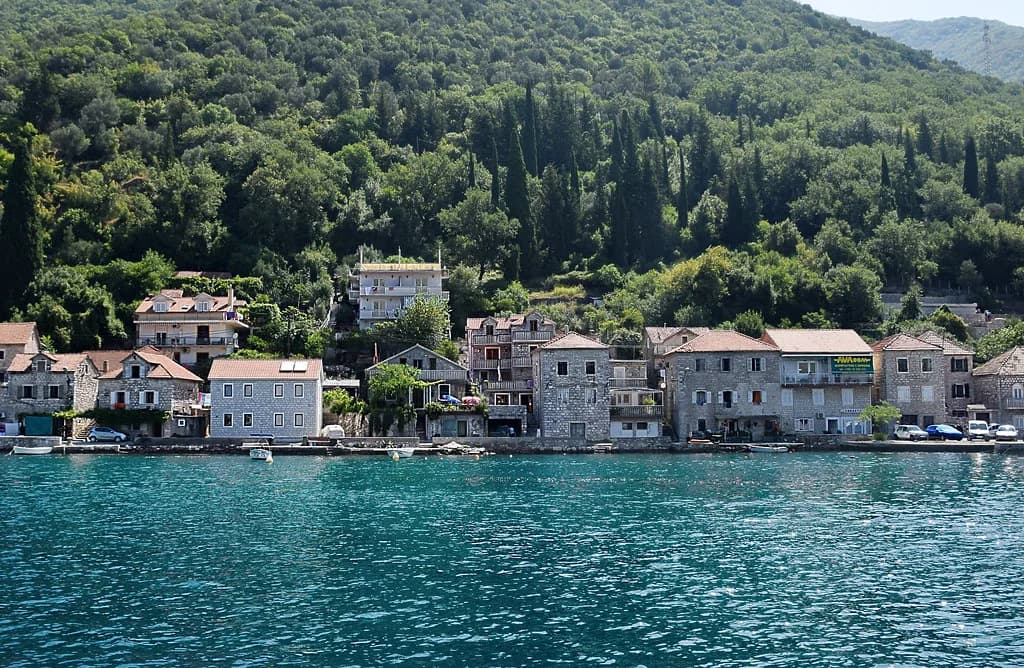
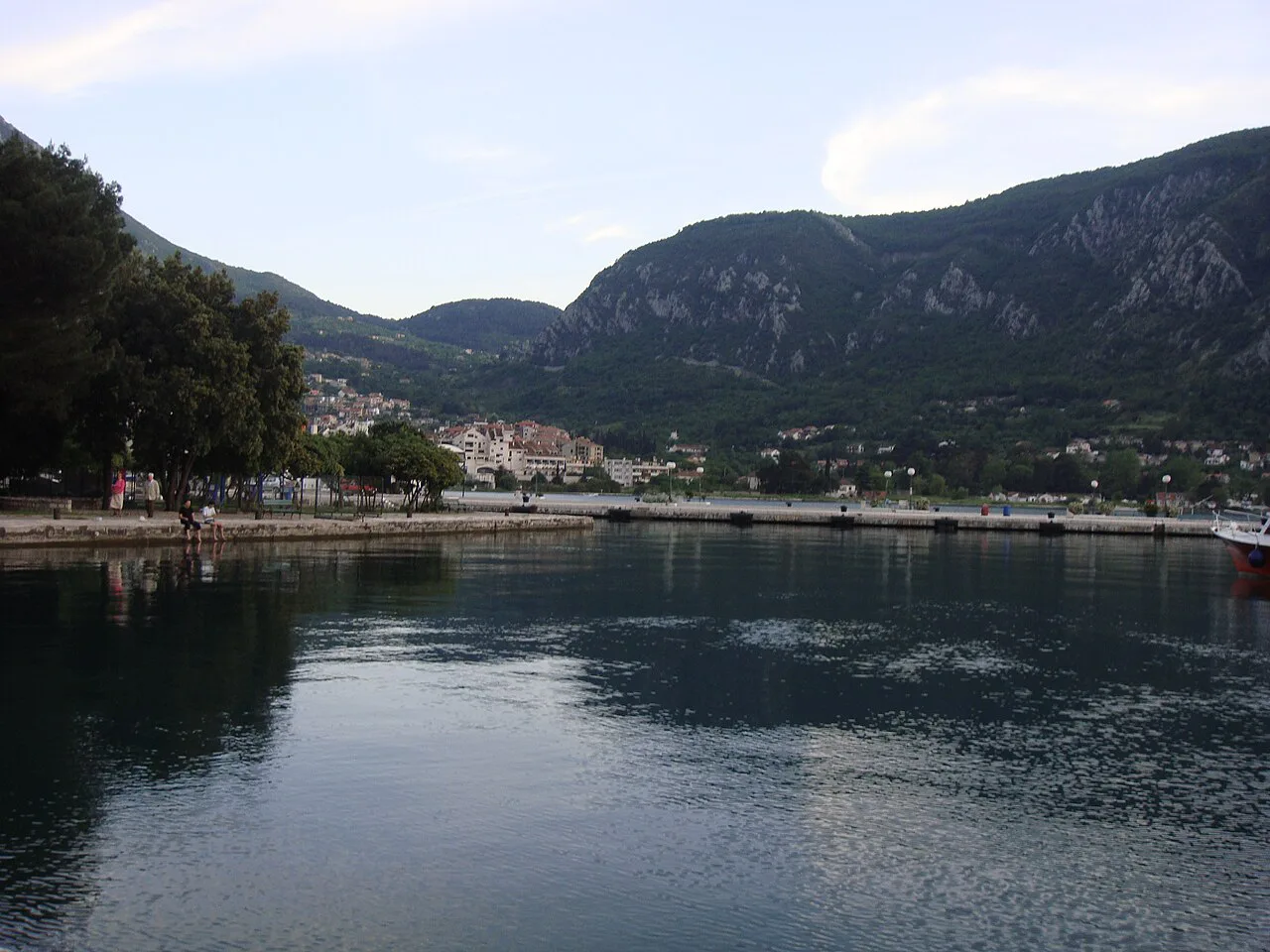
The village splits into two parts. Donji Morinj, the lower settlement, sits by the water and the mouth of the Morinjska Rijeka, with the promenade, the beach and the mills close at hand. Gornji Morinj climbs above it through hamlets and terraced plots held up by drystone walls, with stone-paved lanes and arched bridges over the streams.
For a short visit, the lower village is where you will spend nearly all your time, since the spring, the mill buildings and the waterfront are within a few minutes of each other. Walking up into the terraces takes longer and rewards you with the layout of the place rather than any single monument. If you have only an hour, stay low.
The freshwater landscape: spring, river and mills
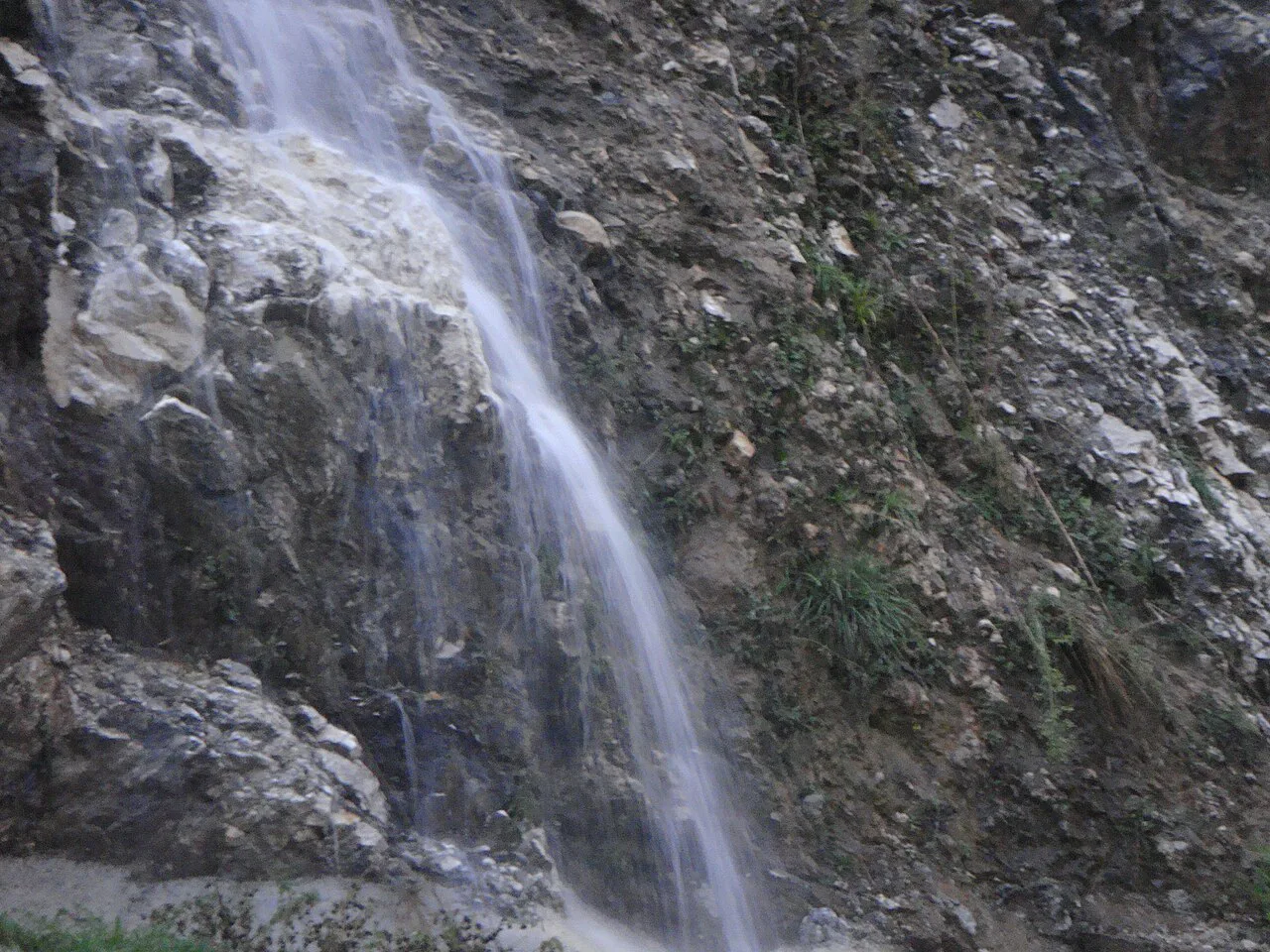
The defining feature of Morinj is water. A strong karst spring at the foot of Mount Orjen feeds the Morinjska Rijeka, a short, clear stream that crosses the flat green field and reaches the sea, and mills were built along its course. Local heritage studies single out this meeting of mountain water and sea as the value that shaped the settlement, which is why the mills and channels belong to one system rather than being scattered curiosities.
The result is a greener, wetter landscape than the bare stone slopes elsewhere on the bay: reeds and water-loving plants gather around the channels, and poplars and dense garden vegetation interrupt the usual run of drystone walls. Walk the stream-side path first and the rest of the village makes sense.
Stone bridges, paved lanes and terraces
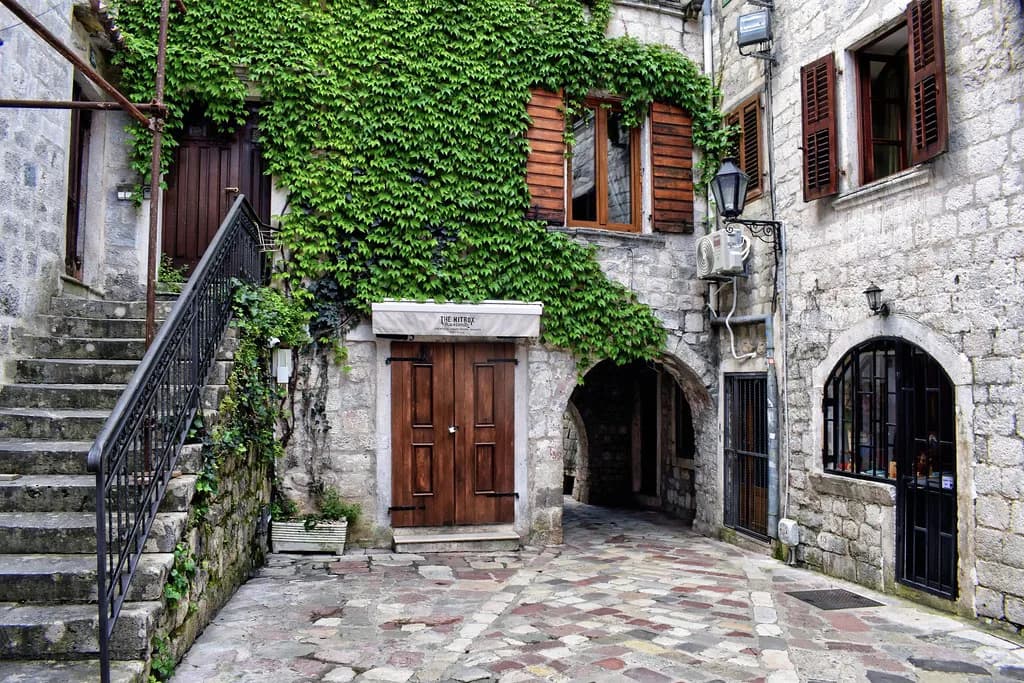
Above the water, the village is held together by stone: paved lanes, arched bridges over the streams and courtyards fitted to the slope rather than laid on top of it. These are working parts of the settlement, not set-piece sights, so the pleasure is in following a lane and noticing how the terraces step up the hillside. Allow time to walk without a target.
The remains of the Roman villa
Morinj has traces of a Roman villa in its surroundings, which places the village within the wider Roman-era occupation of the bay's shores. The ruins are modest, so read them as part of a walk rather than a monument to schedule.
If you want more substantial Roman remains in the same neighbourhood, Risan is the obvious companion stop, and pairing the two gives the day an archaeological thread. Otherwise, see the villa remains in passing on your way through the village.
Mussel and oyster farms in the bay
Floating mussel and oyster farms sit just offshore, and they explain why Morinj's tables lean towards seafood. The farms are working installations rather than attractions, so look at them from the shore and on the water rather than expecting a visitor centre. Their presence is the clearest link between the bay's water and what ends up on the plate.
Prices and menus change with the season and the catch, so check what is on offer on the day rather than relying on anything written in advance. The village's reputation for seafood draws visitors from elsewhere on the bay.
The waterfront: promenade and shingle beach
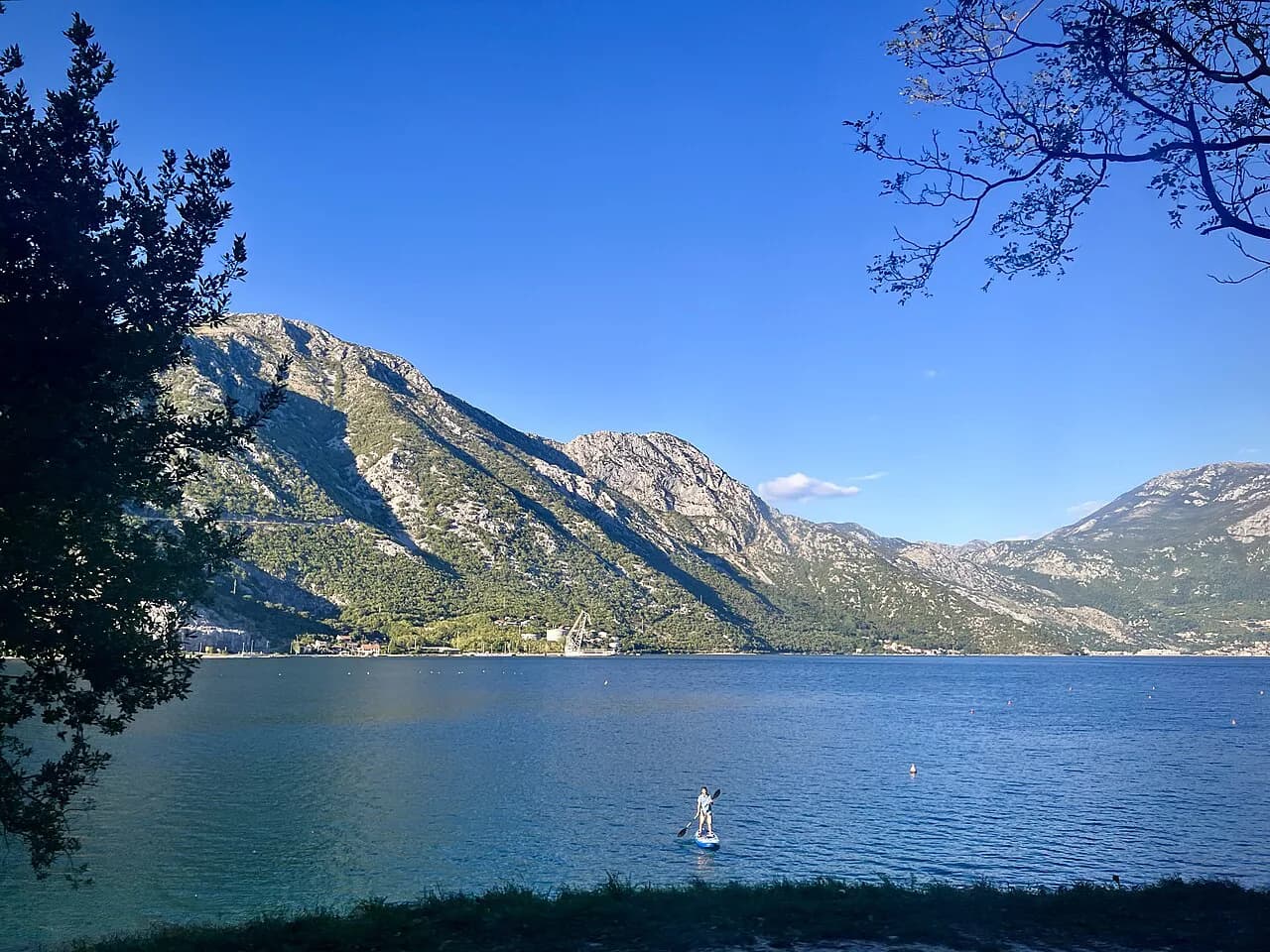
The seafront promenade gives you views across the bay to the hills on the far side, and a modest shingle beach provides somewhere to swim in season. This is a low-key waterfront rather than a resort strip, which suits a stop between bigger places. Bring what you need, since the village is small.
The water is shallow close to the mouth of the stream, so swimming and walking run naturally together here. In high summer, arrive earlier in the day if you want the shoreline to yourself.
Getting there and getting around
Morinj sits on the coastal road connecting Risan with the Kamenari ferry, which makes it simple by car and straightforward to slot into a drive around the bay. The Kamenari–Lepetane ferry shortens the crossing to the Herceg Novi side, so Morinj works well as a pause on that route in either direction.
Within the village, everything in Donji Morinj is walkable in minutes: the stream, the mills, the promenade and the beach sit close together. The climb into Gornji Morinj is the only part that needs real time, and the lanes are steep in places.
How long Morinj needs
Give Morinj two to three hours if you want the stream, the mills, a walk along the promenade and a meal. That fits comfortably into a day that also takes in Risan or the ferry crossing. A quick roadside pause of twenty minutes will only show you the waterfront.
An overnight stay suits travellers who want the village quiet in the evening and the water to themselves in the morning. For everyone else, Morinj is a stop on the way rather than a base.
The season in practice
Swimming, outdoor eating and the beach belong to the warmer months, and the village is at its liveliest then. Outside that window the landscape and the mills still reward a walk, but the waterfront is quieter. Judge your visit by what you want from the day rather than by any fixed calendar.
Nearby places by contrast
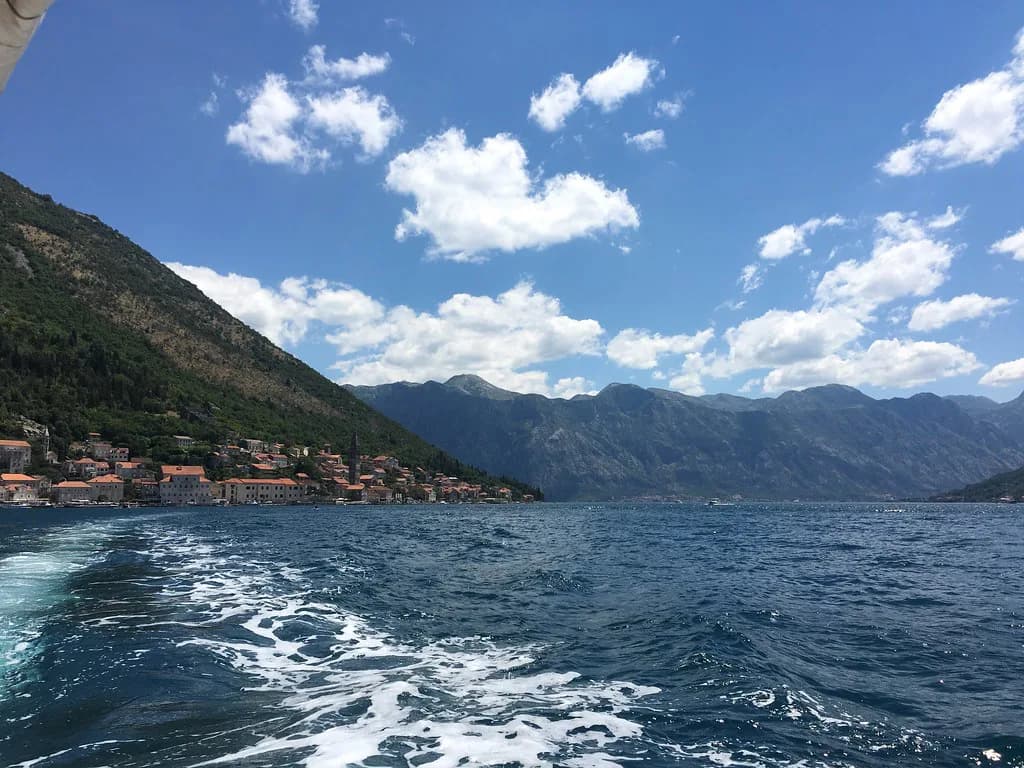
Risan, a short drive south, has Roman mosaics and a compact old core, making it the natural pairing with Morinj's villa remains. Perast and its church island demand more time, while Kotor's walled old town is a different kind of day entirely. Choose by what you want to see next rather than by distance alone.
On the Herceg Novi side, Lepetane and Cape Opatovo sit just across the water from the ferry, and the towns along that shore give you a second contrast within a short drive. The wider Bay of Kotor guide sets out how these pieces fit together.
Is Morinj worth the stop?
Yes, if you are already driving the Risan to Kamenari road: two hours here buys you the spring, the mills and a swim, which is more than most roadside villages offer. Skip it only if your day is already full with Kotor or Perast.
Check ferry times and the state of the coastal road before you set out, and confirm anything time-sensitive on the day.
Explore more Bay of Kotor guides
Frequently Asked Questions
Do you need a car to visit Morinj?
A car makes Morinj easiest, since it sits on the coastal road between Risan and the Kamenari ferry and the sights are spread along the stream and the hillside. Without one, the village is awkward to reach and to leave on your own schedule.
Can you swim at Morinj?
There is a shingle beach and a shallow shoreline near the mouth of the Morinjska Rijeka, and swimming belongs to the warmer months. The waterfront is modest rather than a resort beach, so bring what you need for the day.
What is the difference between Donji and Gornji Morinj?
Donji Morinj is the lower village by the water, with the stream, mills, promenade and beach. Gornji Morinj climbs the hillside through hamlets and terraced plots linked by stone lanes and arched bridges, and takes longer to walk.
Sources
Notes for your Montenegro trip
Optional updates to our Montenegro town guides.
You might also like
Continue reading
More guides you'll find useful