Risan, Montenegro: What to See and How Long It Takes
Risan is a quiet Bay of Kotor town with Roman mosaics and a waterside setting. Here is what to see, how long it takes and how it fits a bay drive.
On this page
Risan needs an hour or two, not a day. It is a small town at the northern end of the Bay of Kotor, and most travellers see it as a quiet pause on a drive between Kotor and the western shore. This guide covers what is there, how long to allow and how Risan compares with Perast and Kotor for a short stop.
The town sits on the Adriatic Highway, roughly 17 km from Kotor and 15 km from Tivat Airport, on the road that runs round the head of the bay. That position makes it easy to fold into a circuit with Perast and the villages on the Kotor side.
Where Risan sits on the Bay of Kotor
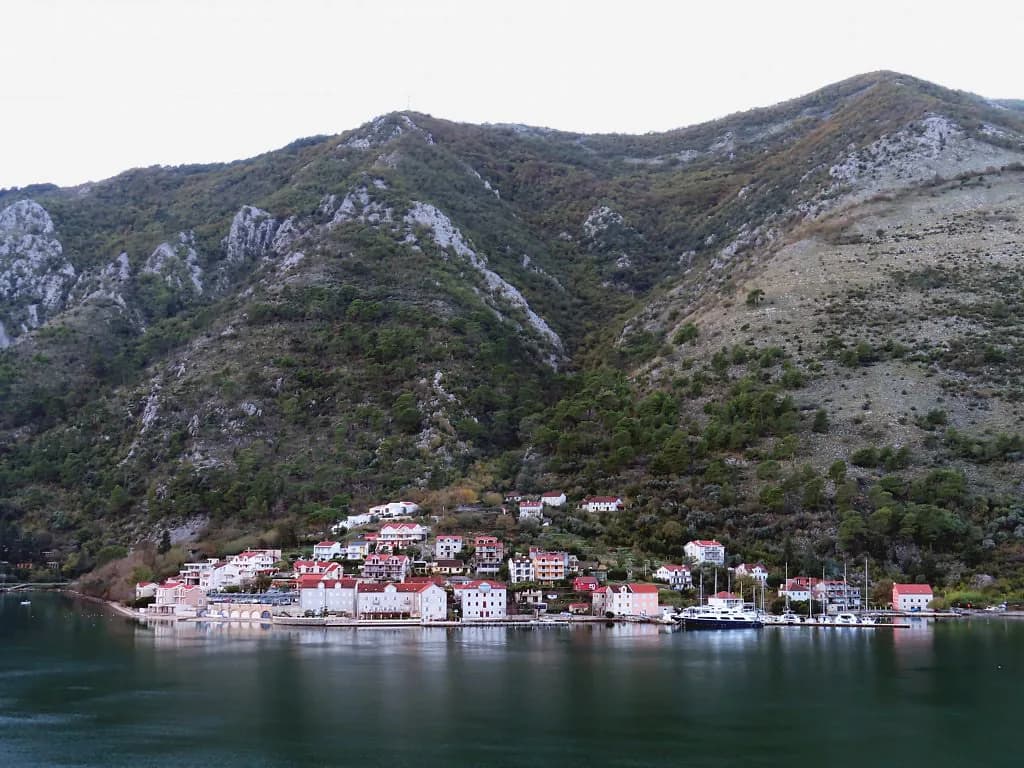
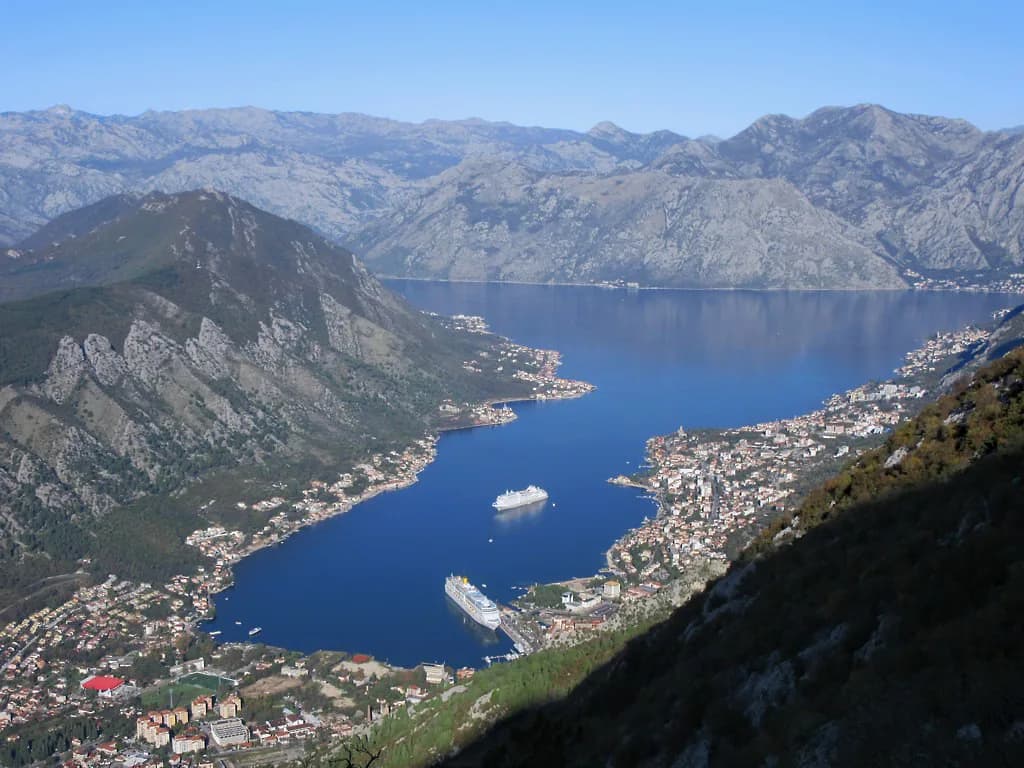
Risan is one of the most beautiful towns on the Montenegrin coast, built along the shore of the bay below steep hills. The Adriatic Highway passes through its centre, so you reach the waterfront without a detour, and the town lies towards the northern end of the bay, within reach of the western shore and Herceg Novi.
Because it lies on the main road, Risan works naturally as a stop on any full loop of the bay. If you are plotting the drive, a Bay of Kotor map makes the order obvious: Kotor, then the villages on the eastern shore, then round the head to Risan and out west.
The town is also close to the Kamenari–Lepetane ferry, which shortens the run between the western and eastern sides of the bay. Drivers heading on to Herceg Novi can take the road round or cut across by boat.
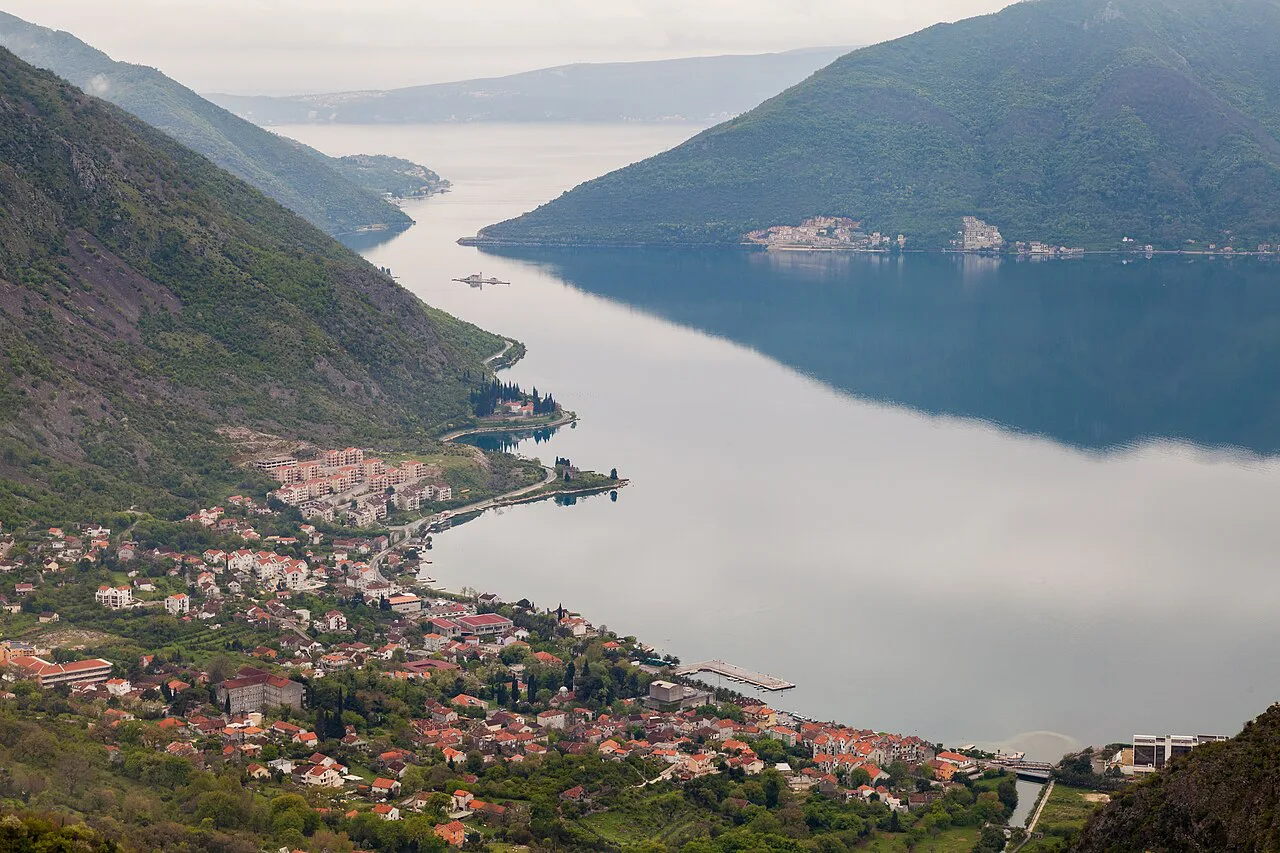
Why visit: Roman mosaics and a quieter shore
Risan's main draw is its Roman remains. The town holds traces of its past in Roman villas with mosaic floors, and it was the seat of Queen Teuta of Illyria. For a small place the layers are unusual, and they reward a slow half-hour rather than a photo stop.
The town is described as still in the shadow of larger centres such as Budva and Bar, while developing in harmony with its cultural and natural heritage. For a short stop that usually means a calmer waterfront than the busy stretches of the bay.
That quiet has a context worth knowing. Risan was the ancient capital of Queen Teuta of Illyria and has existed since 200 BC, which explains why a place this small carries Roman floors and Illyrian associations. Reading up before you go makes the mosaics mean more than a patch of tesserae.
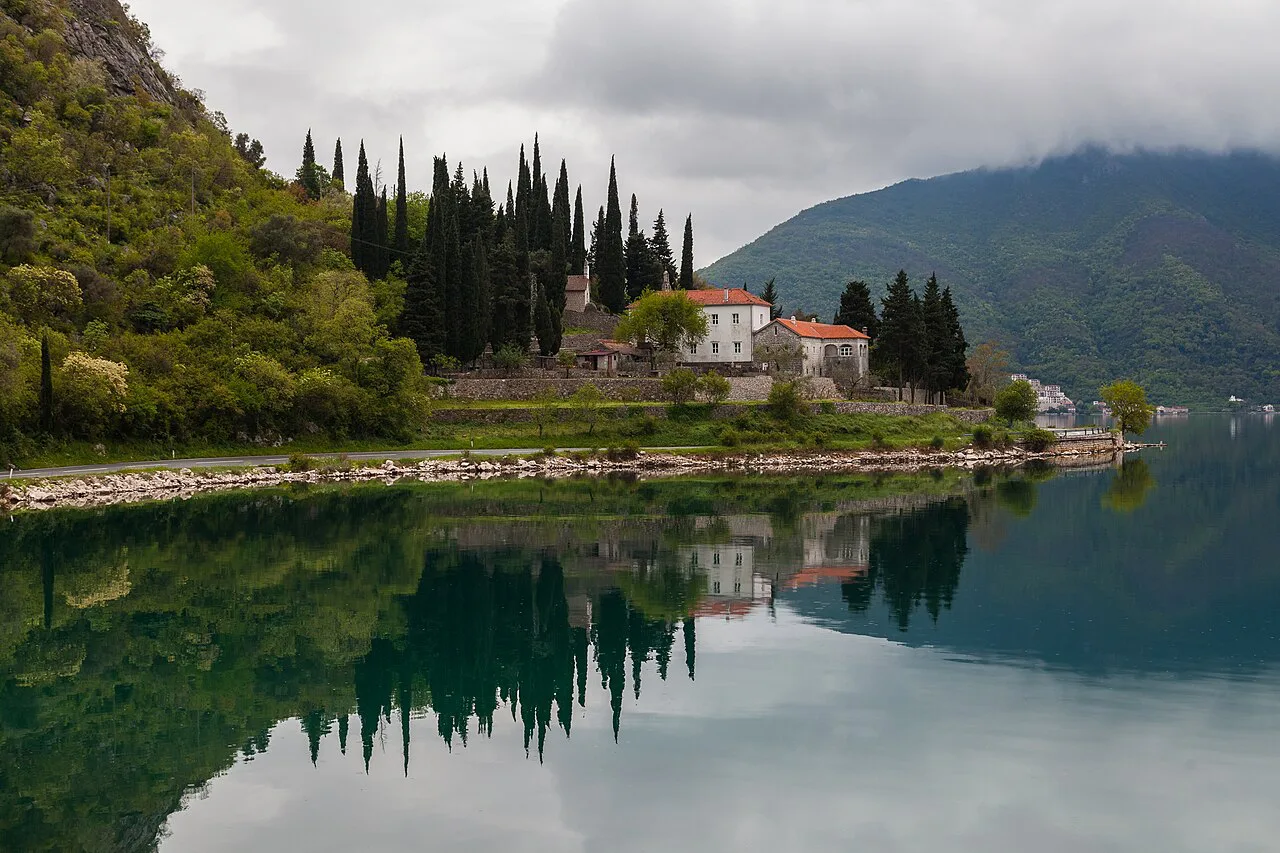
What to see in Risan
Start with the mosaics. The Roman villa remains are the reason to stop, and they are compact enough to see in a single visit. Follow on-site signage on photography and access rather than assumption, and check current visiting arrangements before you travel.
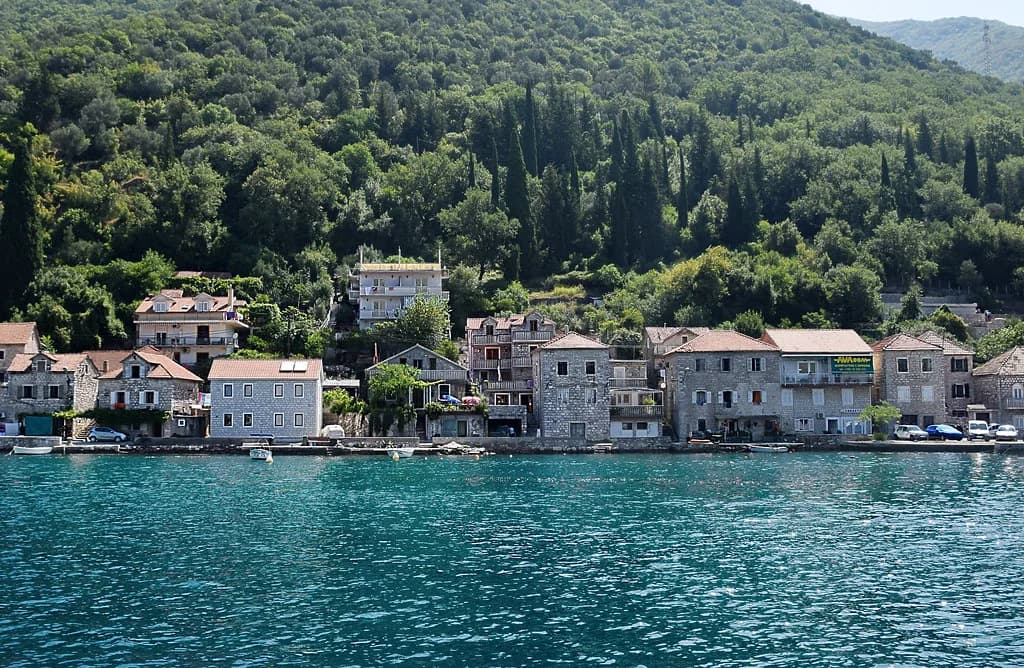
Then walk the waterside streets. Risan's centre is small and flat, with the sea a few metres from the road in places, and the town's setting makes an easy promenade. Look for the older stone buildings and the views back across the water towards the eastern shore.
Risan also has a second identity as a place people stay. The Risan Bay complex, 85 apartments in six buildings around a central courtyard with a pool, sits in the central part of town right on the Adriatic Highway, about 40 metres from the bay. It is a useful marker when you are working out where the town's centre begins and ends.
Beyond that, Risan is a small town and does not pretend otherwise. There is no long list of sights to tick off. The honest advice is to see the mosaics, walk the shore, have a coffee and move on.
How long Risan needs on a bay drive
Allow one to two hours. That covers parking, the mosaics, a short walk along the water and a drink. If you are tight for time, an hour is enough to see the Roman remains and get a sense of the town.
The risk is not that Risan takes long, but that the bay does. A circuit from Kotor through Perast and round to Risan and back is a full day once you add stops. Build Risan in as a mid-afternoon pause rather than the anchor of the day.
Drivers coming from the eastern shore should factor in slow traffic through Dobrota and Kotor in season. Risan, by contrast, is easy to enter and leave, so do the crowded stretch early and end the day here.
Getting there and fitting Risan into a bay route
By car, Risan is a straightforward run on the Adriatic Highway from either direction. It is about 17 km from Kotor and 15 km from Tivat Airport, which makes it practical as a first or last stop if you are flying in or out.
A sensible route runs from Kotor, then north along the shore through Dobrota, Prčanj and Stoliv, then round the head of the bay to Risan, then back via Perast. Each of those villages is a short stop in its own right, and Prčanj and Stoliv in particular are easy to underestimate.
If you are coming from the west, the Kamenari ferry lands you at Lepetane, from where the road runs along the bay past Morinj and Kostanjica towards Risan. That approach gives you the quiet villages first and the busier eastern shore later in the day.
Public transport along this shore is limited and timetables change with the season, so check locally before relying on a bus. Driving gives you the freedom to stop at the villages between the towns, which is where much of the bay's character actually sits.
Risan compared with Perast and Kotor
Perast is the polished stop: a baroque waterfront, boat trips out to the two islands and a steady flow of visitors. Risan is plainer, with no boat queue and no need to book anything. If you have time for one, Perast gives you more to look at; if you want calm, Risan wins.
Kotor is the big day out, with its walled old town, gates and fortifications. Risan cannot compete on scale and should not try. Think of it as the counterweight: after the crowds inside the walls, a low-key waterfront with Roman floors is a relief rather than an anticlimax.
Between the two lies a string of villages that many drivers skip. Morinj, further west, has springs and old stone mills that make an easy leg-stretch, while Muo, just outside Kotor, is worth a look if you are building a slow day rather than a checklist.
Kostanjica, on the western shore, is another village that rewards a pause rather than a drive-past. Together with Stoliv and Prčanj, these places give a bay drive its texture, and Risan's role in that sequence is the calm, historic midpoint.
Practical points: season and getting around
Risan is at its best outside the peak weeks. In high summer the bay fills up and even quiet towns pick up traffic, while spring and autumn give you the mosaics and the waterfront with far fewer people. The climate is Mediterranean, with hot, dry summers and mild, wetter winters.
Evenings in a small residential town like Risan are a different proposition from a resort strip. Plan your meals around where you are staying, or treat Risan as a daytime stop with dinner in a larger town such as Kotor.
The town also lacks the infrastructure of the bigger centres. That is the trade-off for the calm. For a boat trip to the islands or the Blue Cave, bookings are sold through operators based in Kotor.
For the wider context of how the bay's towns connect, the Bay of Kotor Guide is the place to start. It sets out the geography and the main stops, so you can decide where Risan fits in your own route.
Should you stop in Risan?
Yes, if you are driving the bay and want one unhurried stop that is not Perast or Kotor. An hour or two covers the Roman mosaics, the waterfront and a coffee, and the town's position on the Adriatic Highway makes it easy to slot in.
Skip it if your time is short and you have not yet seen Kotor's old town or the islands off Perast; those deserve the hours first. Risan rewards a slower trip, and it is honest about what it is: a small, quiet town with a serious piece of Roman history at its centre.
Explore more Bay of Kotor guides
Frequently Asked Questions
What does Risan mean?
Risan is the town's Montenegrin name. The town was associated with Queen Teuta of Illyria and later with Roman settlement, and its Roman villas with mosaic floors are the visible trace of that period.
How far is Risan from Kotor and Tivat Airport?
Risan lies about 17 km from Kotor and 15 km from Tivat Airport on the Adriatic Highway, so it is a short drive from either. Allow extra time in summer for slow traffic on the eastern shore.
Can you visit Risan without a car?
It is possible but awkward, because services along this shore are limited and change with the season. Check local bus information before you rely on it, and expect a slower day if you are not driving.
Sources
Notes for your Montenegro trip
Optional updates to our Montenegro town guides.
You might also like
Continue reading
More guides you'll find useful