Prčanj, Bay of Kotor: the Waterfront Village and Its Great Church
Prčanj is a quiet waterfront village on the southern Bay of Kotor, known for the Church of the Birth of Our Lady and baroque palaces along one coastal road.
On this page
Prčanj is a short stop rather than a day out: an hour or two walking one waterfront road past the Church of the Birth of Our Lady, a line of baroque palaces and a handful of jetties is enough to see the village properly. It sits on the southern shore of the Bay of Kotor, within fifteen minutes of both Kotor and Tivat by car, so it works best as a pause inside a wider day around the bay. This guide covers the church, the waterfront road, how to reach the village and how to pair it with the rest of the southern shore.
Expect a village, not a walled town. There are no gates, squares or bastions here; the settlement occupies a narrow coastal strip and a single road runs along the water past stone palaces, fishermen's houses and church facades. Set your expectations accordingly and you will enjoy it more than if you arrive looking for a second Kotor.
Where Prčanj sits on the southern shore
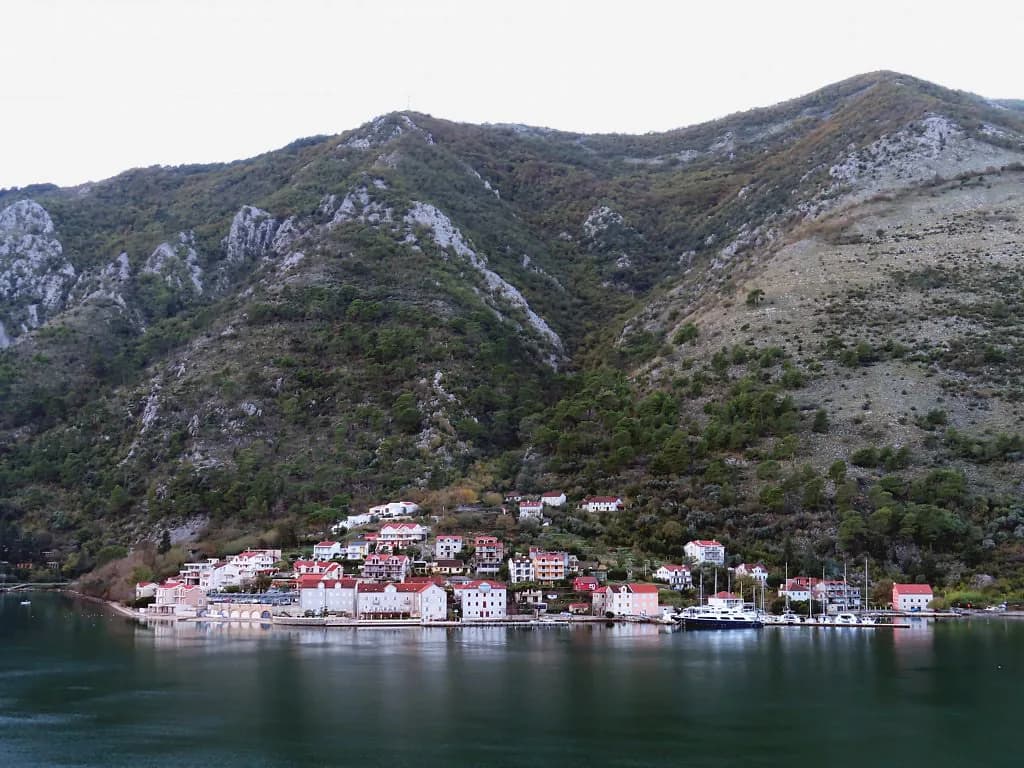
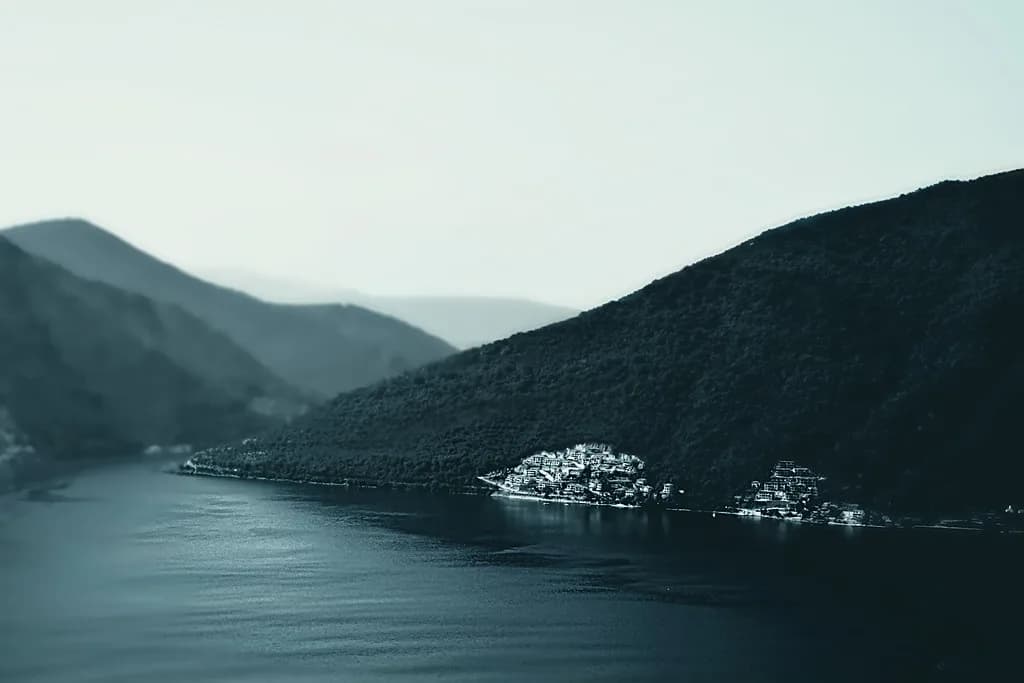
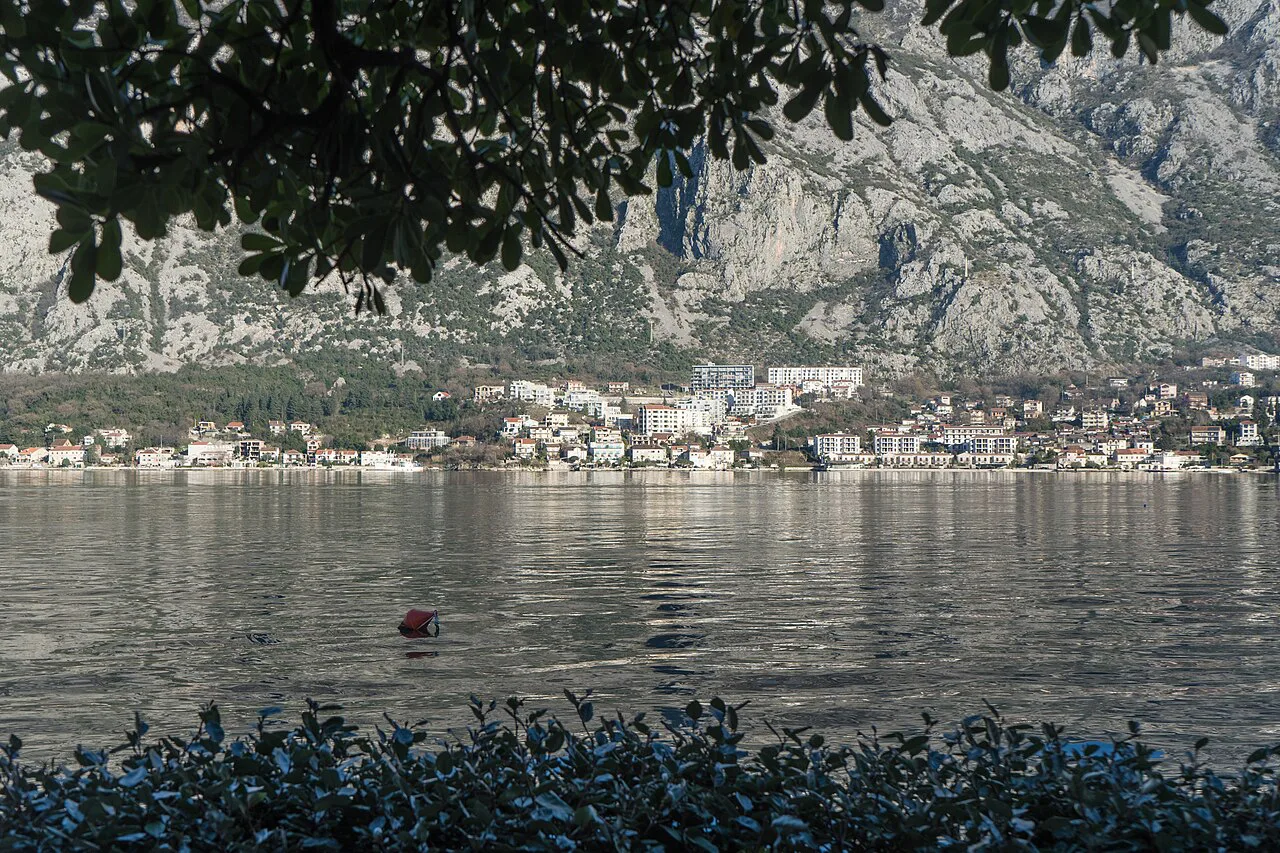
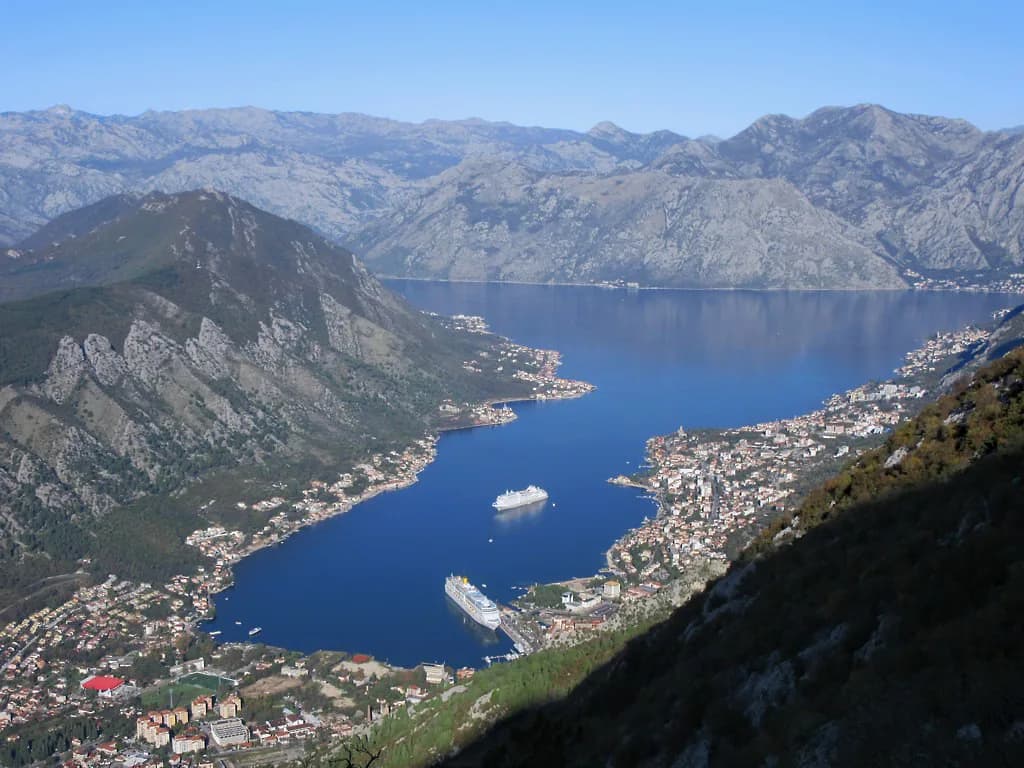
Prčanj lies on the southern shore of the bay, east of Donji Stoliv and Stoliv and west of Muo, which faces Kotor's Old Town across the water. The village occupies a narrow coastal strip along that shore, and the water view opens towards the mountains of Lovćen as the bay begins to widen.
Its neighbours are easy to place on a Bay of Kotor map before you set out. Dobrota and Ljuta sit on the northern shore, Perast further west, and Kotor and Tivat both lie within fifteen minutes by car. Checking the geography first helps you decide whether Prčanj fits a southern-shore drive or a hop across the water.
The Church of the Birth of Our Lady
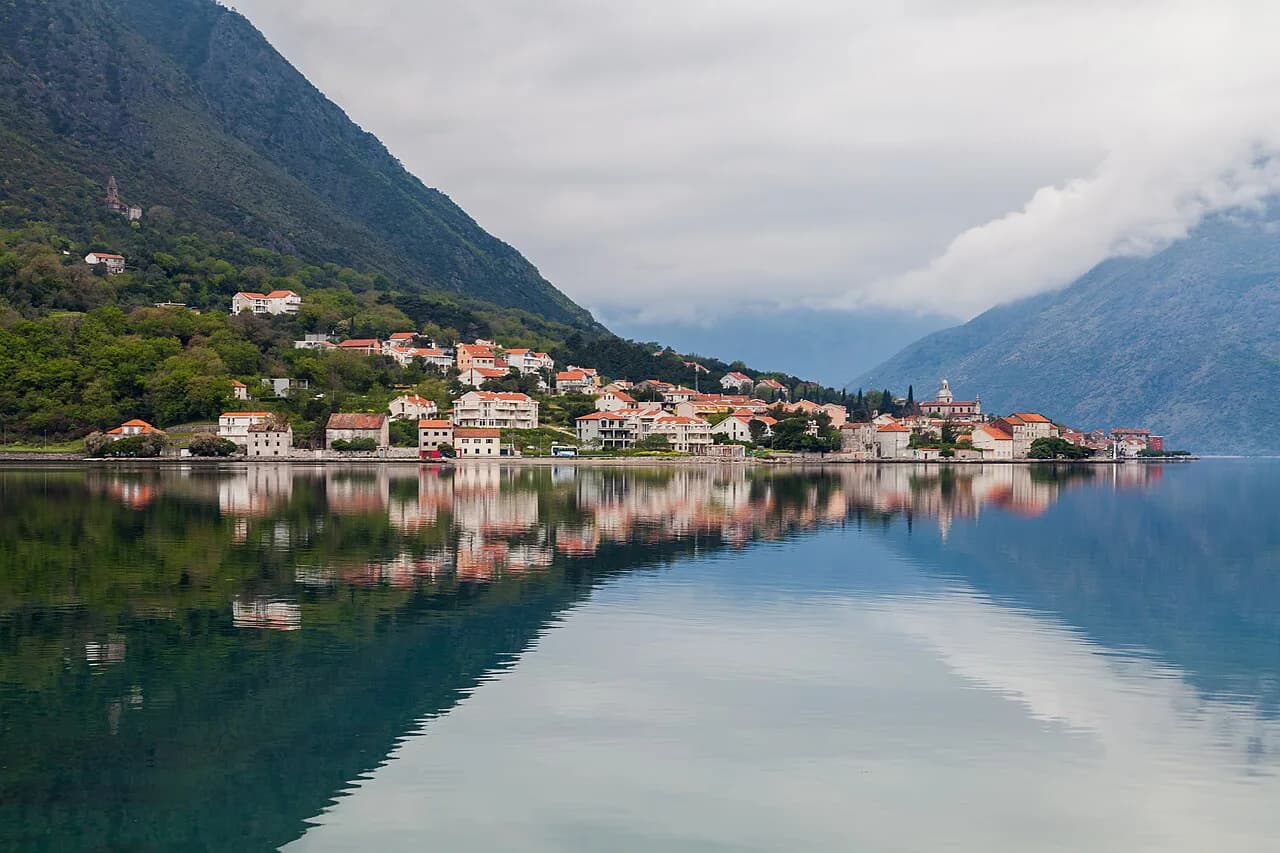
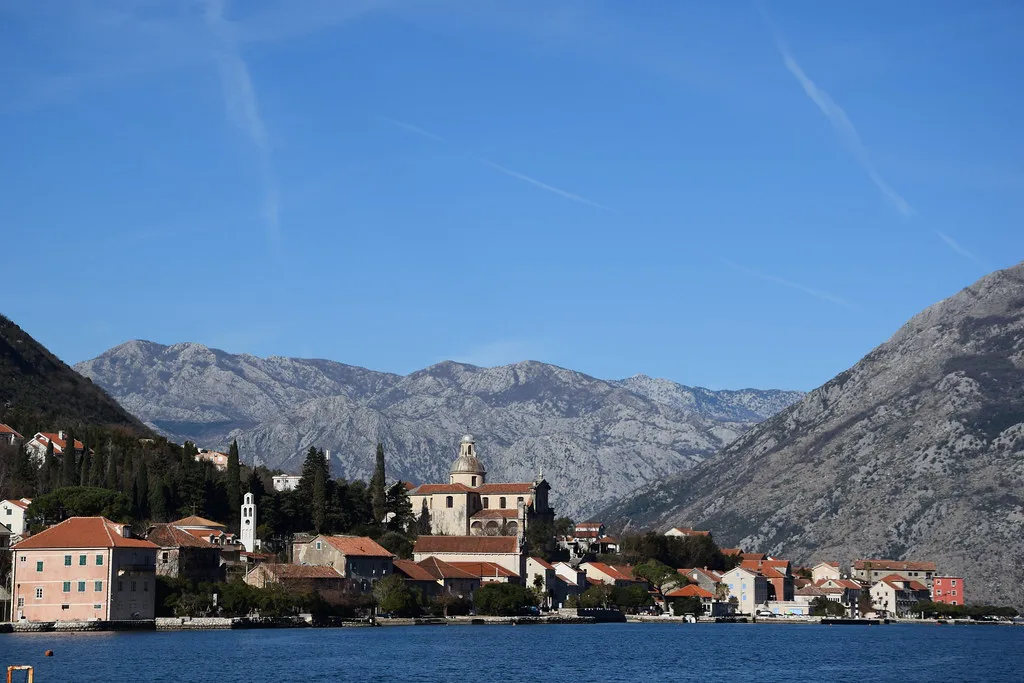
The landmark you see first is the Church of the Birth of Our Lady, whose unfinished neoclassical facade dominates the waterfront. Construction began in 1789 and the building was not completed until 1909, so the fabric you see spans more than a century of work. Those dates are the building's history rather than visiting information.
The unfinished facade is what makes the church distinctive in the bay: it faces the water and anchors the village's seafront composition. Plan to see it from the road and the jetties in front rather than expecting a formal visitor attraction with a set route.
Walking the waterfront road
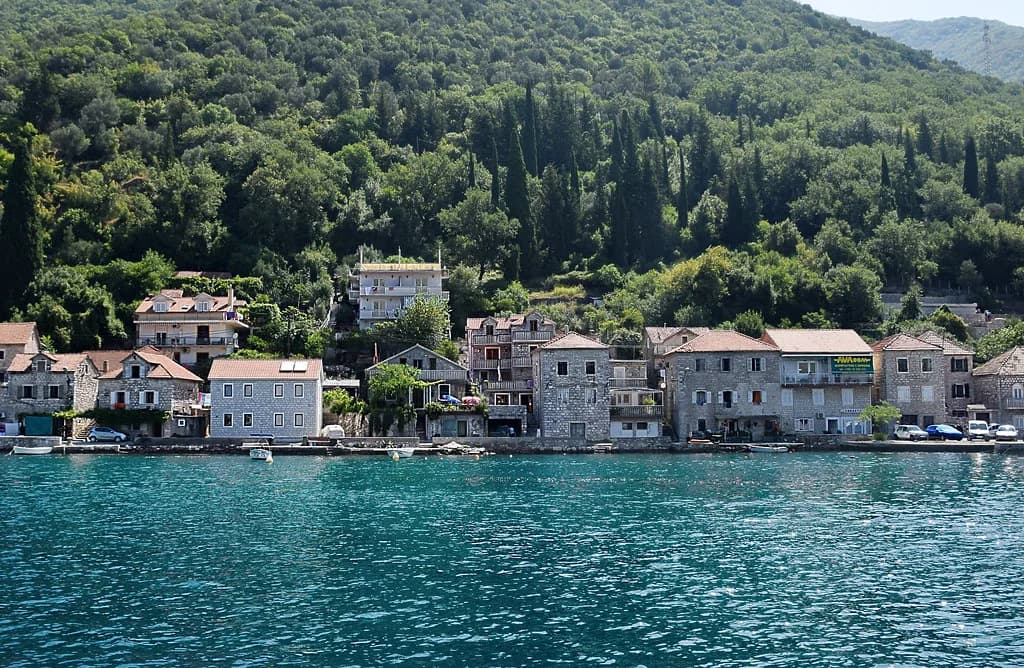
The walk is the attraction. Baroque palaces line the road on both sides, some restored and occupied, others in varying states of ruin, which gives the village a quietly distinctive character rather than the uniform finish of a museum piece. Set aside time simply to stroll and look up at the facades.
Prčanj grew wealthy in the seventeenth and eighteenth centuries on the fortunes of its sea captain families, like Perast and Dobrota, and that maritime prosperity shaped the houses you pass. The stone sea-captain houses and fishermen's cottages stand side by side along the same road, so the village reads as a lived-in place rather than a preserved ensemble.
How to get to Prčanj
Prčanj sits on the coastal road on the southern shore, with Kotor and Tivat both within fifteen minutes by car. Driving yourself gives you the flexibility to stop along the road and to combine Prčanj with Muo or Donji Stoliv in the same outing.
If you are coming from the northern side of the bay, the Kamenari–Lepetane ferry shortens the drive by cutting across the water rather than rounding the whole bay. Check sailing times and the fare on the day, since services vary by season.
The neighbouring villages along the same southern shore are worth knowing by name before you set off. Muo, Donji Stoliv and Stoliv are all within a few kilometres, so a single drive can take in several waterfront stops in one afternoon.
Swimming from the rocks and jetties
Swimming here happens from rocks and small jetties along the waterfront rather than from a formal beach, and the waterfront is the centre of things to do in the village. Bring footwear that copes with stone, and treat the jetties as shared space with local boats and fishermen.
The water is the same bay you see from Kotor and Dobrota, so conditions and water quality are best judged on the day. If you want a longer swim or a proper stretch of shore, the villages along the same coast give you options either side.
Boat tours and time on the water
Prčanj gives easy access to boat tours on the bay, and the waterfront is where those departures are arranged. Ask at the jetty or your accommodation about what is running during your stay, because services on the bay follow the season rather than a fixed year-round timetable.
Boats from this shore also put you within reach of the northern villages, including Lepetane at the narrow entrance to the bay. If your plan depends on a specific crossing, confirm the departure point and time locally before relying on it.
Seafood konobas overlooking the water
Restaurants in Prčanj serve fresh seafood in traditional konoba settings overlooking the water, which makes an unhurried lunch part of the visit rather than an afterthought. Among the places listed for the village are Capasanta Seafood Restaurant, Konoba Boka Bay and Mademoiselle Dine & Wine Lounge; they are listed here as options, not ranked.
Menus and prices change with the season and the catch, so ask for the day's offer and confirm what a dish costs before ordering. Booking ahead is sensible in high summer, when the waterfront fills with day visitors from Kotor and Tivat.
How long Prčanj needs, and what to pair it with
Allow an hour or two for Prčanj itself: the church, the waterfront walk and a coffee stop cover it comfortably. The village is a short stop within fifteen minutes of both Kotor and Tivat by car, so it is best combined with those towns rather than treated as a day on its own.
A natural pairing is a morning in Kotor followed by the drive along the southern shore, pausing at Prčanj and Muo before returning. If you are working your way round the whole bay, the wider Bay of Kotor guide sets the villages and crossings in context.
Should Prčanj be on your bay itinerary?
Yes, if you are already driving the southern shore and want half an hour of quiet architecture between busier stops. The unfinished neoclassical facade of the Church of the Birth of Our Lady is the reason to come, and the single waterfront road gives you the village in one easy walk.
Come for the walk and the setting rather than for a full day of sightseeing, and pair it with Kotor, Tivat or Muo so the drive pays for itself. On a tight schedule, the village is worth a pause, not a detour.
Explore more Bay of Kotor guides
Sources
Notes for your Montenegro trip
Optional updates to our Montenegro town guides.
You might also like
Continue reading
More guides you'll find useful