Kotor on a Rainy Day: Churches and Museums to Wait Out the Rain
Spend a wet day in Kotor under one roof at a time: St Tryphon's Cathedral, Saint Luke's two altars, St Nicholas and the Maritime Museum.
On this page
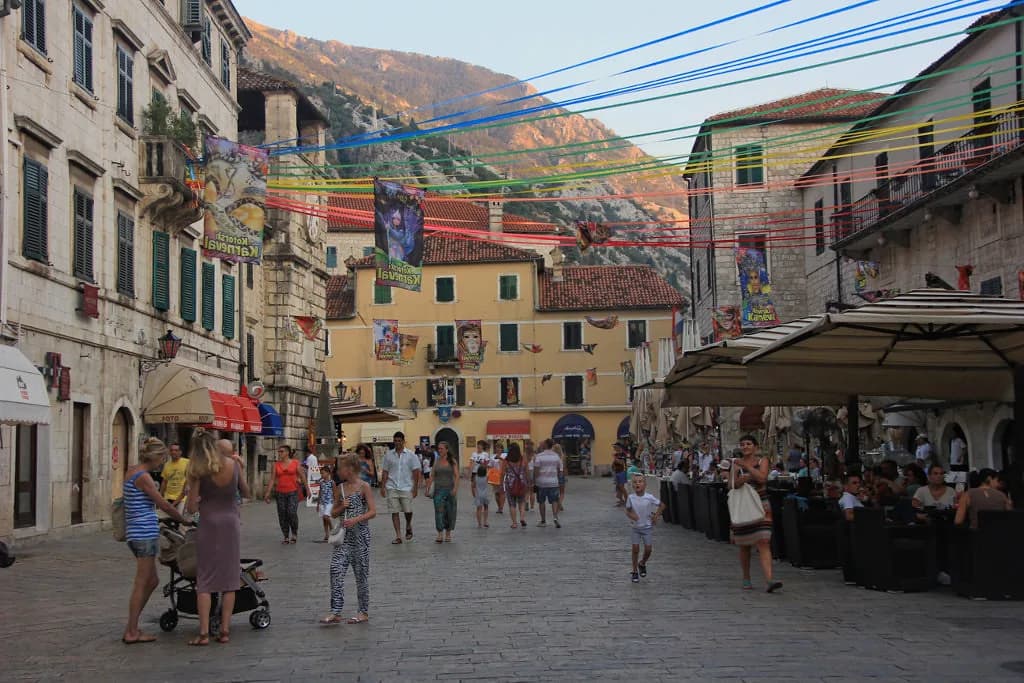
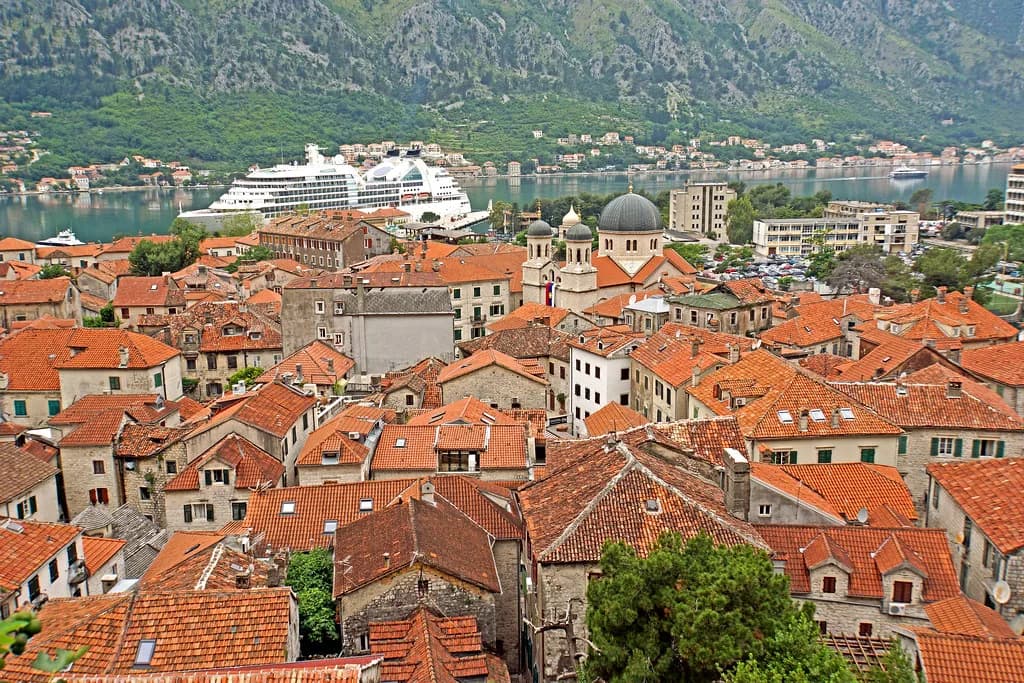
A rainy day in Kotor is a day of churches and a museum, not a washed-out trip. The Old Town packs St Tryphon's Cathedral, the Church of Saint Luke, St Nicholas and several smaller churches into a few minutes' walk, and the Maritime Museum gives you a long indoor stop for the afternoon. This guide orders those stops by building and tells you what to look for inside each one.
The trade-off is the streets themselves: the lanes between the churches are the exposed part, so plan short hops rather than a long loop along the walls. Treat rain as a scheduling problem and you can still cover the core of the town. If you want the wider list of sights for a dry hour, start with Things to Do in Kotor.
Kotor in the rain: what still works indoors
Anything with a roof works: the cathedral, the churches, the museum and the cafés between them. What does not work is standing about on the squares or walking the circuit of the walls, so it pays to decide the order of interiors before you set out. Have a look at Kotor cafés for the gaps between stops.
Most visitors give the Old Town a few hours, and a wet day stretches that comfortably because you linger inside each building. Book nothing outdoors in advance and keep a boat trip as a fair-weather option. If you are working to a tight schedule, the one day in Kotor plan shows how much a single day holds.
Start with St Tryphon's Cathedral in the Old Town
St Tryphon's Cathedral is the landmark most visitors associate with Kotor, and it is the natural first stop because it sits inside the Old Town walls. The cathedral is built in the Romanesque style with Byzantine elements, and later Renaissance and Baroque layers show how earthquakes changed it. It was first mentioned in the 9th century, rebuilt in the 12th, and received a Europa Nostra diploma in 2002 for reconstruction and seismic work; the treasury holds a gilded altar, Baroque frescoes and valuable ornaments.
Give it more time than the other churches: it is the one interior worth reading closely, and the treasury rewards a slow pass. If you would rather build the day around interiors, the Kotor itinerary guide keeps the order clear.
Church of Saint Luke on Piazza Greca: two altars under one roof
The Church of Saint Luke on Piazza Greca shows traits of both Roman and Byzantine architecture, and it is the only building in town that came through the 1979 earthquake without significant damage. Look for the fragments of original fresco on the south wall, the 17th-century iconostasis by Daskal Dimitrij of the Rafailović painting school, and the floor made from tomb panels, since burials took place inside the church until the 1930s.
The detail that makes the stop is the pair of altars, one Catholic and one Orthodox, which reflect the building's shift from Catholic use to Orthodox ownership in the 17th century. It is a compact interior, so pair it with the cathedral rather than treating it as a separate outing. Both sit inside the Old Town, which makes the hop between them short, and more churches are covered in this guide to churches in Kotor.
St Nicholas Church and its treasury of icons
St Nicholas is the most significant Orthodox church in Kotor and stands in the northern part of town, built at the beginning of the 20th century on the site of an earlier building destroyed by fire in the 19th. The treasury nearby holds icons, artistic crafts, documents and church gowns, much of it given by wealthy Kotor families. Allow extra time for the treasury rather than just stepping into the nave.
Because it sits away from the cathedral in the northern quarter, it works well as the second half of a wet walk: cathedral, Saint Luke, then north to St Nicholas. Check at the door on the day and keep it as a flexible stop.
Sveti Mihailo, Sveta Ana and Sveta Marija Koledjate
Three smaller churches fill out the circuit. Sveti Mihailo in the middle of the Old Town took its present form at the end of the 14th century, Sveta Ana in the east part has a 13th-century older section and a 14th-century newer one, and Sveta Marija Koledjate, known locally as Sveta Ozana, was built at the start of the 13th century over an early Christian basilica from the 6th century.
These are short stops, useful for breaking up the walk between the larger buildings rather than destinations in themselves. Treat them as shelter with something to see, and do not plan the day around them.
The Maritime Museum on the Square of the Boka fleet
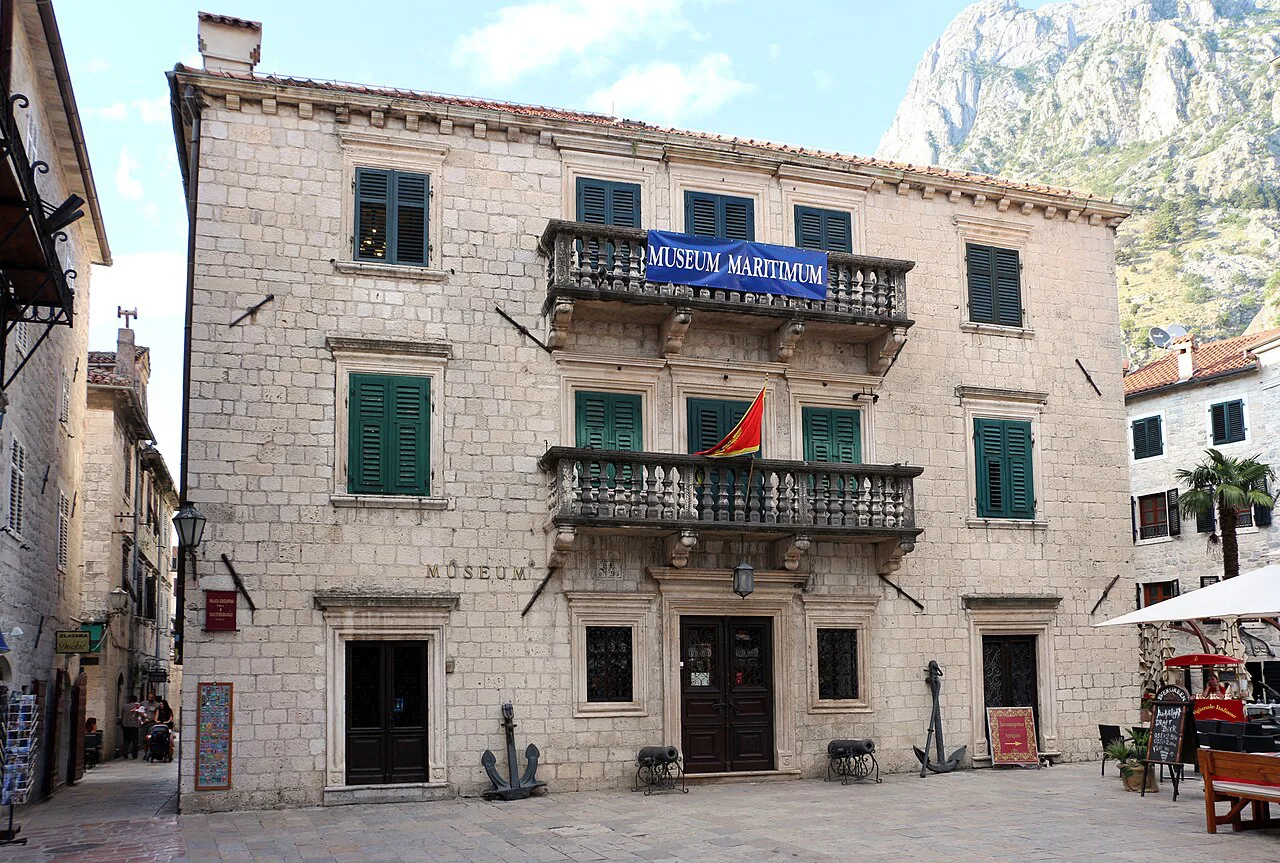
The Maritime Museum is the anchor of a wet afternoon. It occupies the Baroque palace Grgurin on the Square of the Boka fleet inside the Old Town, and two small cannons stand by the entrance. The displays cover the seafaring history of the Boka Kotorska region, from the medieval Boka fleet to the seamen, shipbuilders and diplomats who carried its name abroad.
Ask at the desk when you arrive rather than relying on a timetable you read elsewhere. Budget the longest single block of your day here; it is the one stop where a downpour costs you nothing.
What the museum holds: captain portraits, ship models, maps and the 1168 document
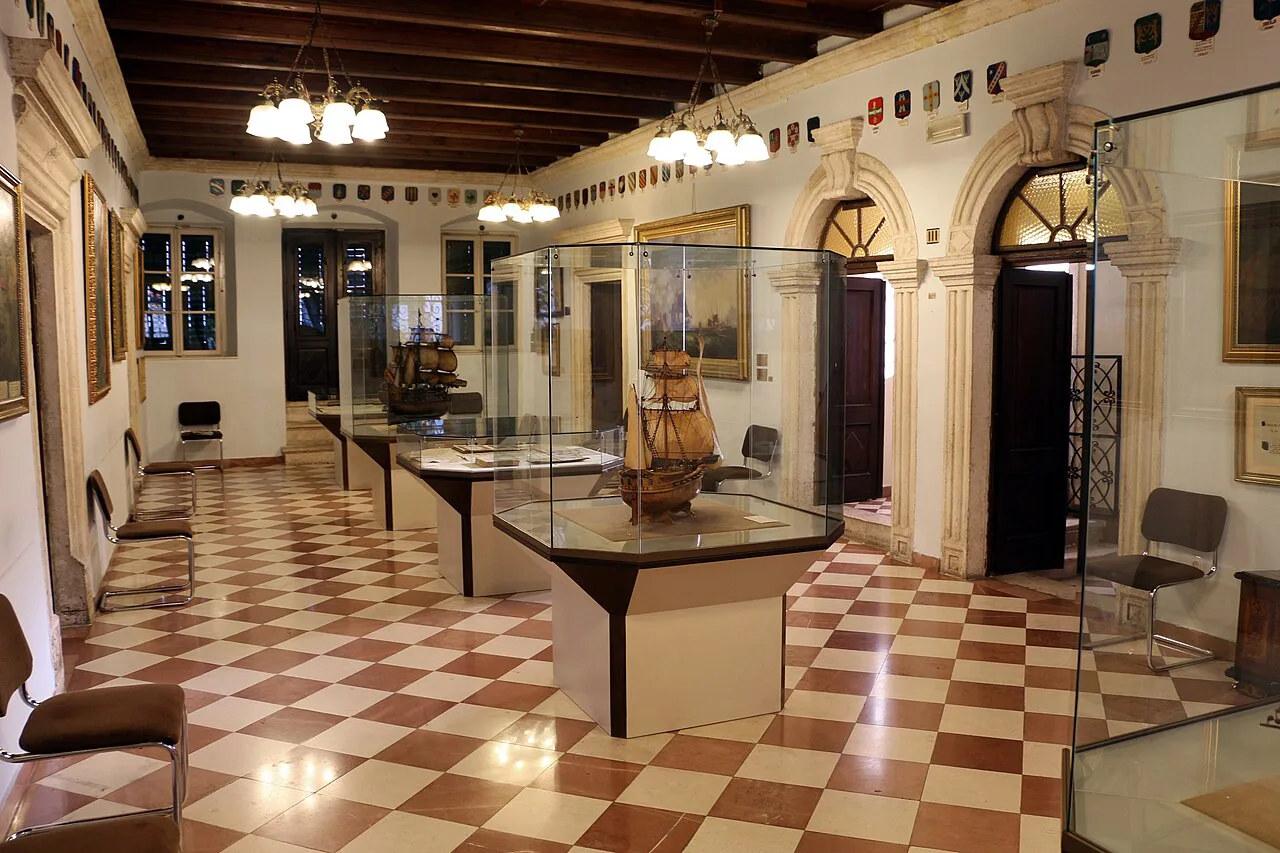
Inside you will find portraits of captains, models of old galleys and sailing boats, navigational instruments, and six bronze relief tablets setting out key events and figures from Kotor's history. There are also maps, engravings and watercolours of the coastal towns, plus an ethnographic collection covering the 16th to 18th centuries.
The single exhibit to seek out is a copy of the oldest document about navigation in the Boka area, dated 1168. Read the bronze tablets in order if you want the town's story to make sense before you walk back out into it.
Pairing the museum with the Grgurin palace setting
The museum is not a modern hall but a Baroque palace, so the building is part of the visit. Palace Grgurin was built at the beginning of the 18th century in the central part of the Old Town, and its position makes it an easy link between the cathedral end and the northern churches.
Plan the day so the museum comes after a church or two and before a late lunch, which keeps you indoors through the heaviest rain. The Best Restaurants in Kotor are a short walk from the museum door, so the transition from gallery to table costs you little exposure.
Kotor's palaces and the city tower as a short covered circuit
Other buildings on the same short loop are worth a look from under the eaves. Palace Bizanti, in the Romanesque style, stands next to the Tower of the city watch and dates from the 14th century, while the 17th-century city tower carries a pillory in front of it and a clock mechanism on the building itself.
None of these are long visits, but strung together they fill an hour without a soaking. If the rain is heavy, drop them and go straight to the museum.
When the rain eases: the market by the second entrance and the Riva
Kotor market sits at the second entrance to the Old Town, across from the Riva and the harbour, and sells mostly fruit, vegetables and fish alongside stands of costume jewellery. Use a break in the weather for it, since it is an open-air stop.
If you would rather shop under a roof, Shopping Centre Kamelija sits just outside the Old Town gates, while the lanes inside hold souvenir shops, bookshops and small boutiques. A dry hour is also the moment for the old town view from the walls; this guide to Kotor viewpoints covers the vantage points.
Cafés and pastry shops inside the walls give you somewhere to sit out a shower, and breakfast in Kotor is an easy way to start a wet morning before the churches fill. Moving a car mid-downpour is the least appealing option, so sort parking in advance.
Which building anchors your wet day?
Build the day around the Maritime Museum and add the cathedral and Saint Luke's before it. That order keeps the longest indoor block for the worst of the weather and leaves St Nicholas and the small churches as flexible extras.
If the rain clears by mid-afternoon, spend the remaining light outdoors along the Riva or on a viewpoint instead of adding another interior. A boat tour is the better call on a settled day, and the wider list of Kotor tours covers what runs.
Explore more Kotor guides
Frequently Asked Questions
Do I need to book Kotor's churches or the Maritime Museum in advance?
The visitor information available does not describe advance booking for St Tryphon's Cathedral, the Church of Saint Luke, St Nicholas or the Maritime Museum. Ask at each door on the day and keep the order flexible so a closed building does not spoil the plan.
Is the Old Town walkable in heavy rain?
The lanes between the churches are short, so you can move from one interior to the next with only brief exposure. The squares and the walls are the parts to leave for a dry spell, and a café makes a useful pause between stops.
Sources
Notes for your Montenegro trip
Optional updates to our Montenegro town guides.
You might also like
Continue reading
More guides you'll find useful