Montenegro Roman Ruins: Doclea, Risan Mosaics and What Survives
Roman Montenegro comes down to two visitable sites: the mosaics at Risan in the Bay of Kotor and Doclea outside Podgorica. Here is how to see both.
On this page
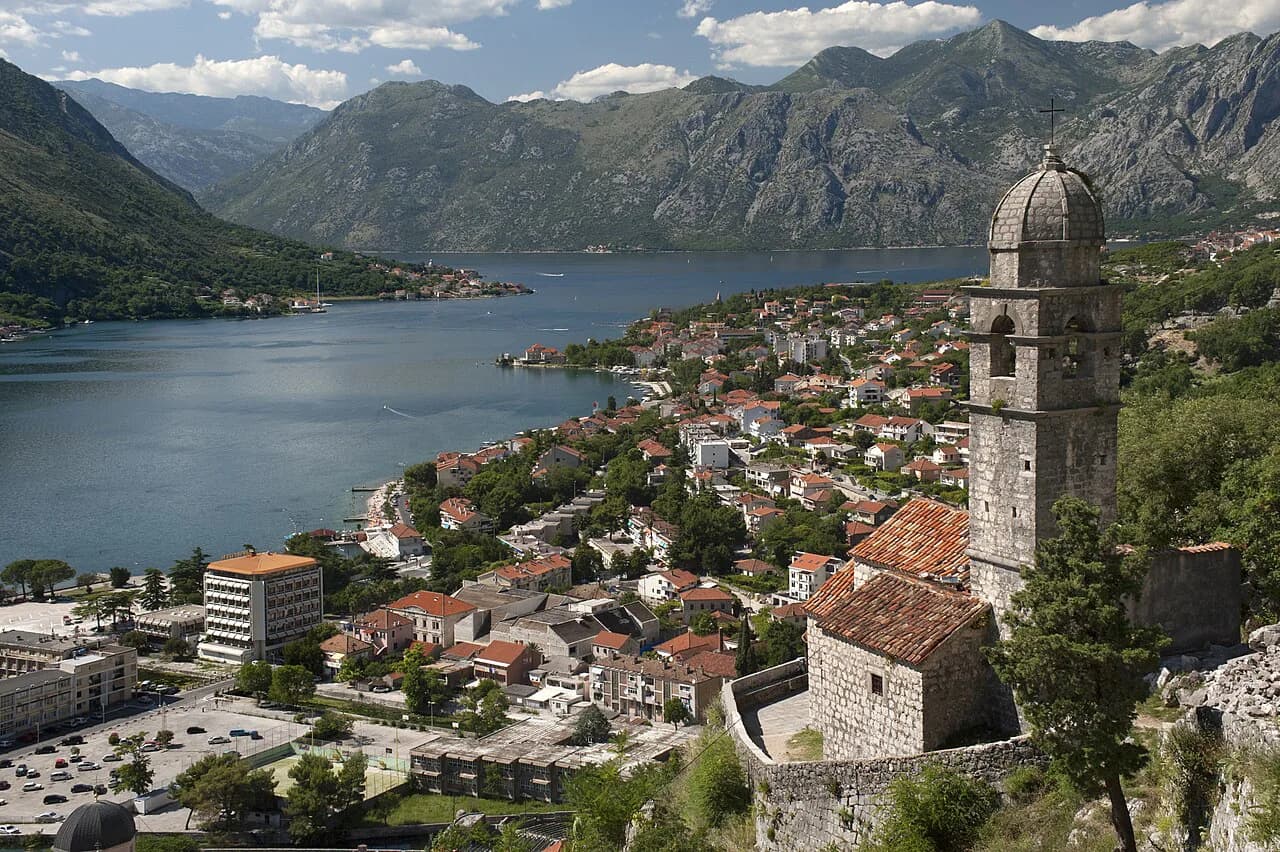
Plan around two Roman sites in Montenegro: the mosaics at Risan on the Bay of Kotor, and Doclea just north of Podgorica. Everything else that survives is fragmentary, so a short trip rarely needs more than these two. This guide covers what stands at each, how to get there, what tickets cost at Risan, and which one to choose if you only have half a day.
The two sites feel completely different. Risan is a compact, covered excavation of one noble family's house, easy to slot into a Kotor or Perast day. Doclea is an open landscape of foundations, ramparts and tombs that you walk yourself, with no transport running to the gate. Set both against the wider sweep of Montenegro history before you commit a day to either.
Which Roman sites in Montenegro you can actually visit
Risan and Doclea are the two places where you can plan a visit around Roman remains. Risan, at the head of the Bay of Kotor, protects the floor of a second-century villa under cover. Doclea, on the plain outside Podgorica, spreads across open ground beside the rivers that once formed its natural defence.
Budva old town also holds Roman remains, though they come as fragments within a town walk rather than a ticketed site with opening hours. Elsewhere in Montenegro the Roman layer sits under later towns or survives as inscriptions and stray stonework, which is why the two sites above carry the weight of a Roman-themed day.
Risan mosaics: what the Villa Urbana floor plan shows you
The Risan mosaics belong to Villa Urbana, the town house of a noble family from the second century AD. You enter along a walkway that rings a central atrium, where an impluvium pool caught rainwater and a compluvium channelled it towards the kitchen and bathroom. Rooms open off this court, so the visit reads as a floor plan rather than a gallery of isolated pictures, across roughly 790 square metres.
Seven rooms carry mosaics, though two are not restored and on display. The tesserae are white, grey-blue and Black; only the white stone was available locally, so the darker stone was brought in. Servants' quarters with a dirt floor and a backyard complete the layout, and the backyard shows stone pillars and other pieces from the villa and from Carine, an Illyrian site nearby.
The Hypnos mosaic and the rooms at Risan
Room by room, the mosaics tell you what each space was for. The war meeting room shows a double-headed axe, the labrys, and a rosette, a Roman symbol of power. The reception room carries stylised octopuses and plants with another labrys around a central sun, and the dining room floor shows squid and wine; another room has a chequerboard pattern.
The master bedroom holds the panel that makes the site worth the trip: a winged Hypnos, the Greek god of sleep, reclining on pillows. It is the only mosaic in the villa using more than three colours, and it is the only known mosaic of Hypnos. Hypnos was the protector of Risan, and the image was laid to watch over the owner while he slept.
Beside the Hypnos panel is a small sunken rectangle that has puzzled archaeologists. Dug into the ground, it most likely kept food cool, but human remains found inside leave open the possibility that it was a grave. An information display along one wall sets out the area's history and daily life under the Roman Empire.
Getting to Risan mosaics by car and by bus
The site sits at Kovačevina in Risan, on the opposite wing of the bay from Kotor and Perast, so a car is the simplest way to combine it with a bay day. The drive follows the shoreline around the bay rather than crossing it, which takes longer than the map suggests, though parking in Risan is straightforward by bay standards.
Buses run along the bay between Kotor and Risan, but services and timings shift by season, so check the current timetable locally rather than planning around a remembered departure. Risan itself is small and the site is easy to find on foot once you are in the village, and the wider story of how the coast was built is covered in our Montenegro architecture guide.
Risan mosaics tickets and opening hours
Risan mosaics open daily from 8am to 5pm, and entry is €5 for adults with children under 12 going free; groups of ten or more with a licensed guide pay €2.50 each. Your ticket includes a leaflet explaining the mosaics, which is useful because the labelling alone will not tell you which room is which. The telephone number listed for the site is +382 32 322 886 if you need to confirm anything before travelling.
Be honest about the scale before you pay. Visitors who know the mosaics of Pompeii find Risan modest by comparison, and that is a fair judgement. What you get instead is a rarely busy site with no queue, which suits anyone travelling in the Kotor cruise-day crush and wanting somewhere calmer; an hour is enough.
Doclea near Podgorica: the forum, basilica and baths
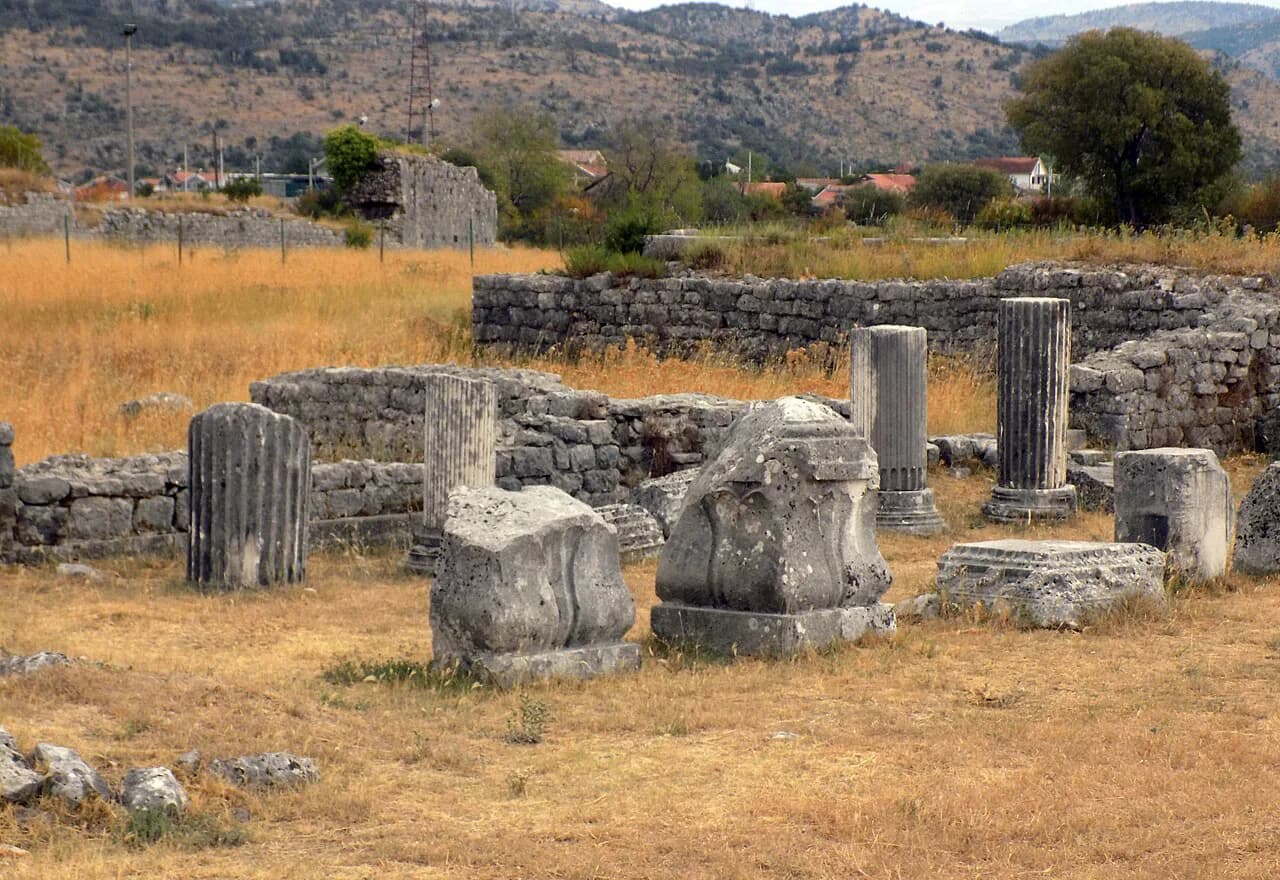
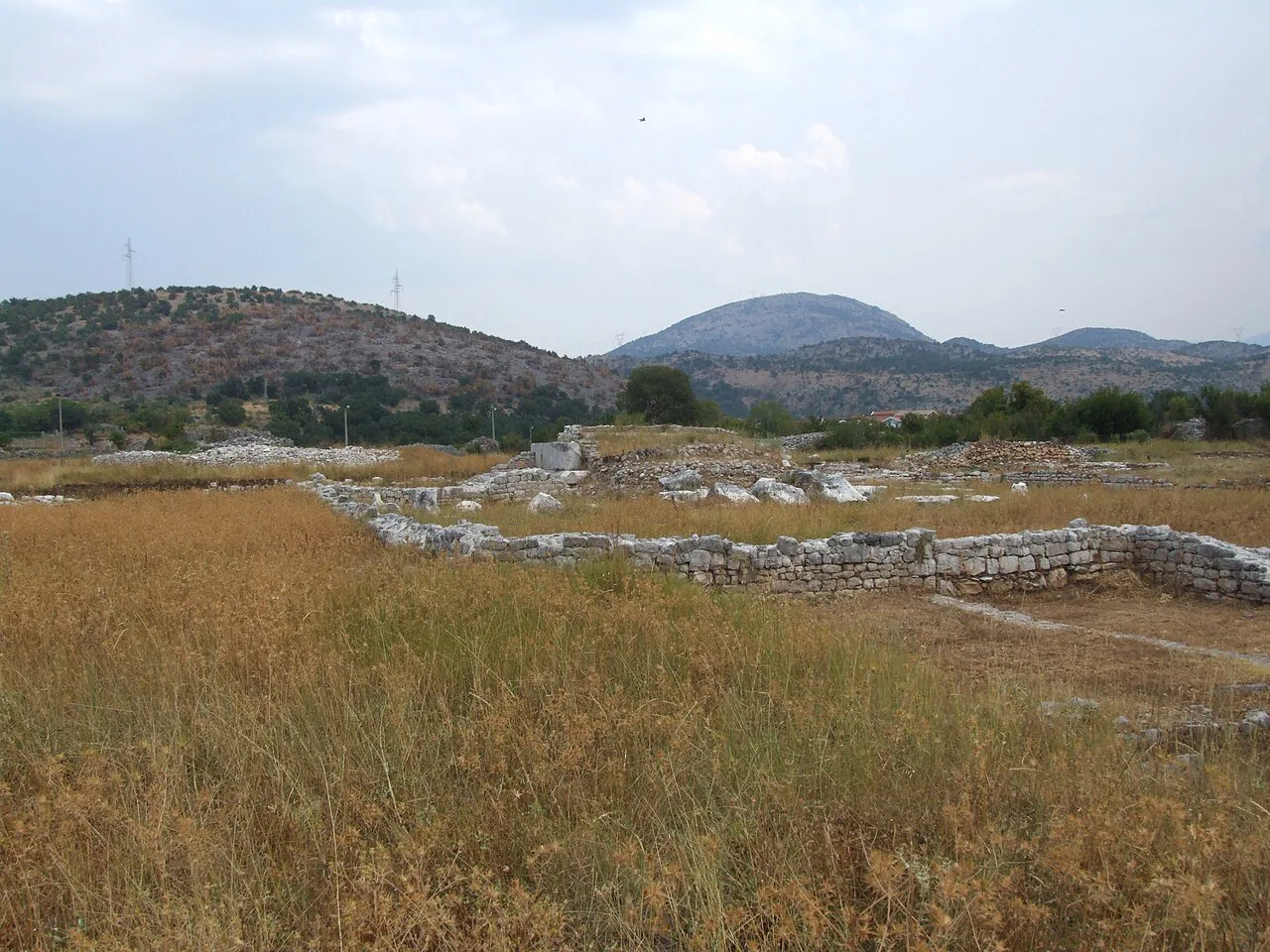
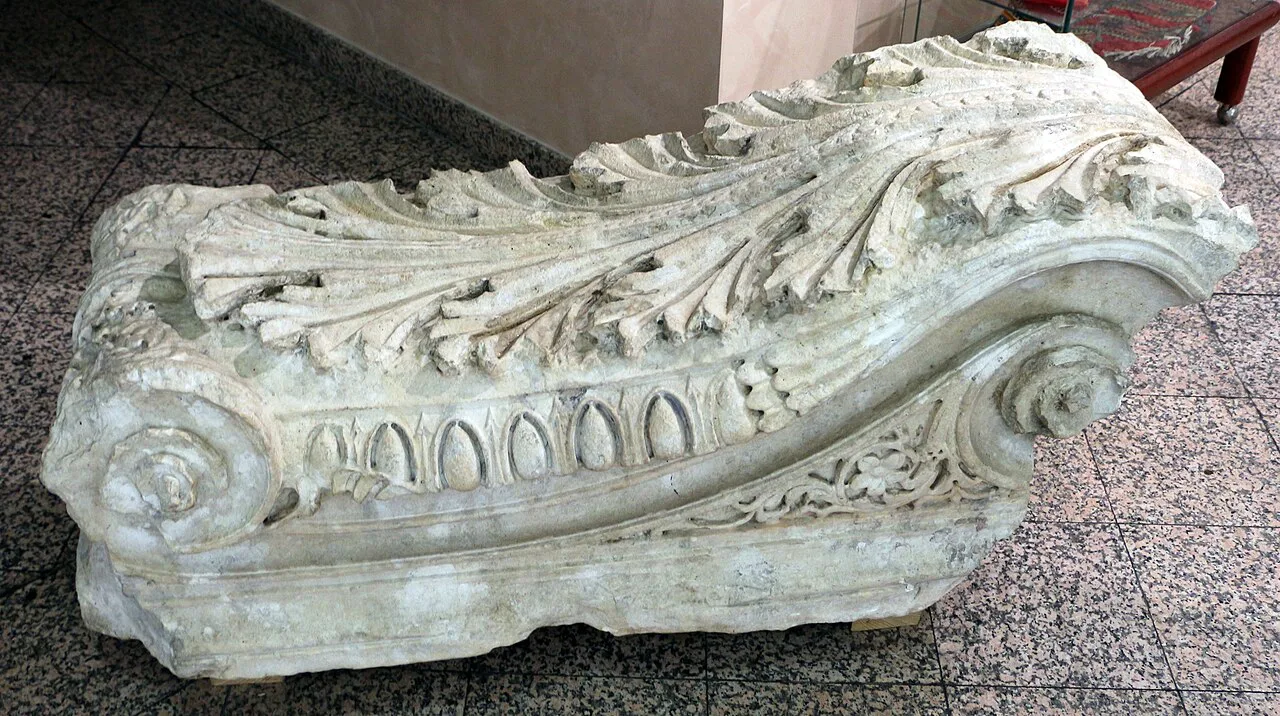
Doclea lies a few miles north of Podgorica on a site ringed by rivers on three sides, which formed a natural fortress. The visible remains are mostly Roman, laid out on a planned town grid whose central area can still be traced among the stones and broken colonnades. The forum, basilica and thermal baths are all discernible, and stones carved with images and inscriptions remain in their original positions.
A ruined temple stood at the centre, measuring around 50 by 40 metres, with an atrium paved in stone slabs in front of it. After Christianity arrived the temple was turned into a glass-making workshop, and traces of that use survive. Sections of the Roman ramparts still stand, and outside the walls are the remnants of villas occupied by the town's elite between the first and fifth centuries AD.
Doclea is a candidate for inscription on the UNESCO World Heritage List, a status it has sought but does not yet hold. If that listing matters to your itinerary, check the current position rather than describing it as a World Heritage Site, and our Montenegro's UNESCO Sites guide separates the inscribed places from the candidates.
What else stands at Doclea, from ramparts to tombs
Two Roman burial grounds flanked the town, one to the west and one to the south-east, dating from the first century BC to the second century AD. Around 300 tombs have been found and most had escaped looting, which is why the grave goods are so informative: jewellery, perfume bottles, dishes, coins and glassware. Some tombs are vaulted, and one carried Jewish symbols including a menorah.
Getting to Doclea and what to expect on site
No public transport runs to Doclea, so you need a car or a taxi from Podgorica, which is only a few miles away. Admission is free and the walk around the site is extensive, so bring water and wear shoes that cope with rough ground. There are no guides at the ruins and only a limited number of information boards, which means the visit works best if you have read up beforehand.
The lack of guiding is the main trade-off. You get an open Roman town plan without crowds or ticket queues, but little interpretation on the spot, so the forum, basilica and baths can blur into one another without a plan in hand. Pair the visit with Podgorica's museums if you want the objects that came out of the ground.
Roman remains in Budva old town and how they fit a town visit
Budva old town holds Roman ruins among its later stone buildings, visible as fragments rather than as a site you pay to enter. There are no published opening hours or tickets for them, so plan Budva around its walls, gates and churches and treat the Roman stonework as something you notice in passing.
If Roman stone is your reason for the stop, give Budva a short walk and put your time into Risan or Doclea instead. If you are already in Budva for the old town, the fragments add depth to a place that most visitors read only as a walled seaside town, and the broader story of building on this coast is set out in our Montenegro architecture guide.
Illyrian Risan: Carine, Gradina and Queen Teuta's seat
Roman Risan sits on top of an Illyrian town that was the seat of Queen Teuta before Rome took the bay. Archaeologists have worked at Risan since at least the 1820s, uncovering Illyrian settlement remains and the original fort built by the bay's first inhabitants. Stonework from Carine, an Illyrian site nearby, is displayed in the villa's backyard, and Gradina, the hill above the village, gives you the geography that made Risan worth defending.
How long each site needs and which to pick on a short trip
Risan takes about an hour, including the leaflet and the wall display, and fits neatly between Kotor and Perast. Doclea needs two hours or more because the site is spread out and you are walking it without a guide. If you have one free day on the coast, choose Risan; if you are based in Podgorica, choose Doclea.
Doing both means a drive across the country, so it suits a multi-day itinerary rather than a single outing. Whichever you pick, read the plan before you arrive: at Risan the rooms are labelled but not explained in depth, and at Doclea you are largely on your own.
Risan or Doclea: which Roman site fits your trip
Pick Risan if you are on the Bay of Kotor and want a covered, compact site with a fixed ticket price, a leaflet and the Hypnos panel at the centre of it. Pick Doclea if you are near Podgorica and prefer an open landscape you can walk for free, accepting that you bring your own interpretation. Neither needs a whole day.
Whichever you choose, place it in the wider story of the country rather than treating it as a single stop. The Illyrian layer at Risan and the Byzantine traces at Doclea both show how long these places were lived in, and the Montenegro history guide sets out how the pieces fit. Check the Risan opening hours and ticket price before you set off, as they are the one detail most likely to have moved.
Frequently Asked Questions
Is Doclea free to enter?
Admission to Doclea is free, the site is unguided and there are only a limited number of information boards. No public transport runs there, so you need a car or taxi from Podgorica, which is a few miles away. Allow time for an extensive walk over rough ground.
Do I need to book the Risan mosaics in advance?
No booking is needed for individual visitors: you pay at the site and the ticket includes a leaflet. Groups of ten or more with a licensed guide pay a reduced rate per person. The site is rarely busy, so queues are unusual.
Can I see Roman ruins in Budva old town?
Budva old town has Roman remains among its later buildings, but they are fragments rather than a site with tickets or opening hours. Plan Budva around its walls, gates and churches and treat the Roman stonework as something you pass on a walk.
Sources
Notes for your Montenegro trip
Optional updates to our Montenegro town guides.
You might also like
Continue reading
More guides you'll find useful