Montenegro Museums: Where to Go, What It Costs and How Long
Plan a museum day in Montenegro: which collections in Cetinje justify the trip, what tickets cost in euros, and how long to allow for each building.
On this page
Base yourself in Cetinje for a museum day in Montenegro. The old royal capital packs the National Museum's main buildings into a short stretch around Novice Cerovića, so you can walk between the History Museum, the Art Museum and the Museum of King Nikola without a car. This guide separates those collections by building and by ticket, gives the published prices in euros and sets out where the printed leaflet or a guided tour earns its place.
The trade-off is real: a single ticket covers two collections in one building, while the collective ticket reaches every museum unit plus Njegoš's mausoleum on Lovćen. Deciding which you need depends on whether you are staying in Cetinje or heading up the mountain the same day.
Cetinje: the National Museum of Montenegro and its buildings
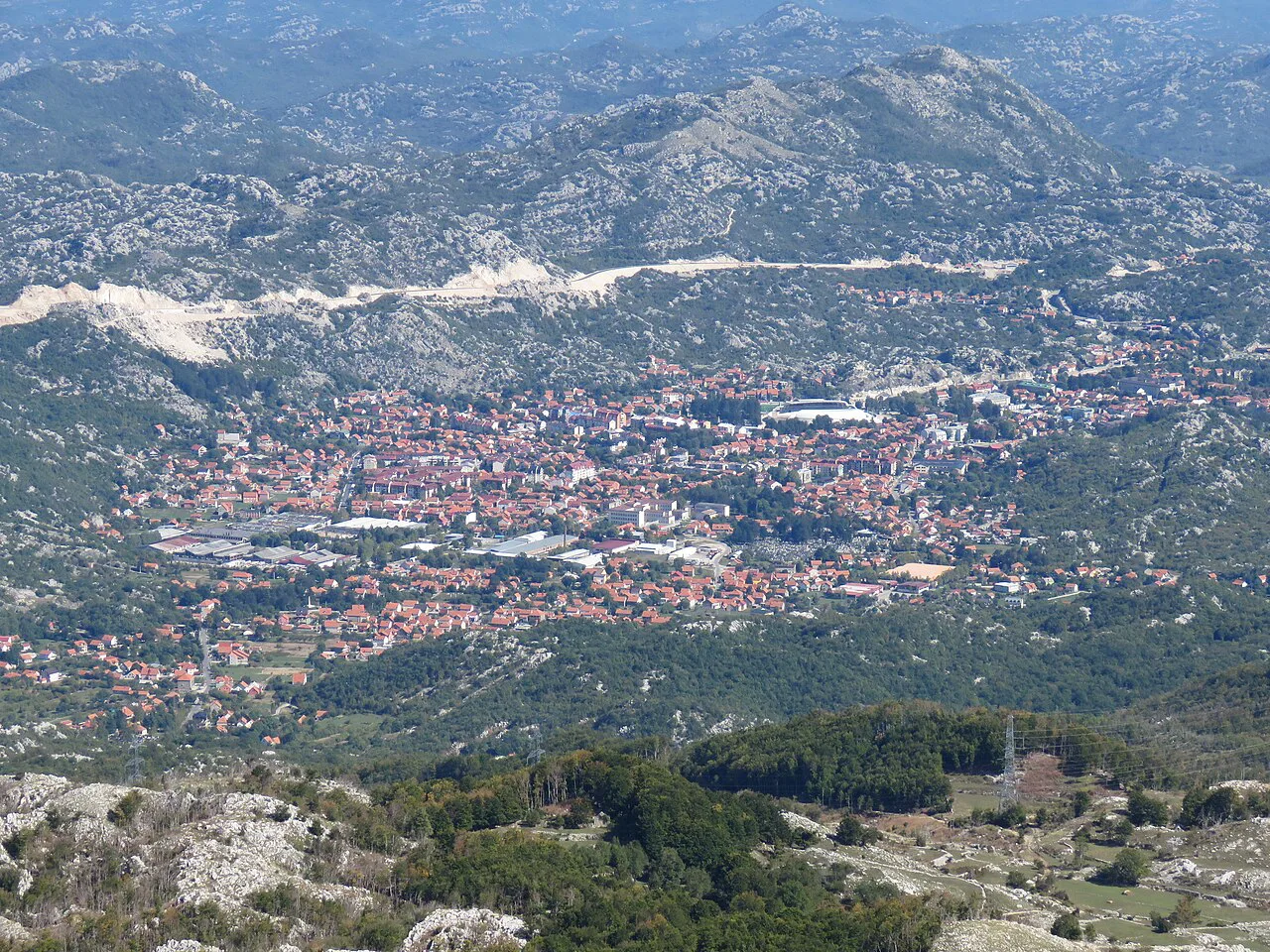
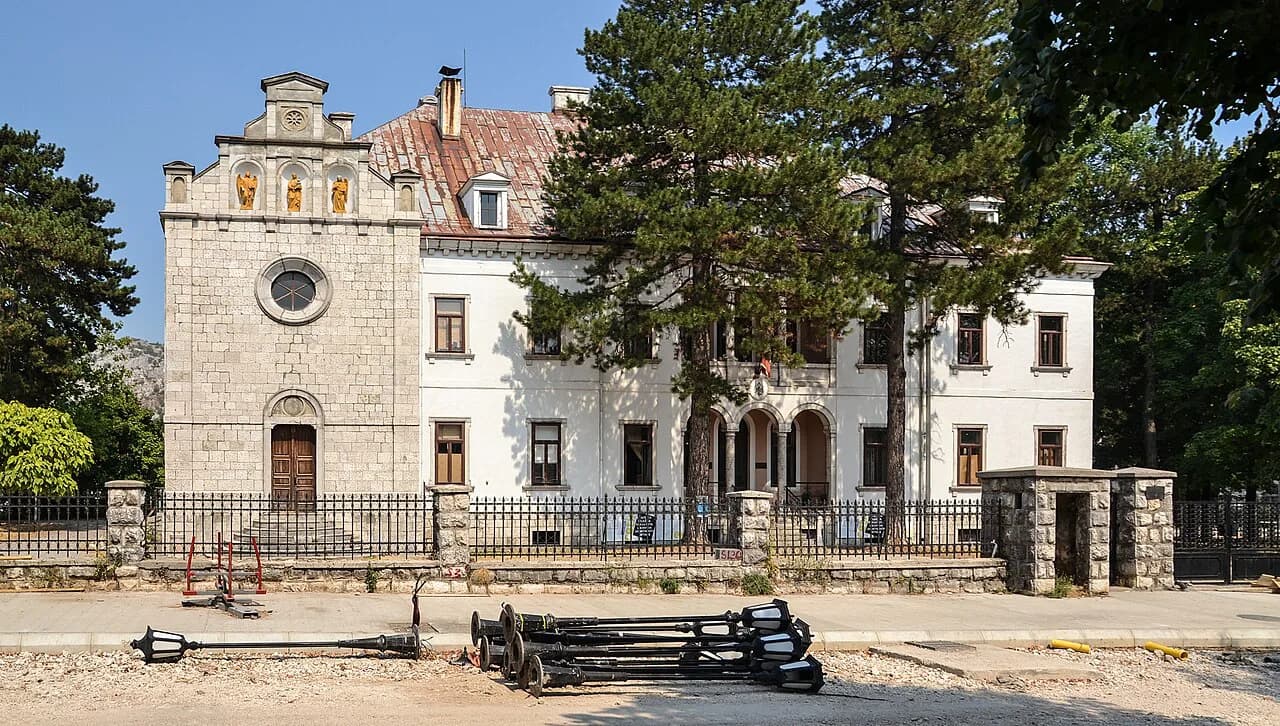
The National Museum of Montenegro runs a family of units in Cetinje, including the Historical Museum, the Museum of King Nikola, the Art Museum, the Ethnographic Museum and an Archaeological Museum with a lapidarium. The Art Museum sits in the Government House, built in 1910 in neo-Renaissance style, which now acts as the administrative headquarters of the National Museum and houses the permanent History and Art displays. Because the units share one organisation and one address cluster, Cetinje works as a single half-day or full-day stop rather than a series of separate excursions.
If your interest runs to how this collection of buildings and institutions came about, the wider Montenegro history page sets the frame before you arrive in the old capital. The Government House itself is worth a look from the outside even if you only go in for one exhibition, since the neo-Renaissance frontage is part of the museum experience rather than just a container for it.
The History Museum in the Government House: what the permanent exhibition covers
The History Museum occupies the Government House building and lays out the story of the area as a timeline, from the earliest recorded traces of human activity to modern times. The exhibition was first set up in 1989 and modernised in 2011, when objects from the period before the Austro-Hungarian occupation of Montenegro in 1916 went on display. A section covering the First World War through to 2007 opened on 21 May 2016, marking ten years since the restoration of independence, so the permanent display runs right up to the present constitutional settlement.
Treat the timeline as the backbone of a Cetinje visit: it gives context to the royal rooms you will see afterwards. The caveat is timing. The National Museum's visit page currently carries a closed-for-visiting notice above the museum opening hours and the gift shop hours, so confirm the building is admitting visitors before you build a day around it, using the museum's own visit page.
The Art Museum and its collections in the same building
The Art Museum shares the Government House with the History Museum and fills over 1,000 square metres, with a permanent exhibition drawn from several collections. The holdings grew from 240 works shown in the gallery's first exhibition in the 1950s to more than four thousand today, and the display covers the development of modern art in Yugoslavia from the late nineteenth century into the middle of the twentieth. A large share of the collection is Montenegrin and Yugoslav fine art, shown in roughly 3,000 exhibits, including memorial rooms devoted to Milo Milunović, Petar Lubarda, Branko Filipović Fil and Miodrag Dado Đurić.
A separate part of the exhibition holds the Collection of Icons, with the icon of the Virgin of Filermska displayed in the Blue Chapel. The Art Museum also includes the Gallery of Contemporary Art Miodrag Dado Đurić and the Atelier DADO, and it keeps space for living Montenegrin artists whose exhibitions change periodically. That changing programme means the contemporary rooms may look different from one year to the next, while the named memorial rooms and the Blue Chapel are the fixed points to plan around.
The Museum of King Nikola: the royal residence and its rooms
The Museum of King Nikola occupies the residence of Montenegro's last ruler, King Nikola I Petrović-Njegoš, and was founded in 1926. The rooms try to reconstruct how the family actually lived in the house, so you move through domestic interiors rather than rows of display cases. Alongside the furniture, some of it original to the house, the collection includes weaponry, clothing, coins, paintings and portraits, personal items, dinnerware and stamps.
Labels are the weak point. Many items and rooms carry no descriptions, so the printed leaflet handed out at the entrance does much of the explanatory work, and guided tours are offered for a deeper account of the exhibits. My pick is to take the leaflet even if you normally skip them here, and to accept the guided tour if the royal family's daily life is the reason you came. Plan the better part of an hour and a half if you read as you go, treating that as a rule of thumb rather than an official duration.
Tickets: single museum, combined History and Art, and the collective ticket
One ticket covers both the History Museum and the Art Museum, since they share the Government House. Adults pay 5,00 € and pupils and students 2,50 € for that combined pair. The collective ticket, which covers all museum units together with Njegoš's mausoleum, costs 20,00 €, and a group ticket for all museums and mausoleums for pupils and students is 10,00 €. Check the current price list on the National Museum's visit page before you travel, because these are the published figures and not a quote for any given day.
The decision comes down to scope. If Cetinje is your only museum stop, the 5,00 € combined ticket buys two collections under one roof and is the obvious buy. The 20,00 € collective ticket only makes sense if you also plan to visit Njegoš's mausoleum on Lovćen and at least a couple of the other units, such as the Ethnographic Museum or the Archaeological Museum with Lapidarium. Add up what you will realistically see in a day before paying for access you will not use.
An estimate of about 8 € circulates for the Museum of King Nikola, which is not an official museum price. Ask at the entrance what the ticket costs rather than budgeting from that figure, and treat the same for any suggested visit duration. The National Museum's published prices, including the combined History and Art ticket, are the ones to plan around.
How long to allow in Cetinje, and whether to take the leaflet or a tour
A realistic Cetinje museum day is the Government House in the morning and the Museum of King Nikola after lunch, with a walk between them. The combined History and Art ticket covers a timeline exhibition and a large art collection in one building, which is where most of your time goes; the royal residence is the shorter, more domestic visit. If you add the Ethnographic Museum or the lapidarium, plan on the best part of a day rather than an afternoon.
On the leaflet-or-tour question, the answer depends on the building. The Museum of King Nikola is where the printed leaflet or a guided tour matters most, because room and object labels are sparse. In the Government House the narrative is carried by the exhibition itself, so a tour is a bonus rather than a necessity. Guided tours are offered at King Nikola's, and you can ask about them when you arrive rather than booking far ahead.
Practical points: opening hours, gift shop, address and access
The National Museum lists its address as Novice Cerovića bb, Cetinje 81250, and publishes museum opening hours, gift shop hours, a price list, location details and conditions on its visit page. The conditions section covers dress code, wireless coverage and access for people with disabilities, which is the place to check if anyone in your group has mobility needs. Montenegro's UNESCO Sites page is a useful companion if you want to pair the Cetinje collections with the protected towns and landscapes nearby.
Opening hours are the one thing to confirm the day before you go. The visit page has carried a closed-for-visiting notice over the museum hours and gift shop hours, so a listing that shows times is not proof the doors are open. The same page sets out the group ticket conditions for school and student parties, which matters if you are arranging a visit for a class rather than turning up as a couple.
Cetinje's compact centre makes the logistics simple once you are there: the Government House and the royal residence are close enough to walk between, and the museum quarter fits around a single parking stop or bus arrival. The Government House's neo-Renaissance design is itself part of the appeal, and if you want to read the town's buildings as architecture rather than exhibits, the Montenegro architecture page is the natural next stop.
Single ticket or the collective one?
Buy the combined History and Art ticket if Cetinje is your only museum stop, and take the printed leaflet at the Museum of King Nikola whatever else you skip. Reach for the collective ticket only when Njegoš's mausoleum on Lovćen and several other units are genuinely on your route, since the saving depends on how many you actually enter.
Before setting out, check the National Museum's visit page for current opening hours and the exact price list, and ask at the Museum of King Nikola what its entrance fee is on the day. That single check protects the rest of your day.
Explore more Montenegro guides
Frequently Asked Questions
Can I see the History Museum and Art Museum on one ticket?
Yes. The two collections share the Government House in Cetinje and are sold together on a single combined ticket, with a reduced rate for pupils and students. The National Museum's visit page lists both rates, so you do not need to choose between the two museums or pay twice.
What does the collective museum ticket include?
It covers all National Museum units together with Njegoš's mausoleum, with a lower group rate for pupils and students. The published figures sit on the National Museum's visit page. It only pays off if you will actually enter the mausoleum on Lovćen and more than one Cetinje unit.
Are the Cetinje museums suitable if I have mobility needs?
The National Museum's visit page has a conditions section listing access for people with disabilities alongside dress code and wireless coverage. Read that section before you travel, and confirm opening hours at the same time, because the page has shown a closed-for-visiting notice over its hours.
Sources
Notes for your Montenegro trip
Optional updates to our Montenegro town guides.
You might also like
Continue reading
More guides you'll find useful