Montenegro Cheese: Njeguši, Pljevlja, Kajmak and How to Order Them
A practical guide to Montenegrin cheese, from Njeguši and Pljevlja to kajmak and cheese in oil, explaining how each is made, served and ordered.
On this page
Montenegro's cheeses reach the table as accompaniments, not as a cheese board: a hard, salty slice of Njeguši next to smoked prosciutto, a spoonful of kajmak on bread, or grated cheese folded into pastry and cornmeal. If you order one thing to understand the dairy side of the cuisine, make it Njeguši served with the prosciutto from the same village. This guide covers the cheeses visitors meet most often, how they are made and served, and the wording to use when ordering or buying.
Four names do most of the work: Njeguški sir, Pljevaljski sir, Lisnati and Prljo. The last three appear in a survey of Montenegrin cheeses as meeting most requirements to be proposed for protected designation of origin, which tells you they are regional products with defined methods rather than generic farm cheese. Kajmak is not a cheese in the same sense but a creamy spread that arrives alongside many of the same dishes, so it belongs in the same conversation.
What Montenegrin cheese is: the cheeses visitors meet most often
Montenegrin cheese splits into two families that behave differently on the plate. The hard, salty, often smoked cheeses from the mountain villages around Lovćen and the north are sliced thin and eaten with cured meat, while softer fresh cheeses and kajmak are spread or spooned. Once you know which family you are ordering, menus stop being a guessing game.
The names follow places and shapes rather than a single style. Njeguški sir takes its name from Njeguši, the village on the slopes of Lovćen that also gives its name to the prosciutto; Pljevaljski sir comes from Pljevlja in the north; Lisnati describes a layered, flaky cheese; Prljo is a crumbly cheese from the same register. The cheeses are usually listed on menus as an accompaniment under the cured meat or as a side, not as a main course.
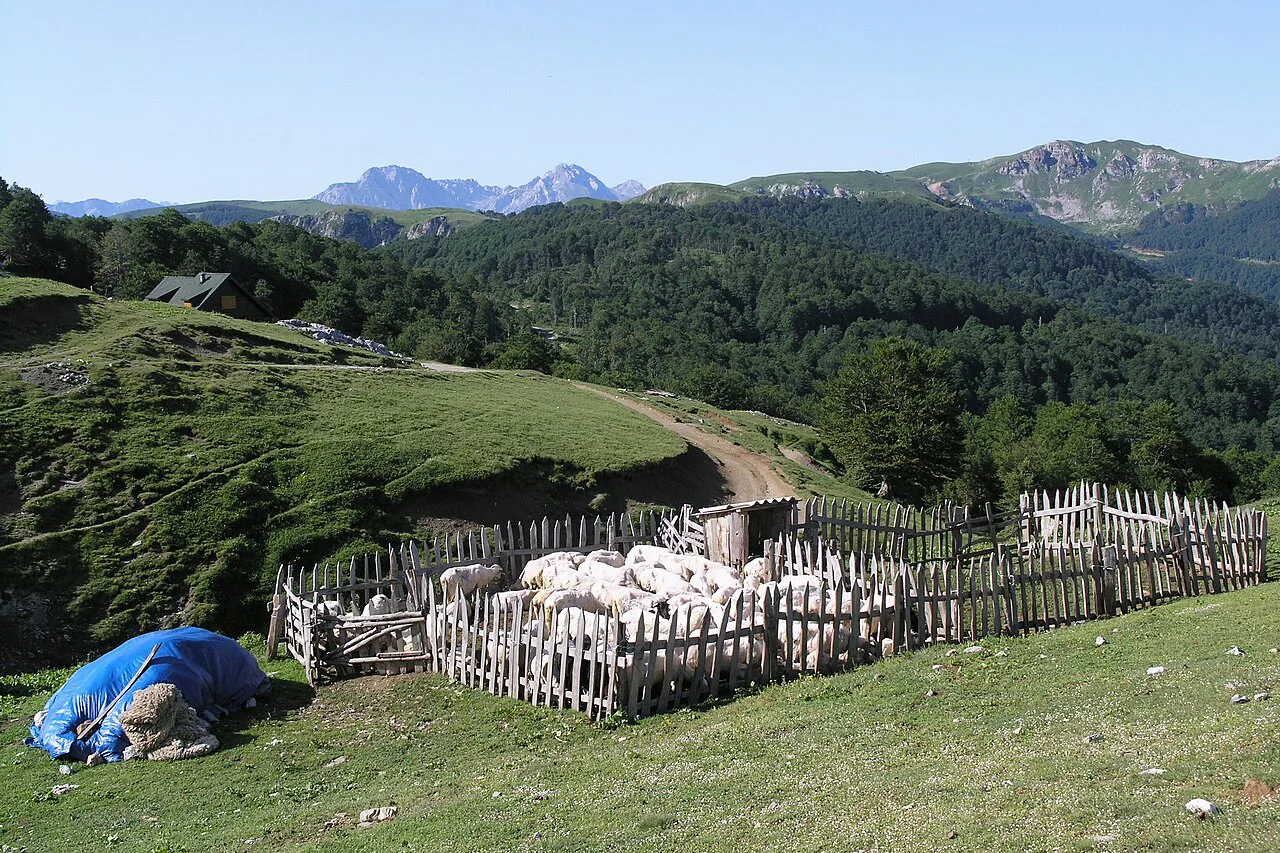
Njeguši cheese: hard, salty and smoked near the slopes of Lovćen
Njeguši cheese is the one most visitors encounter first, and it is best understood as the partner to Njeguški pršut. The village sits on the slopes of Lovćen, and the food culture there revolves around curing and smoking: the prosciutto is made from hind legs packed in salt, dried and then smoked for months, and the cheese picks up a similarly salty, smoky profile from the same mountain larder. Order them together and you get the clearest taste of the region.
What kind of food do they eat in Montenegro? Montenegrin cooking leans on cured meat, dairy, bread, grilled dishes and mountain staples. Njeguši prosciutto and cheese open a meal, kajmak spreads on bread, burek makes a filling snack, and cornmeal dishes such as kačamak with kajmak appear in the mountains.
Is Njeguši cheese the same as Njeguši prosciutto? No. Njeguši cheese is a hard, salty cheese from the village of Njeguši on the slopes of Lovćen, while Njeguši prosciutto is cured pork from the same area.
What is the difference between kajmak and cheese? Kajmak is a creamy, spreadable dairy product rather than a hard cheese. It is served on bread, beside prosciutto and grilled meat, and mixed into dishes such as kačamak.
On a plate, expect thin slices rather than a wedge, often arranged with a selection of local cheeses and eaten with bread. It is salty enough that a small portion goes a long way, so it works better as a shared opener than as a solo snack. The same village name reappears in Njeguski steak, a schnitzel filled with Njeguši prosciutto and cheese, which is the easiest cooked dish for tasting the combination.
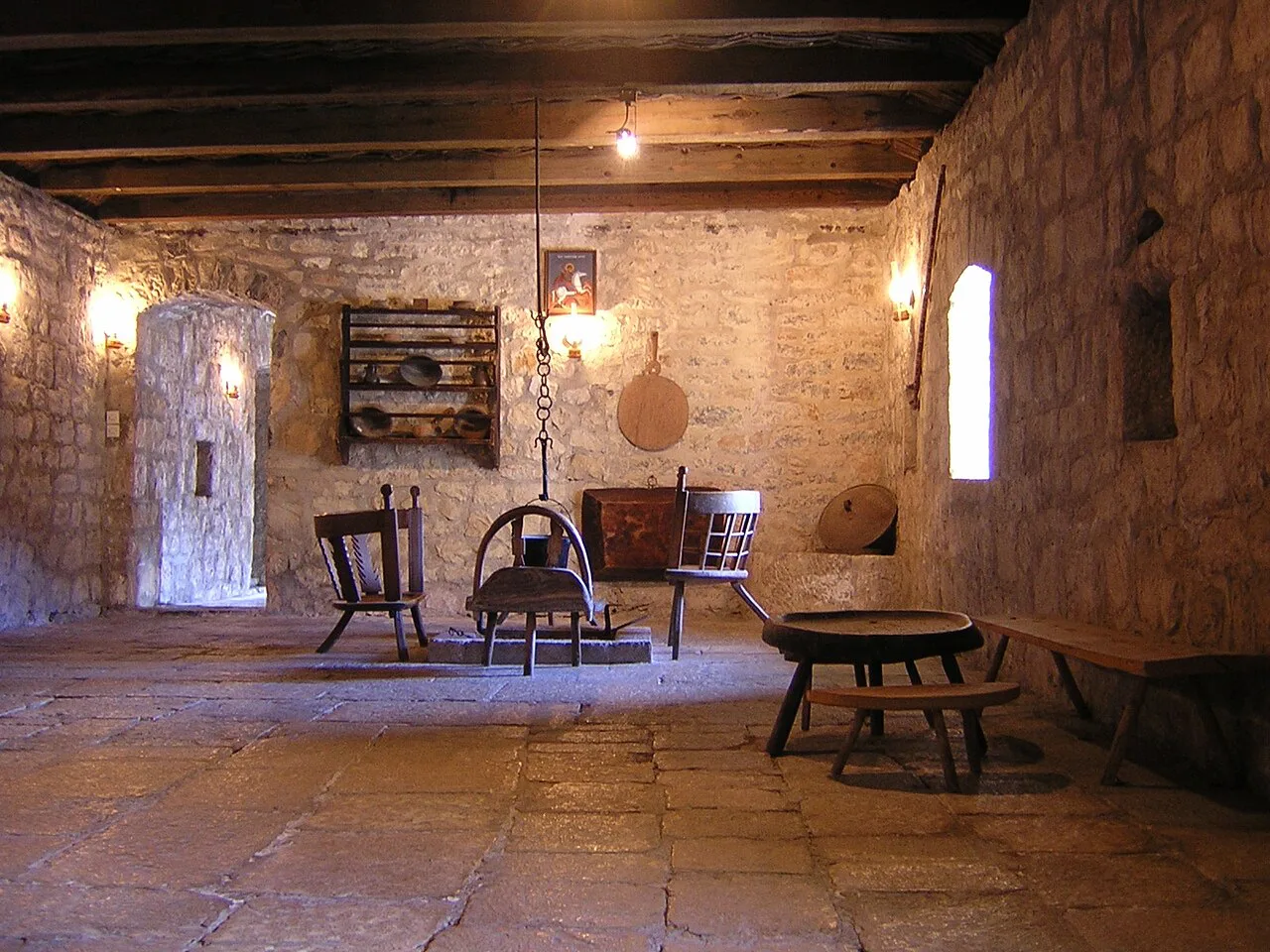
Pljevlja cheese and Lisnati: cheeses proposed for protected origin status
Pljevaljski sir, Lisnati, Prljo and Njeguški are the four cheeses named when you want something with a defined regional identity. A specification of Montenegrin cheeses lists them as meeting most requirements to be proposed for protected designation of origin, which reflects documented methods and areas rather than a marketing label already granted. Treat the protection as a proposal in progress, not a status you can assume on a menu.
In practice, these are the cheeses you may meet on a cheese plate in a restaurant or buy from a market counter, and the names alone tell a shopkeeper what you are after. If a menu lists simply 'domaći sir' (house cheese), ask which one it is, because the answer changes the texture entirely. A named cheese and a generic house cheese are rarely the same thing.
Kajmak: the creamy spread that comes with prosciutto, bread and grilled meat
Kajmak is the creamy counterpart to the hard cheeses, a spreadable dairy product you will see smeared on bread, served beside prosciutto and used as a topping on grilled dishes. It is mild and rich rather than sharp, which is why it works as a cooling layer against salty cured meat and smoky grilled food. If you only learn one word for ordering, learn this one.
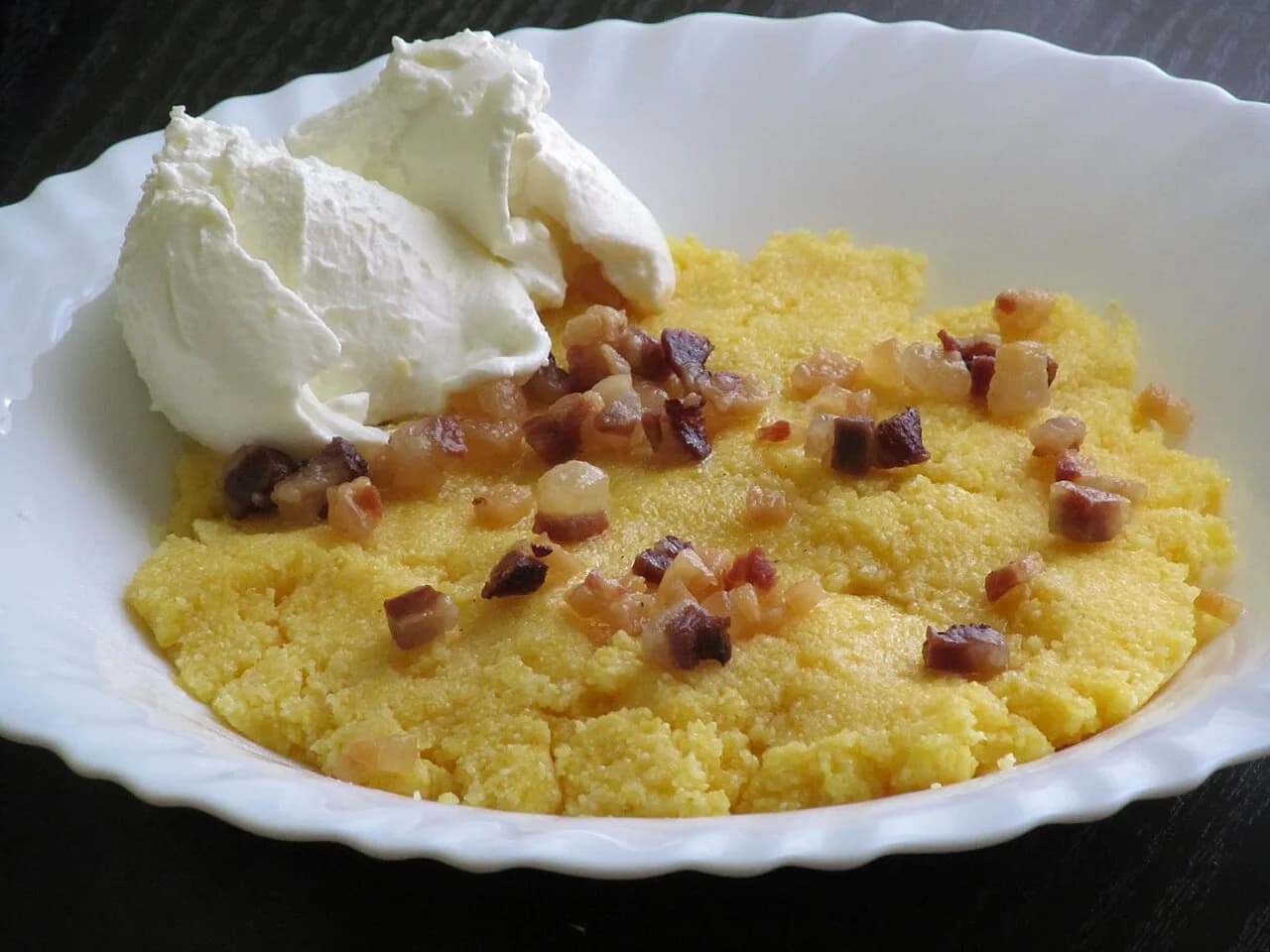
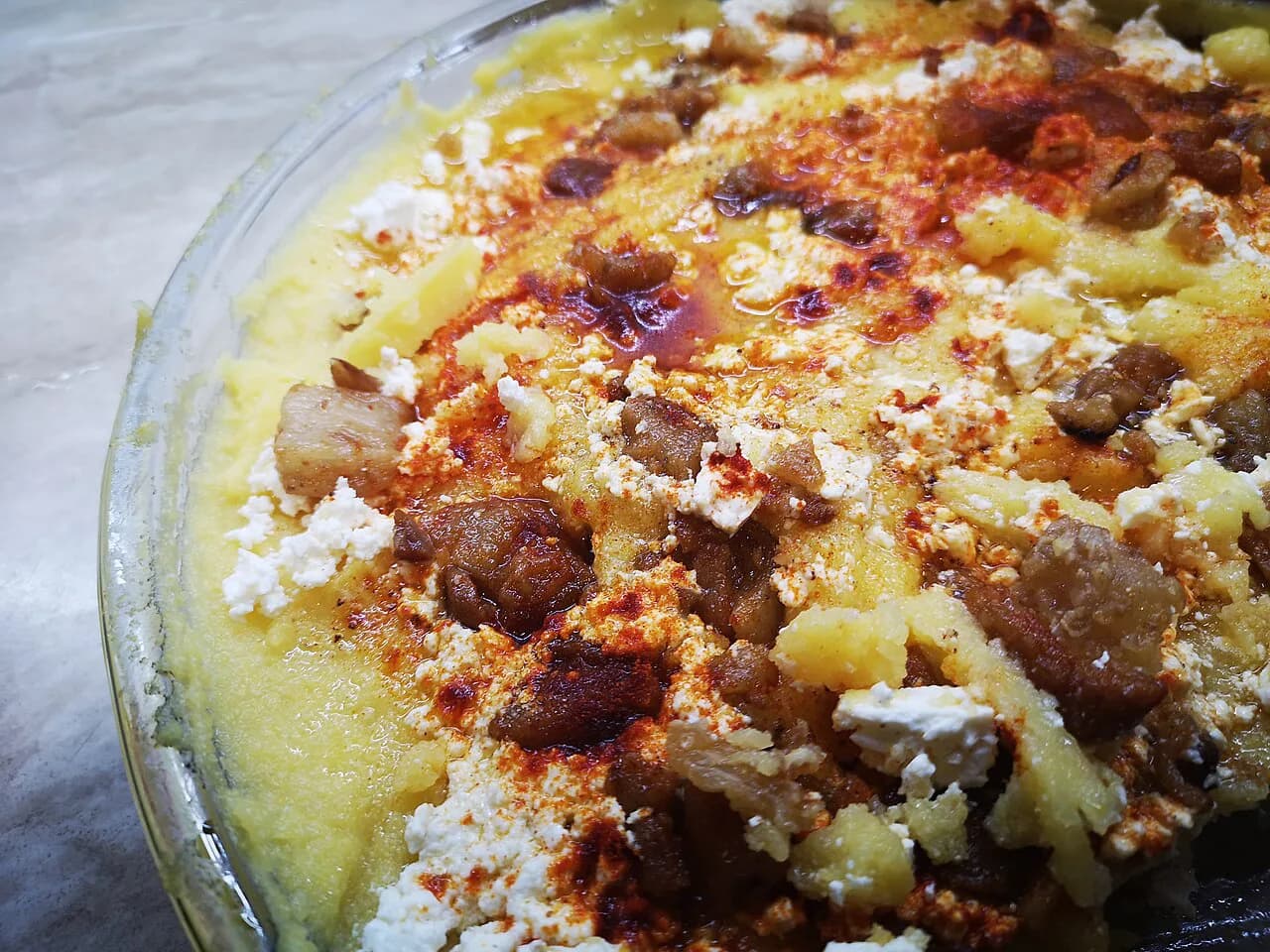
You will also meet kajmak inside cooked dishes. Kačamak, the mountain cornmeal dish, is made by cooking cornmeal with potatoes and mixing in kajmak, then topping it with sour milk or yoghurt; the creaminess is the point of the dish rather than a garnish. A small bowl of kajmak on the side is a sensible add-on to almost any grilled meat order.
Cheese in oil: what it is and how it turns up on a mezze-style plate
Cheese in oil is exactly what the name suggests: firm cheese kept under oil, usually with herbs, and served as part of a spread of small plates rather than as a course on its own. It turns up alongside olives, cured meat and bread in the kind of mezze-style opening that suits a long lunch. Order it if you want something less salty than Njeguši and more textured than kajmak.
Because it keeps well under oil, it is also the sort of thing that travels: a jar makes a reasonable edible souvenir if you have luggage space. Ask at a market or deli counter what is in the jar before buying, since the cheese and the herbs vary. Nothing about it is complicated, and that is the appeal.
How cheese is served in Montenegro: with Njeguši prosciutto, in burek, alongside kastradina
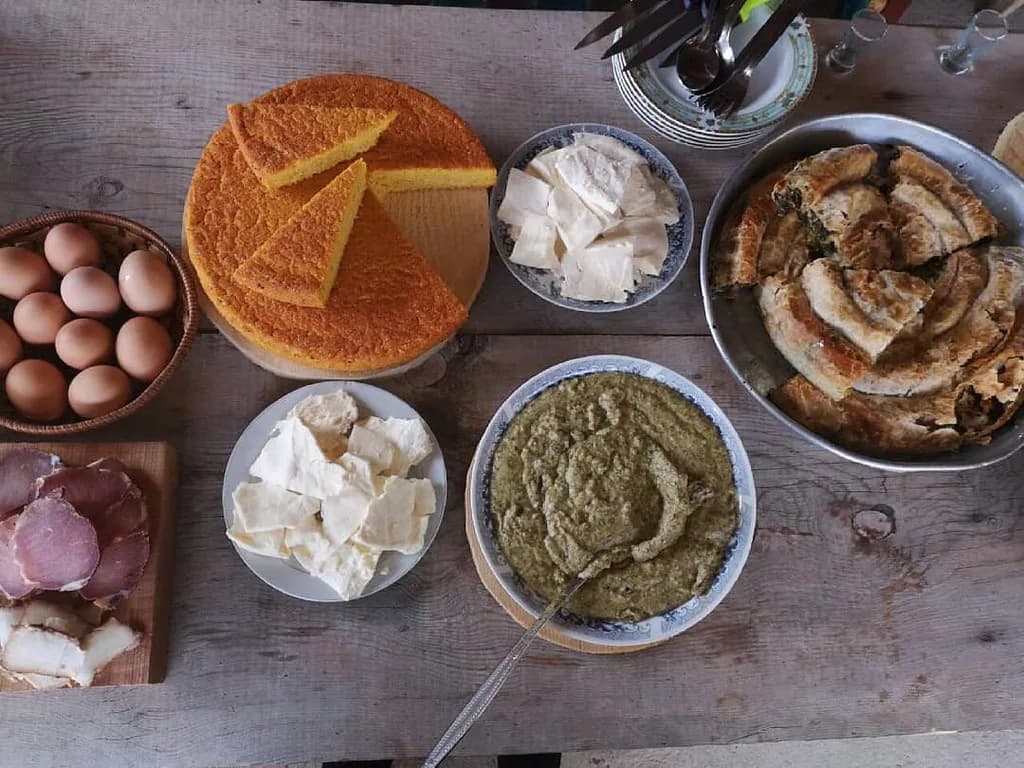
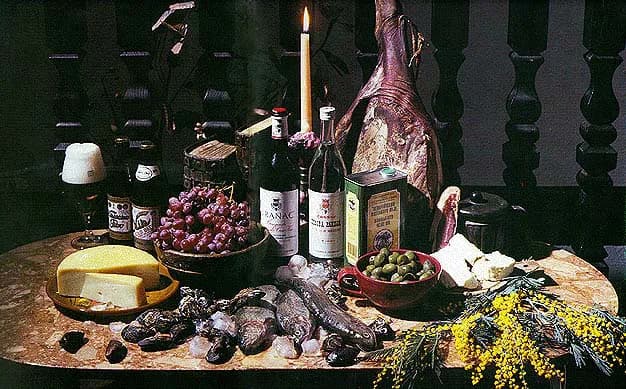
The default setting for Montenegrin cheese is the cured-meat plate. Njeguši prosciutto, sliced thin, arrives with local cheeses and bread, and the salt in both is balanced by the bread and by a glass of something local. Order this as a shared starter and you have covered the region's signature flavours in one plate.
Cheese also disappears into pastry and stew. Burek, the baked filo pastry, is traditionally stuffed with meat but cheese and vegetable fillings are common, and it makes a cheap, filling breakfast or snack. Kastradina, the smoked mutton stew from the mountainous north, is a cold-weather dish served at family gatherings, and it is the kind of hearty cooking that a cheese plate before it suits well.
How to order and buy Montenegrin cheese: what to ask for and how it is sold
On a menu, look for 'sir' (cheese) with a regional prefix: Njeguški, Pljevaljski, Lisnati, Prljo. Ask for 'domaći sir' if you want the house product, and expect it to arrive as an accompaniment rather than a standalone course. For kajmak, the word alone is enough; it will come as a spread or a side.
Buying is a conversation, not a label check. Market and deli counters sell cheese by weight, and the useful questions are which village it comes from, whether it is smoked, and how salty it is. If you want the taste you met on the prosciutto plate, ask for Njeguši by name and say how strong you like it.
Prices vary by counter, weight and type, so check the price per kilo where it is displayed rather than assuming a fixed rate. Nothing in the sources here gives a reliable figure, and asking at the counter is faster than guessing.
Cheese in Montenegrin dishes to look for: Njeguski steak, kačamak and priganice with cheese
Three cooked dishes put cheese at the centre rather than at the edge. Njeguski steak is a veal or pork schnitzel filled with Njeguši prosciutto and cheese, sometimes topped with more cheese including kajmak. Kačamak is the cornmeal and potato dish enriched with kajmak. Priganice, the fried dough balls, are usually served warm with honey, jam or cheese, which makes them a breakfast or snack rather than a dessert.
There is a related cheese-and-cornmeal dish worth knowing if you like the sound of kačamak: cicvara, which combines cheese and cornmeal in a richer, spoonable form. Order one or the other rather than both, since they occupy the same space on a menu. Either works best in the mountains, where the dish is at home.
If you finish with something sweet, the cheese course is not the Montenegrin habit; pancakes with homemade jam or a hazelnut-and-cocoa spread are the usual ending. Keep the cheese for the start and middle of the meal and you will be eating the way the menu is built.
Which Montenegrin cheese to order first
Start with Njeguši cheese and Njeguši prosciutto on the same plate, because that pairing teaches you the salty, smoked register that most Montenegrin cheese shares. Move on to kajmak with bread or on grilled meat if you want the creamy contrast, and try Pljevaljski, Lisnati or Prljo when you want to compare regional hard cheeses.
For buying, ask at a market or deli counter for the village, the smoking and the salt level, and buy by weight. Check the price per kilo at the counter, since it varies.
Explore more Montenegro guides
Frequently Asked Questions
What kind of food do they eat in Montenegro?
Montenegrin cooking leans on cured meat, dairy, bread, grilled dishes and mountain staples. Njeguši prosciutto and cheese open a meal, kajmak spreads on bread, burek makes a filling snack, and cornmeal dishes such as kačamak with kajmak appear in the mountains. Coastal cooking adds seafood, including Black risotto made with cuttlefish ink.
Is Njeguši cheese the same as Njeguši prosciutto?
No. Njeguši cheese is a hard, salty cheese from the village of Njeguši on the slopes of Lovćen, while Njeguši prosciutto is cured pork from the same area. They are served together, and the same village name also appears in Njeguski steak, a schnitzel filled with the prosciutto and cheese.
What is the difference between kajmak and cheese?
Kajmak is a creamy, spreadable dairy product rather than a hard cheese. It is served on bread, beside prosciutto and grilled meat, and mixed into dishes such as kačamak. Hard cheeses like Njeguški and Pljevaljski are sliced and eaten with cured meat.
Can I buy Montenegrin cheese to take home?
Yes. Cheese is sold by weight at market and deli counters, and cheese in oil keeps well enough to travel. Ask which village the cheese comes from, whether it is smoked and how salty it is, and check the price per kilo at the counter.
Sources
Notes for your Montenegro trip
Optional updates to our Montenegro town guides.
You might also like
Continue reading
More guides you'll find useful