Montenegro Olive Oil: Bar Groves, Žutica and Buying a Bottle
Montenegro's olive oil comes mainly from the Bar area, pressed from the Žutica variety. Here's what defines it, where the groves are and how to buy a bottle.
On this page
Montenegro's olive oil is extra virgin oil pressed mainly from the Žutica variety, and production is concentrated in and around Bar on the southern coast. Almost 90 percent of the oil made in that area comes from Žutica, and roughly 100,000 olive trees grow in Bar and its immediate surroundings. This guide covers what the oil is, how it is made, where else on the coast olives are grown and what to look for when you buy a bottle.
The most useful thing to understand before you shop is that Montenegrin oil is a quality-first, small-volume product rather than a bulk one. The people running Bar's mill say the country will never compete on volume but can compete on quality, and the production choices behind that claim are what shape the flavour in the bottle.
What Montenegrin olive oil is
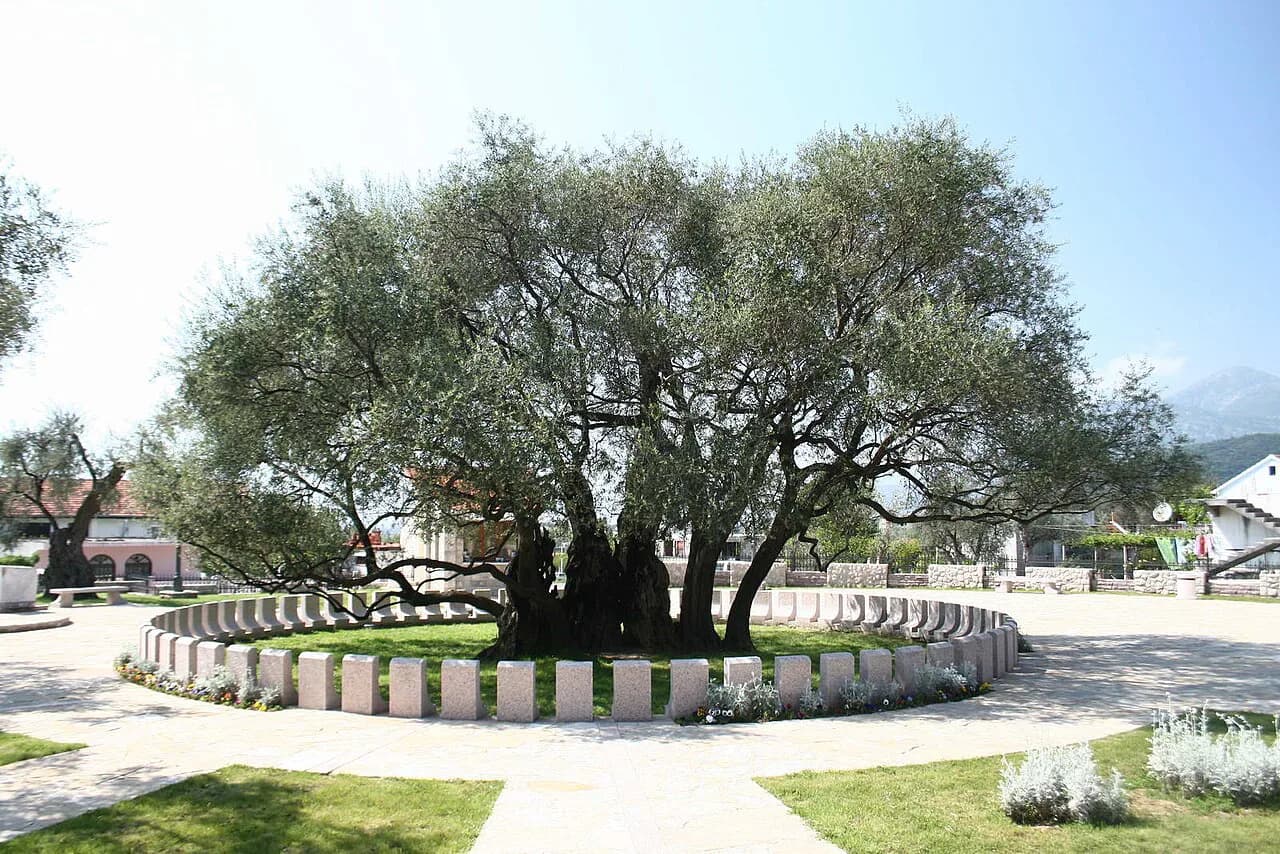
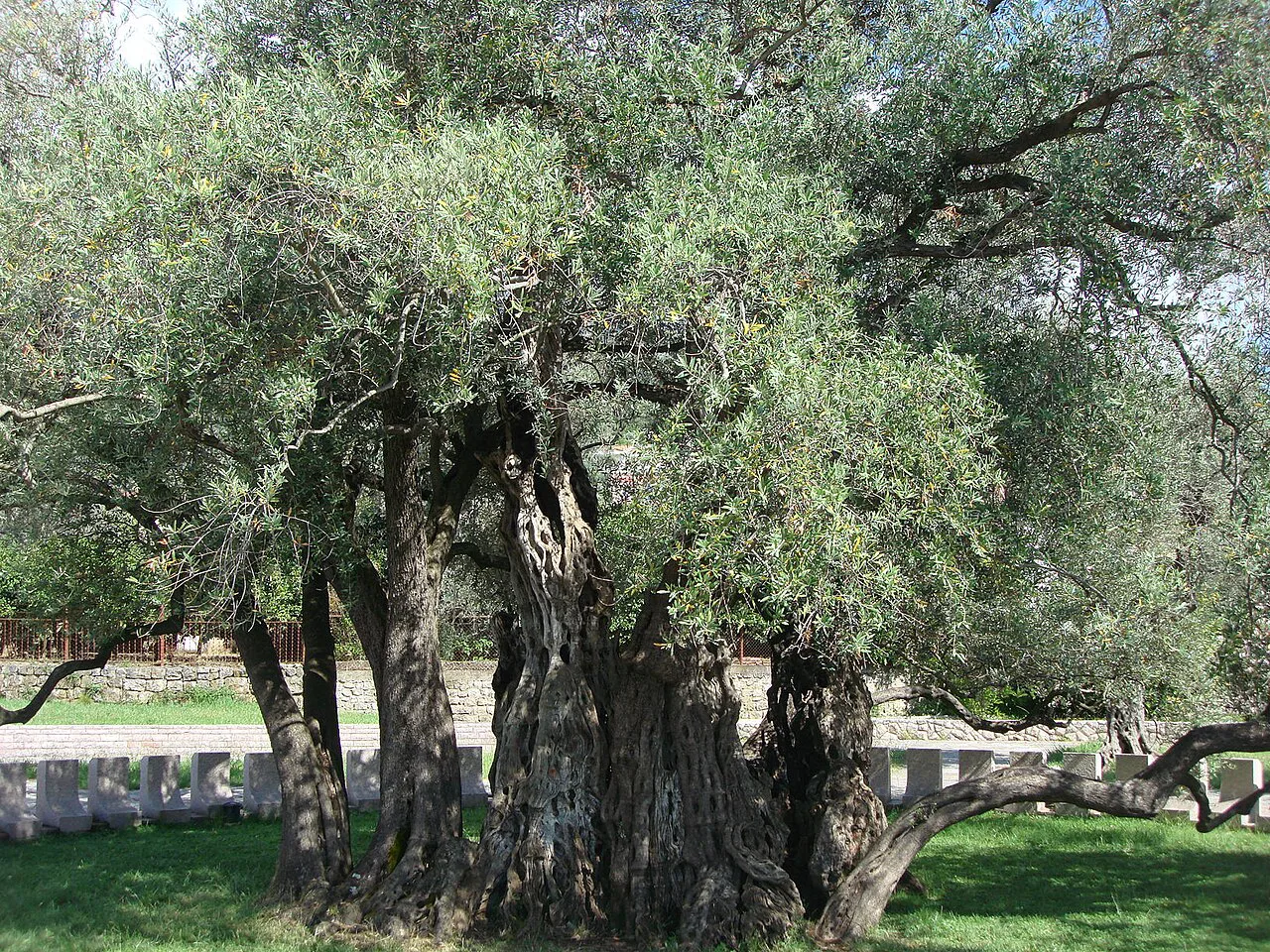
The oil is extra virgin, cold-extracted and, in its most celebrated form, monovarietal: Mirovica, made from Žutica alone. Mirovica takes its name from the spot in Bar where the oldest of the local millennial Žutica trees stands, known locally as Stara Maslina, the old olive tree.
Žutica takes its name from the golden-yellow colour the fruit turns as it ripens. It is the backbone of the Bar area's production, so it is the style a visitor is most likely to meet, whether on a restaurant table or at a deli counter.
Why Bar is the centre of production
Bar sits at the heart of Montenegro's olive oil production, with about 100,000 trees in the town and its surroundings and close to 90 percent of the area's oil coming from Žutica. A visit to the Bar area, rather than a search across the whole coast, is the efficient way to see olives growing and oil being made.
Is Montenegrin olive oil expensive? Costs vary by harvest, producer and shop, so ask at the mill or deli where you are buying. Small-volume production and the handling it requires put a Montenegrin bottle in a different band from supermarket oil, but there is no fixed figure to plan around.
Can I buy Olive Heritage olive oil now? Not according to its own site, which says its first product is still being developed and is not on shelves yet. If you want to buy from that grove, check with them before travelling to Cape Mendra.
Is Mirovica the same as the Old Olive Tree? Mirovica is the name of both the oil and the place in Bar where the old Žutica tree stands; the tree itself is known locally as Stara Maslina. The oil is a monovarietal Žutica pressed by Kuća Maslina-House of Olives.
The scale matters for planning. This is a grove landscape wrapped around a working town rather than a single estate with a visitor centre, so the mill and the trees are the anchors and everything else is scattered among them.
The Žutica olive: golden fruit and alternate bearing
Žutica has a reputation for alternate bearing, the tendency to crop heavily one year and lightly the next. The agronomists at Bar's mill argue that the problem is manageable rather than fixed: with proper agronomic practice, they say, the trees deliver a significant yield every year rather than skipping two or three seasons.
That management is data-driven. The mill runs complete soil analysis every six months to a year, covering plant material, groundwater and the soil's chemical and physical characteristics, while portable devices monitor moisture and nutrient levels. A local meteorological station supplies daily data, and targeted boron applications at pre-flowering and early fruit development are credited with improving fruit set and yield.
For a buyer, the practical lesson is that vintage variation is real in Montenegrin oil and worth asking about. Treat the harvest year on the label as information rather than decoration.
How the oil is made at Kuća Maslina-House of Olives
Bar's publicly owned miller and producer, Kuća Maslina-House of Olives, combines Tuscan milling equipment with tightly controlled handling. Olives are picked by hand and milled within minutes of arrival, and the process is configured never to exceed 22.5 ºC, well below the threshold usually associated with cold extraction.
After milling, the oil rests in steel tanks under an inert atmosphere of argon and nitrogen. The mill does not use vertical separators, and the oil is filtered twice, once straight after production and again before bottling. Each of those steps costs time and equipment, which is the trade-off behind a small-volume, quality-first product.
The institution also hosts the local olive growers' association, runs training, organises a national competition and, in its first year, offered its services free of charge as a subsidy to lift quality across the region. Its chief executive has written a 300-page technical book on olive oil production for producers and students.
The Old Olive Tree at Mirovica in Bar
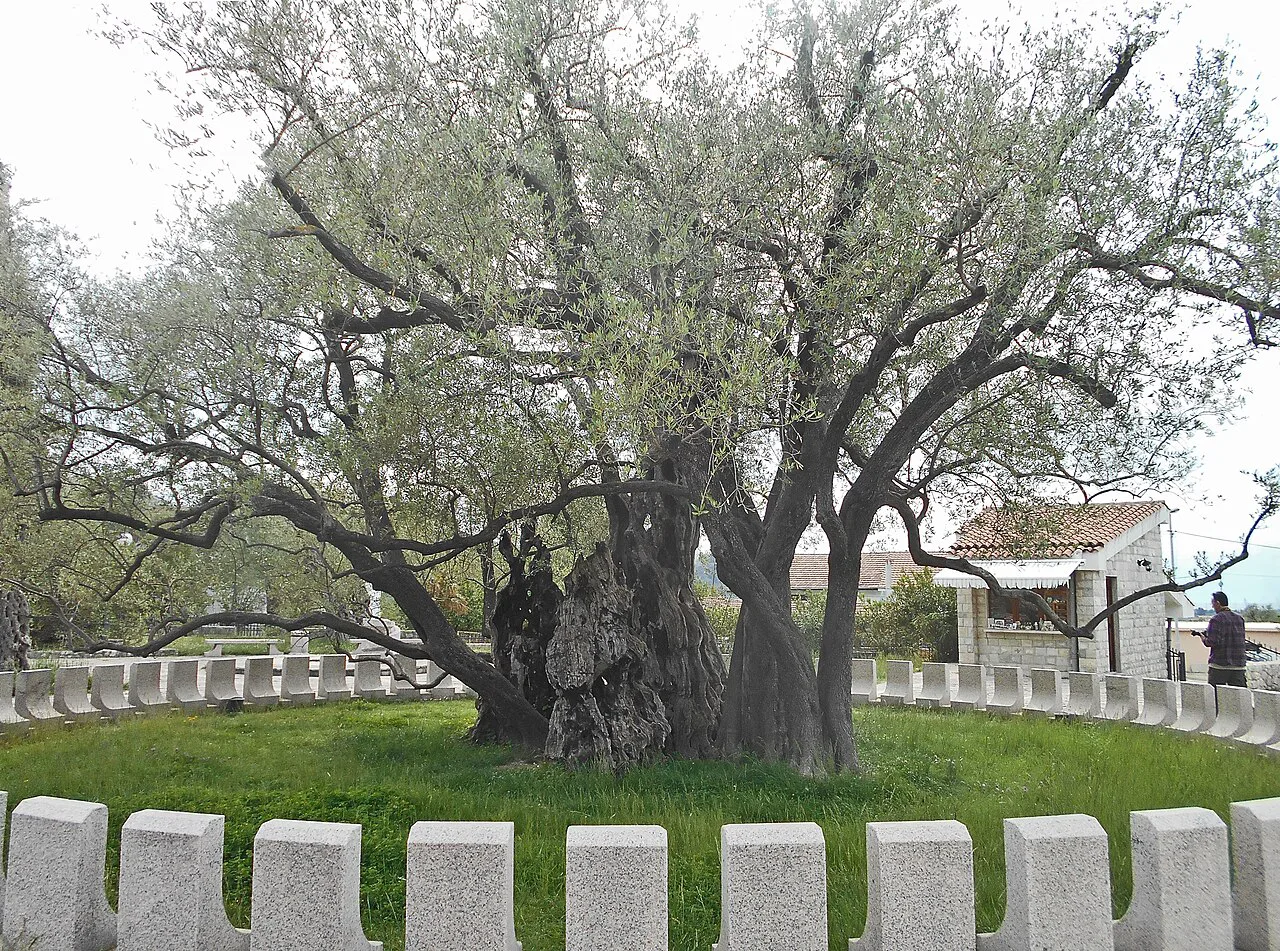
Stara Maslina, the old olive tree at Mirovica, is regarded locally as a natural monument, and local tradition attributes 2,250 years to it. The tree gives its name to the Mirovica oil and is the local landmark that ties the Bar groves to the town's identity.
Local tradition also holds that families and tribes in conflict once gathered beneath its canopy to settle disputes. The name Mirovica comes from the Slavic root mir, meaning peace, and the site is described as a place where quarrels were resolved and coexistence restored, which is why the spot matters to the town.
Awards: Mirovica's Gold and Montenegro's competition winners
Mirovica won a Gold Award at the 2026 NYIOOC World Olive Oil Competition, the mill's first gold at that competition and a result its team did not expect. The producer entered only that competition, which makes the award a single, focused data point rather than a sweep of trophies.
Montenegro's award record extends beyond Bar. A competition index lists nine NYIOOC winners from Montenegro, including a Koroneiki oil listed under Odiva, which shows that other varieties and producers are judged alongside Žutica.
Use awards as a shortlist, not a verdict. A gold medal tells you a producer cleared a quality Bar in a given year; it does not tell you whether you will prefer a peppery Žutica to a milder Koroneiki, so taste before committing to a case.
Olive growing elsewhere on the coast: Ulcinj, Valdanos Bay and Cape Mendra
Outside Bar, olive growing continues south around Ulcinj. Olive Heritage describes a family-led grove of 25 hectares at Cape Mendra near Valdanos Bay, with low-impact agriculture and hand-harvesting at peak ripeness followed by traditional cold-pressing, and presents itself as rooted in Ulcinj's olive-growing past and future.
The same site says its first product is being developed from the first press and is not on shelves yet, so do not assume it is selling retail oil. If you want to buy from that grove, ask them before travelling to Cape Mendra.
The difference between the two routes to a bottle matters. Bar's mill is a public institution with education and regional quality as part of its remit; a private grove like Cape Mendra is a single estate reflecting one patch of coastal soil and one family's method.
How to taste and use Montenegrin olive oil
As a rule of thumb for tasting, try the oil on its own first, in a small glass at room temperature, and notice where the pepper hits: the back of the throat is where a robust oil announces itself. Then try it on bread, the way it is most often served. In the kitchen, a peppery oil works best raw or added at the end of cooking, where its aroma survives.
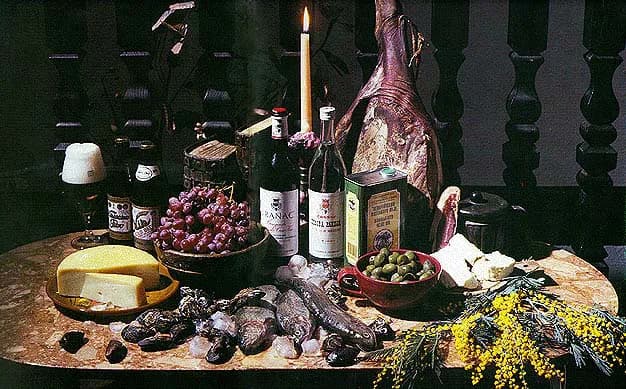
Pair it with the cheese and cured meats of the region; a Montenegrin cheese board is a natural match for a green, pungent oil. Around a table of Njeguški pršut and Njeguški sir, keep the bottle on the table as a dip-and-drizzle companion rather than a cooking fat, and let people add it themselves so the peppery edge stays under control.
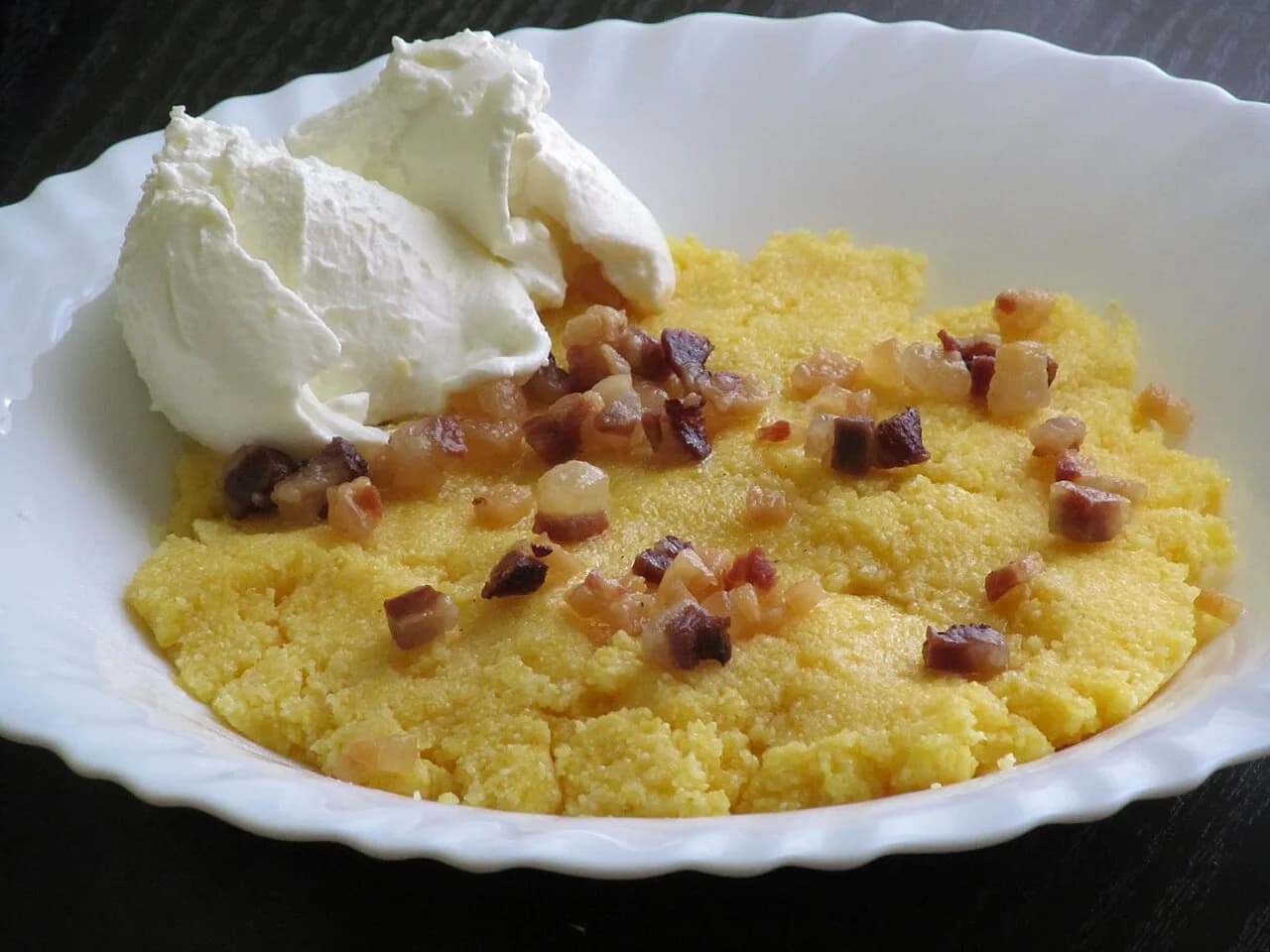
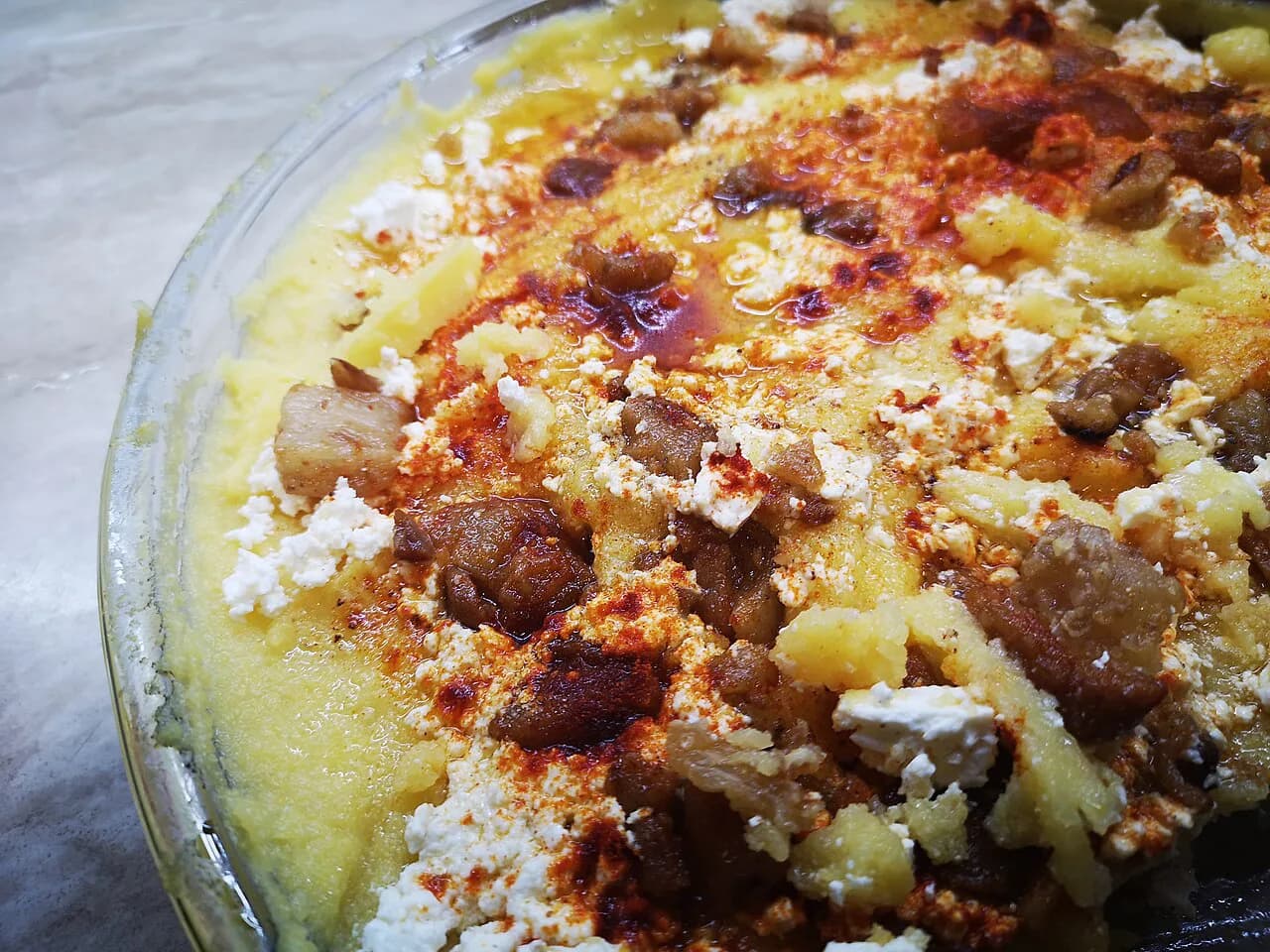
The oil also finishes mountain dishes rather than cooking in them. If you order kačamak, a cornmeal dish enriched with cheese, a slow drizzle of raw oil at the table sharpens the flavour without overwhelming it.
Buying a bottle: what to look for
Start with the variety and the producer rather than the brand name. Žutica from the Bar area tells you what you are getting in style, while a named mill or estate tells you who controlled the picking, the milling temperature and the storage.
Look for extra virgin on the label, a harvest year and a producer address; those three tell you more than a medal sticker on its own. Cold extraction and inert-gas storage are worth asking about at the counter, because they help decide how fresh the oil tastes months after bottling.
Prices move with the harvest, the producer and the shop, so ask at the mill or the deli counter rather than budgeting from a figure online. Buy in smaller bottles if you are travelling, since oil ages faster once opened.
Practical notes on visiting the Bar olive area
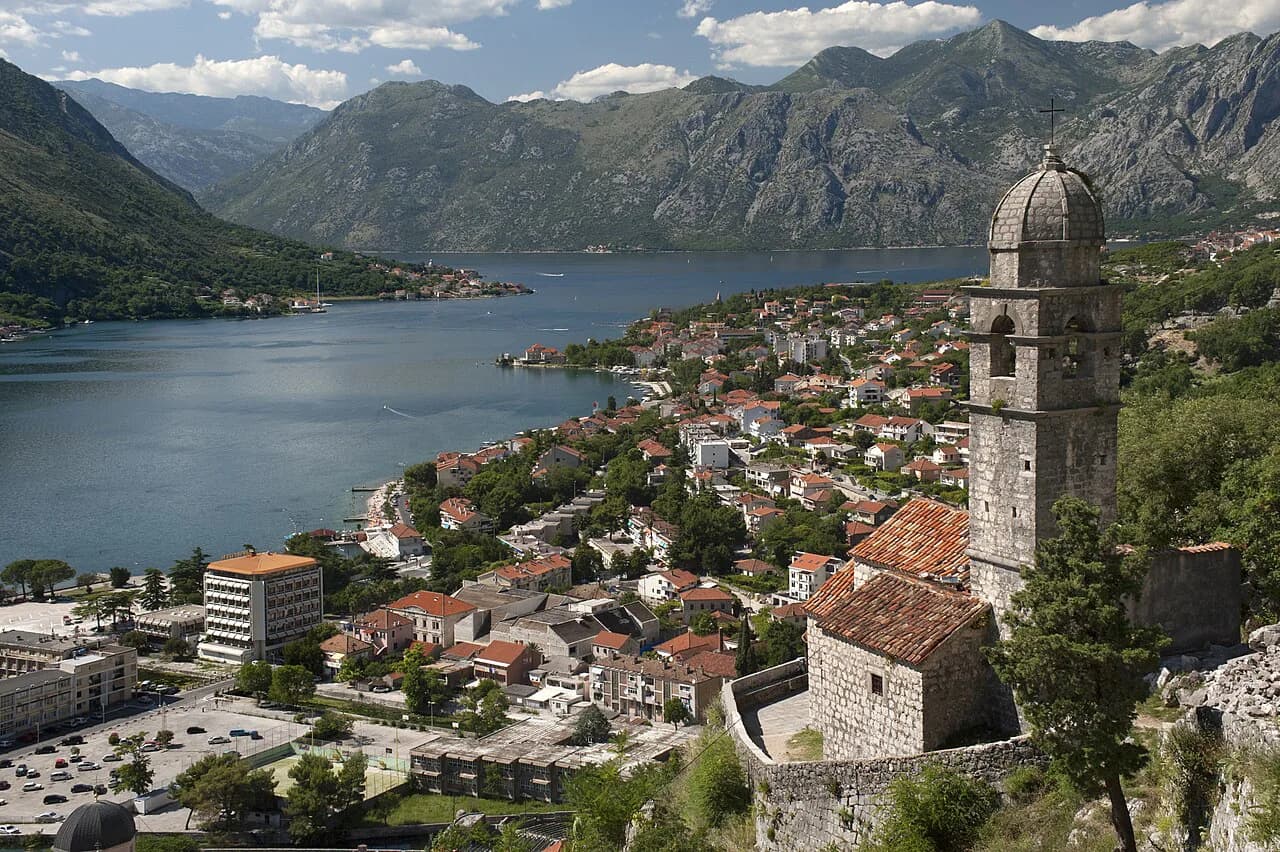
Bar is on the coast between Budva and Ulcinj, with Stari Bar, its old town, on the hill above the modern town. Pair a look at the Mirovica tree with a walk through Stari Bar, and treat any mill visit as something to arrange in advance rather than pinning the day to a fixed slot.
Tours, tasting fees and opening hours for Kuća Maslina and the individual groves are not set out in the mill's coverage, so ask directly before you build a day around a visit. Autumn is when the harvest runs and the mill is busiest with growers, so expect a working site rather than a quiet shop.
Bring cash for small producers and a bag that will protect glass bottles in a hot car. The region's cured meats, cheeses and desserts are as much a reason to linger as the oil.
Which bottle to bring home
Choose by variety and producer: a Žutica from the Bar area if you want the classic Montenegrin character, a bottle from a named estate if you want to compare a single grove's style. Taste before you buy where you can, and treat the harvest year as part of the description.
Build the rest of the meal around the same bottle, with cured meat, mountain cheese and bread on the table.
Explore more Montenegro guides
Frequently Asked Questions
Is Montenegrin olive oil expensive?
Costs vary by harvest, producer and shop, so ask at the mill or deli where you are buying. Small-volume production and the handling it requires put a Montenegrin bottle in a different band from supermarket oil, but there is no fixed figure to plan around.
Can I buy Olive Heritage olive oil now?
Not according to its own site, which says its first product is still being developed and is not on shelves yet. If you want to buy from that grove, check with them before travelling to Cape Mendra.
Is Mirovica the same as the Old Olive Tree?
Mirovica is the name of both the oil and the place in Bar where the old Žutica tree stands; the tree itself is known locally as Stara Maslina. The oil is a monovarietal Žutica pressed by Kuća Maslina-House of Olives.
Sources
Notes for your Montenegro trip
Optional updates to our Montenegro town guides.
You might also like
Continue reading
More guides you'll find useful