Montenegro Desserts: 10 Sweet Things to Try, and How to Order Them
A practical guide to Montenegrin desserts, from krempita and bajadera to palačinke and baklava, with what each one is and how to order it.
On this page
Montenegro's desserts fall into two families: cold, cream-based slices such as krempita and trilece, and syrup-soaked pastries such as baklava, ravanija and tulumbe. This guide explains what each one is, how it is served and how to order it, so you can walk up to a bakery counter or café table knowing what you are asking for.
Bakeries sell pastries by the piece and cafés serve dessert alongside coffee, so the practical skill is recognising the shapes and names on display. The sections below group the desserts by type and finish with ordering advice and where each kind is easiest to find.
What Montenegrin desserts are
The dessert table here mixes Mediterranean pastry work with the nut-and-syrup tradition that runs through the Balkans and the former Ottoman lands. Krempita, a puff-pastry slice under thick custard, appears in several European countries, and Montenegro has its own coastal version sold as kotorska krempita.
A few sweets that visitors assume are Montenegrin come from neighbouring countries. Bajadera, a nougat praline of almonds, hazelnuts and chocolate, is Croatian in origin but is sold in Montenegro. Treat these as part of the everyday offer rather than as folk dishes of the mountains, and see the Montenegrin food guide for the cured meats and cheeses that anchor a meal.
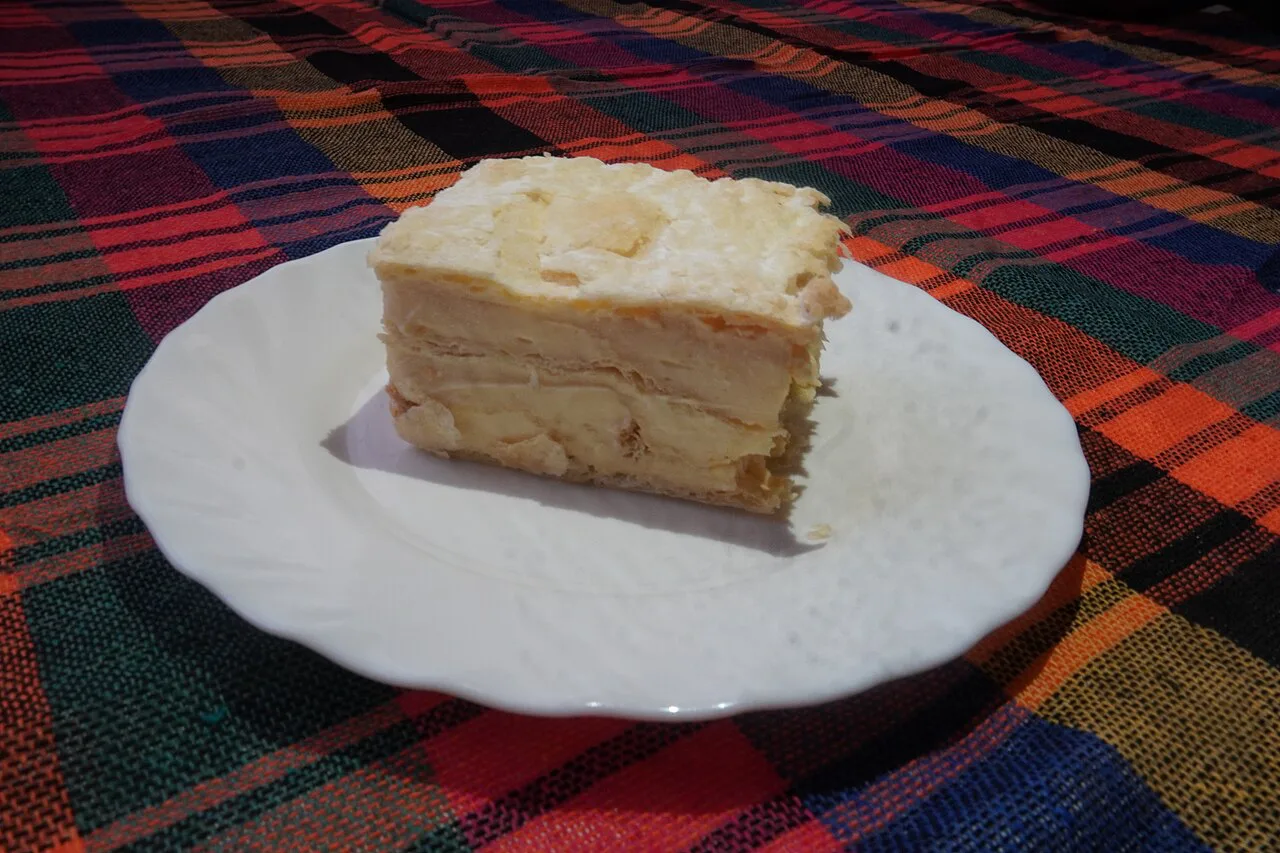
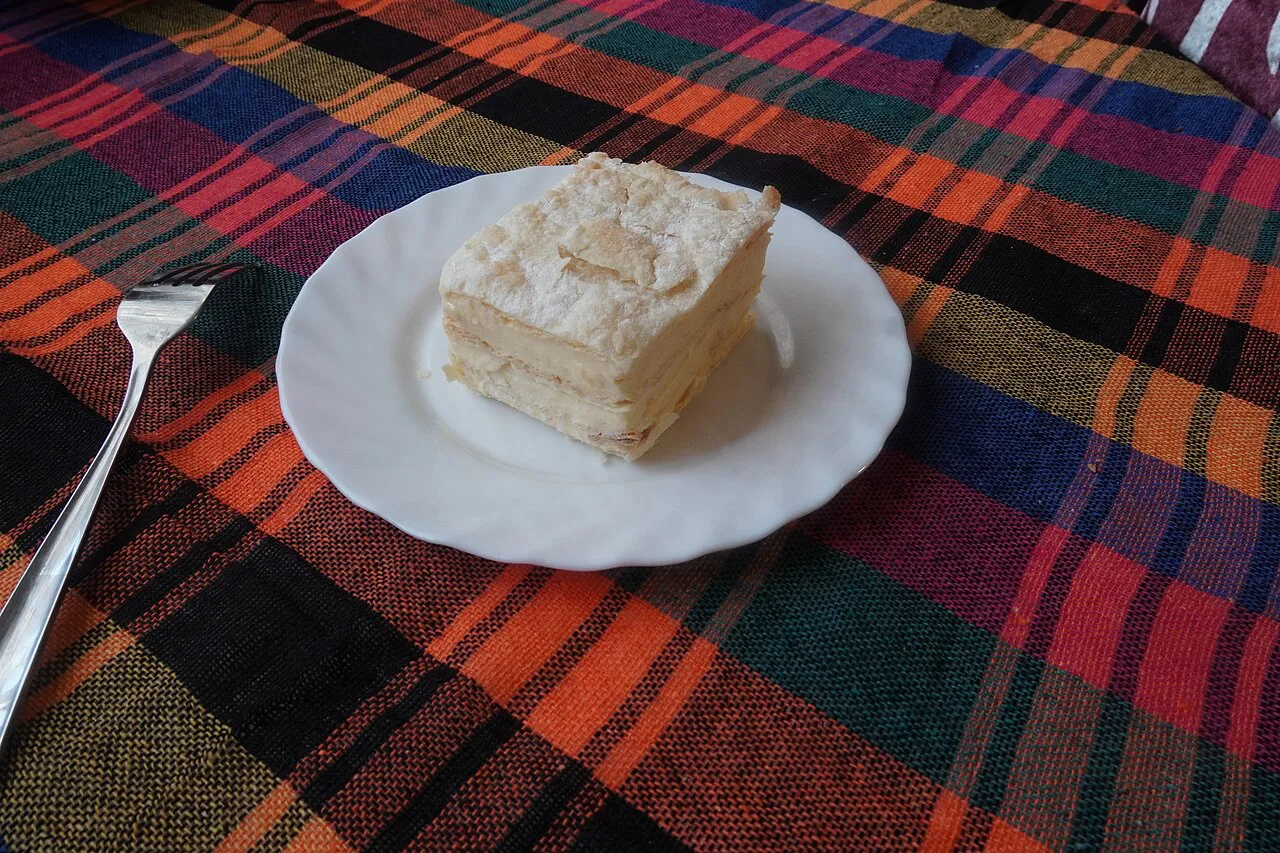
Krempita, or kotorska krempita: custard slices of the Bay of Kotor
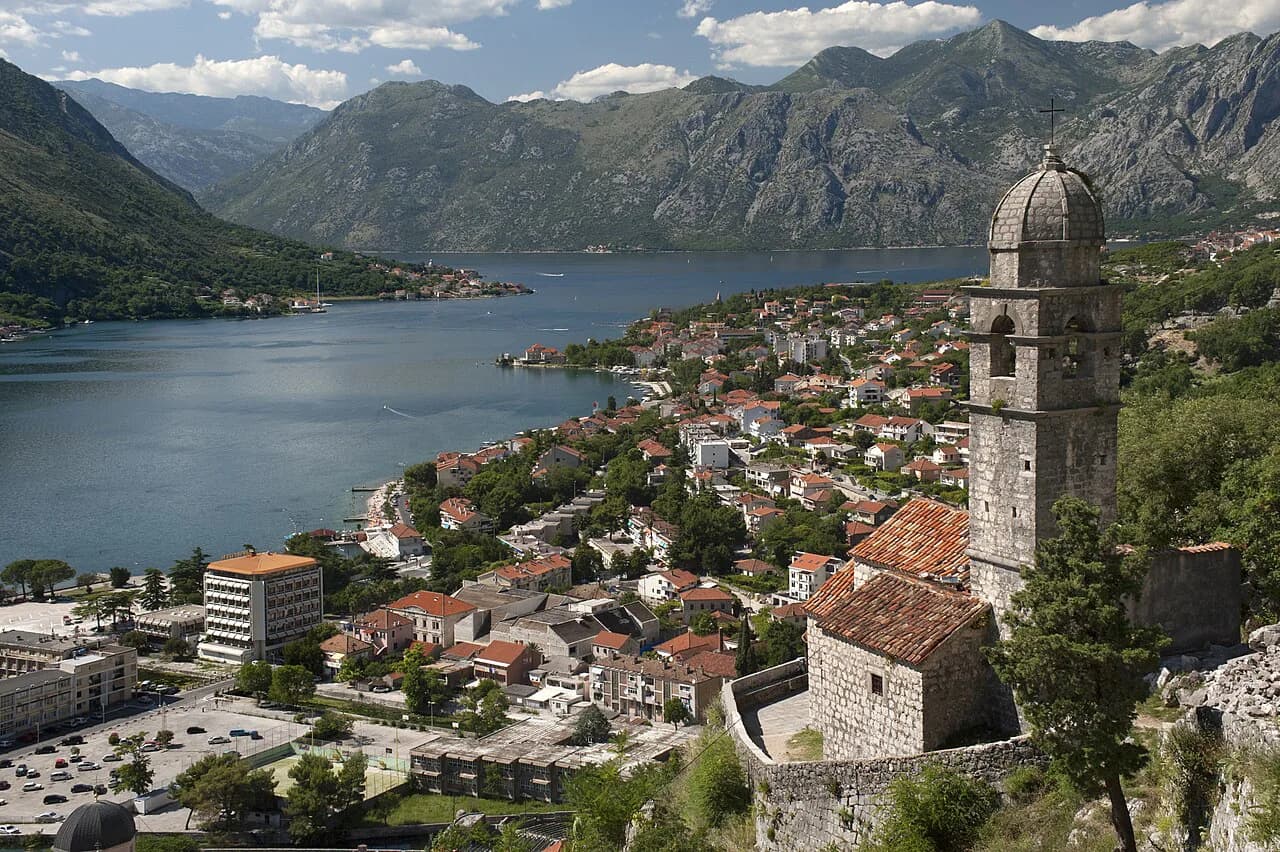
Krempita is a slab of puff pastry with a thick layer of set custard between the layers and often a dusting of icing sugar on top. It is the dessert most closely tied to the Bay of Kotor, where it is sold under the name kotorska krempita. Look for it in the chilled cabinet rather than on the room-temperature tray, since the custard needs to stay cold.
What is the national dish of Montenegro? The savoury dishes most associated with the country are the mountain plates of cured meat, cheese and cornmeal, such as Njeguški pršut, Njeguški sir and kačamak, rather than any single dessert. Desserts are sold separately in bakeries and cafés, and the cream slices and syrup pastries described here are the everyday sweet offer.
Are there international fast-food chains in Montenegro? Montenegro has no McDonald's, KFC or other international fast-food chains of that kind. Instead, the everyday fast food is grilled meat, with pljeskavica and ćevapi sold widely, which is worth knowing if you are travelling with children who expect familiar names.
What snacks should I look for in Montenegro? Bakeries are the simplest source of snacks: krofne, baklava, gurabije and slices of krempita are sold by the piece or by weight. For something savoury, burek and grilled meat travel better than a custard slice, which needs to stay cold.
The slice is rich and best shared or taken with an unsweetened coffee. It travels badly in summer heat, so it is a sit-down dessert in a café rather than something to carry around the old town.
Palačinke: large crepes filled with jam or chocolate
Palačinke are large, thin pancakes rolled or folded around a filling of jam, chocolate spread or both, and they are the easiest Montenegrin dessert to order if you are unsure. They appear in cafés and restaurants and can also be bought to take away. Expect a generous portion: one order is usually enough for two people after a main course.
Because the filling is a spread rather than a custard, palačinke are forgiving in warm weather and turn up on menus from the coast to the mountain towns. Ask whether the chocolate version comes with a second filling, since some kitchens add jam or ground nuts as well.
Krofne: airy doughnuts filled with jam, chocolate or custard
Krofne are round, airy doughnuts filled with jam, chocolate spread, cream or custard, close in style to the German Berliner. They sit on bakery trays rather than in a chilled case, which makes them the simplest thing to buy and eat while walking. A custard or cream filling does spoil faster in heat, so choose a jam or chocolate one if you are carrying it through the day.
Bakeries sell them singly, so you can try one before committing to a bag. They work as a breakfast pastry as well as an afternoon snack, and they keep better than a custard slice if you are travelling onward.
Baklava: layers of pastry with walnuts and raisins
Baklava is built from thin layers of pastry packed with finely chopped walnuts, sometimes with raisins, and soaked in syrup. In Montenegro it belongs to the wider Balkan and Ottoman pastry tradition rather than to a single town. A good piece is sticky rather than wet, with the layers still distinct under the syrup.
Buy it by the piece from a bakery or order it from a café dessert menu, and expect it to be very sweet. It pairs better with strong coffee or a glass of water than with another dessert.
Bajadera: nougat praline with almonds, hazelnuts and chocolate
Bajadera is a dense nougat praline made with almonds, hazelnuts and chocolate, cut into small bars or cubes. It originated in Croatia but is widely sold in Montenegro, so you will see it boxed in shops and served on café plates. The texture is firm and grainy rather than soft, and a small piece goes a long way.
Because it keeps well, bajadera is the sweet to buy as a gift or to carry home, and boxes turn up in ordinary supermarkets and confectioners rather than only in tourist shops. Check the label if you want the version with a high proportion of nuts.
Trilece sponge cake
Trilece is a sponge cake soaked in a mixture of milks and finished with a caramel-coloured top, served cold in a square or wedge. It is soft, wet and sweet, closer to a trifle in texture than to a dry cake, and it is one of the most popular desserts in the country. You will find it in cafés and cake shops rather than on a bakery bread counter.
Order it with coffee in the afternoon, when a cold slice is more appealing than a heavy pastry. Because it is soaked, it needs to be eaten soon after it comes out of the fridge; if you only try one cream-based dessert, this and krempita are the two to compare.
Ravanija, gurabije, tulumbe and bombice: the syrup and nut pastries to look for
Beyond baklava, several further Montenegrin sweets are worth recognising by name. Ravanija, gurabije, tulumbe and bombice appear on the country's dessert lists alongside baklava, krempita and šampita. They are traditionally sold by weight or by the piece in pastry shops, so a mixed box is a good way to try several at once.
Ask for a small selection rather than a kilo, since these sweets are dense and several of them are syrup-soaked. A mixed box also keeps well enough to survive a day in a bag.
Ledena kocka and šampita: cold slices and meringue
Ledena kocka and šampita appear on Montenegrin dessert lists with the country's other sweets; šampita is usually given in English as Serbian meringue slices. Both are café desserts that rely on refrigeration, so they suit a hot afternoon stop rather than a picnic.
Order them from the chilled cabinet and eat them on the spot; a soft, cold slice will not survive a walk through town in summer. Look out for them in the same display as trilece.
How to order dessert in Montenegro
There are three ways to buy a Montenegrin dessert, and the setting determines what you get. In a bakery you point at the tray and pay by the piece or by weight, which is quickest; in a café you order from a menu and sit down with a coffee; in a restaurant dessert comes as a final course from a short list. Plenty of non-traditional sweets are sold alongside the local ones, including a chocolate mousse bought from a bakery counter in Kotor.
Useful phrases are simple: kolač for cake, slatko for something sweet, and račun for the bill. If you want a dessert to take away, say poneti, and if you are sharing, ask for two forks. Prices vary by town and venue, so read the menu or the counter label before ordering rather than assuming a figure.
Where in Montenegro to try them: coastal towns versus the mountains
The coast is where the cream and pastry work is strongest. Kotor, Budva and Perast are known for seafood, and the same cafés that serve fish put krempita, trilece and palačinke on the menu, so a coastal lunch can end with a cold slice. Driving from Perast towards Kotor you also pass oyster farms, which tells you how firmly the coast's identity is tied to the sea.
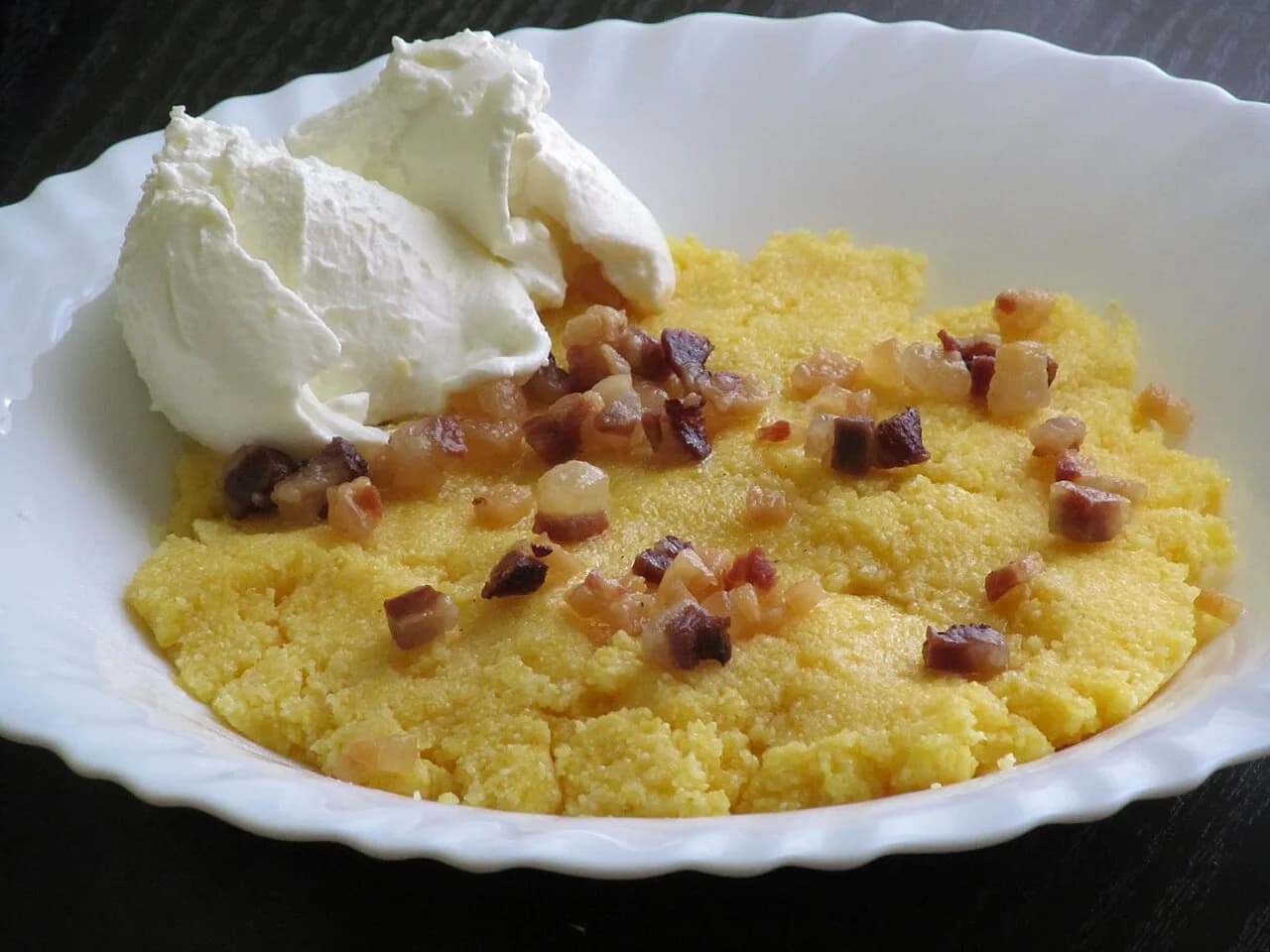
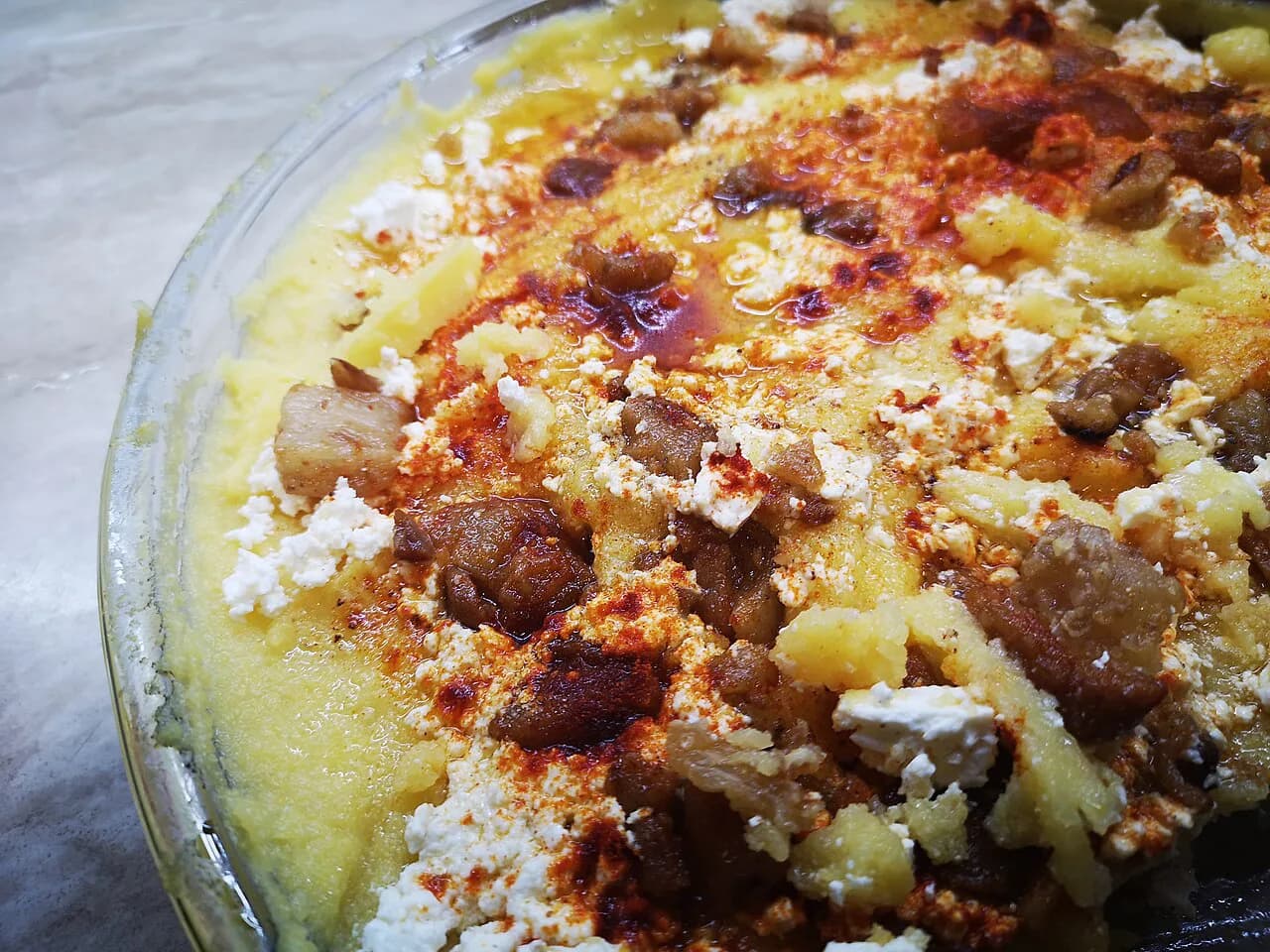
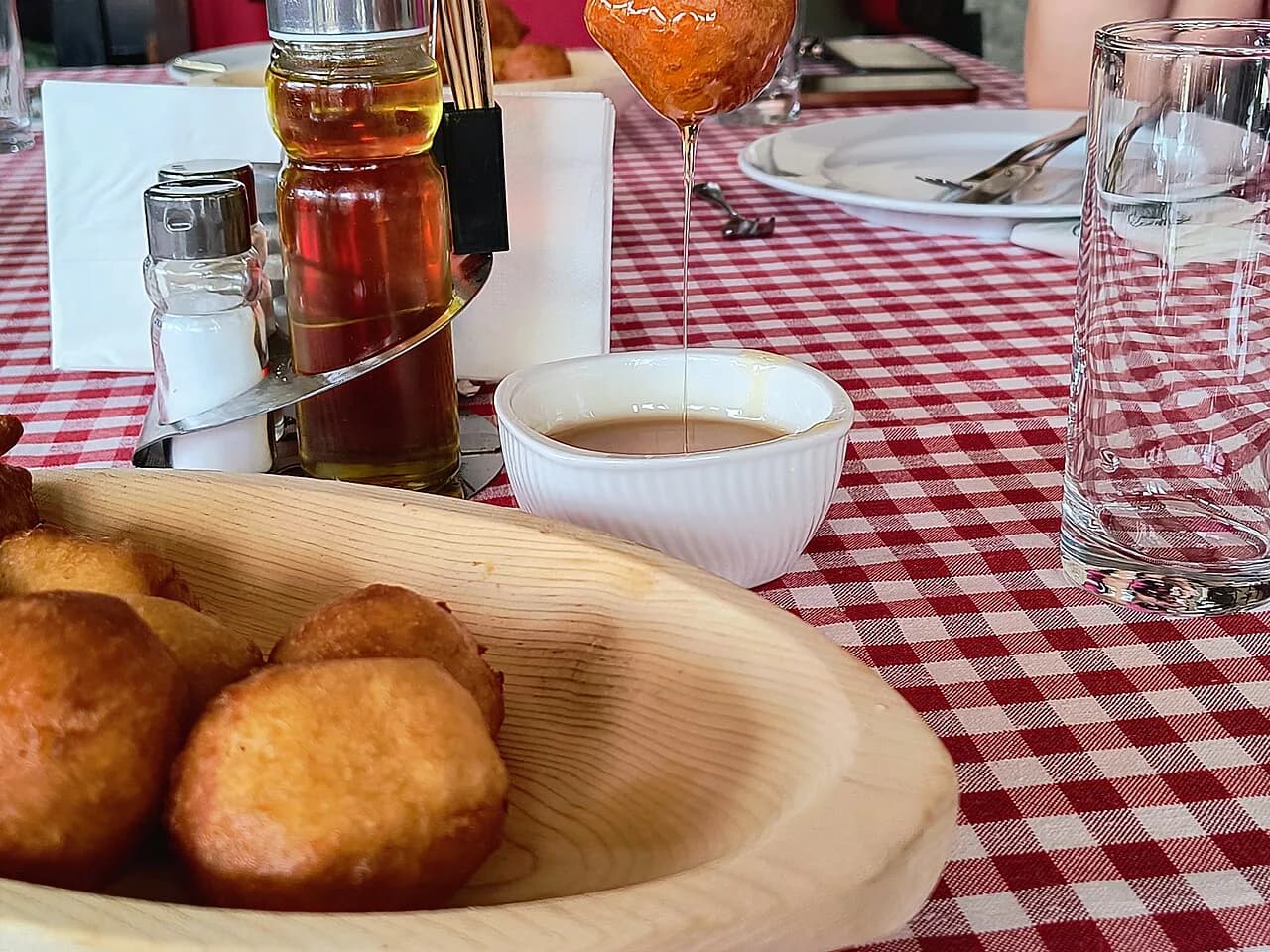
Inland, the menu shifts towards meat, cheese and cornmeal dishes, and dessert is a simpler affair. After the mountain cornmeal dish kačamak or a plate of priganice, a heavy pastry is often too much, so save the syrup sweets for a mid-morning coffee stop. The cured meats and cheeses of the mountain villages are the better thing to spend appetite on.
Ulcinj is the most reliable place to look for halal food, since it is a Muslim-majority town and the restaurants there share a halal meat supplier. Halal options are also easier to find in Budva, where Turkish kebab shops and Bosnian grillhouses operate, and further south in Bar. In Kotor and Perast halal meat is less common, so check before assuming a dessert or a dish is suitable.
Which Montenegrin dessert should you try first?
Start with kotorska krempita on the Bay of Kotor and trilece if you want something cold and soft with coffee. Add a piece of baklava or a mixed box of ravanija and gurabije to compare the syrup tradition, and take palačinke or krofne when you want something made to order or easy to carry.
Buy pastries from a bakery counter by the piece, sit down for the chilled slices, and read the menu or counter label before you order, since prices differ between towns and venues. In the south, Ulcinj is the most reliable place to ask about halal food.
Explore more Montenegro guides
Frequently Asked Questions
What is the national dish of Montenegro?
The savoury dishes most associated with the country are the mountain plates of cured meat, cheese and cornmeal, such as Njeguški pršut, Njeguški sir and kačamak, rather than any single dessert. Desserts are sold separately in bakeries and cafés, and the cream slices and syrup pastries described here are the everyday sweet offer.
Are there international fast-food chains in Montenegro?
Montenegro has no McDonald's, KFC or other international fast-food chains of that kind. Instead, the everyday fast food is grilled meat, with pljeskavica and ćevapi sold widely, which is worth knowing if you are travelling with children who expect familiar names.
What snacks should I look for in Montenegro?
Bakeries are the simplest source of snacks: krofne, baklava, gurabije and slices of krempita are sold by the piece or by weight. For something savoury, burek and grilled meat travel better than a custard slice, which needs to stay cold.
Sources
Notes for your Montenegro trip
Optional updates to our Montenegro town guides.
You might also like
Continue reading
More guides you'll find useful