Njeguški Pršut: What It Is, How It's Made and How to Buy It
Njeguški pršut is the cold-smoked, dry-cured ham of Njeguši on Lovćen. Here's how it's made, how it tastes, what it's served with and where to buy it.
On this page
Njeguški pršut is the dry-cured, cold-smoked ham made in Njeguši, a village on the slopes of Lovćen above the Bay of Kotor. It is served thinly sliced at room temperature as the opening plate of a Montenegrin meal, usually beside smoked sheep's cheese, bread and olives. This guide covers how the ham is made, how the pork and lamb versions differ, how to order and eat it, and how to buy it without ending up with a distributor's pack.
Expect a ham that is smoked through the whole cut rather than only at the surface, because the curing happens in cold mountain air. That is the clearest difference from Italian prosciutto, which is not smoked at all, and from Istrian pršut in Croatia, which takes smoke mainly on the outside.
What njeguški pršut is and where it comes from
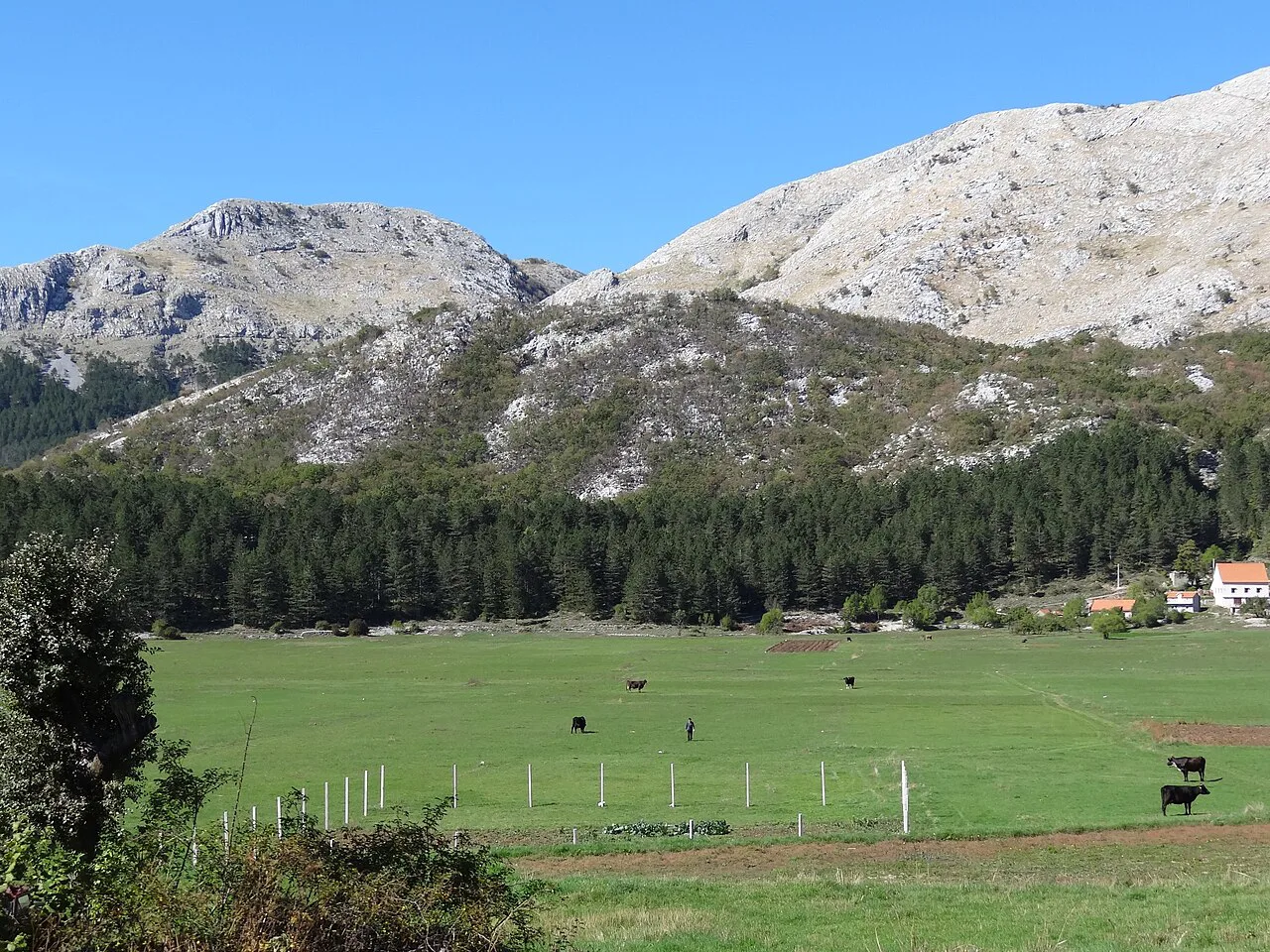
Njeguši sits at around 1,000 metres on the karst plateau between Kotor and Cetinje, and the ham takes the village's name. The village is also the birthplace of Petar II Petrović Njegoš, the poet-bishop whose mausoleum stands on Lovćen above it. The ham is standard on traditional Montenegrin tables, from family celebrations to the opening plate of a serious konoba.
Cured meat is only one part of the mountain table. If you are building a meal around it, the wider picture of Montenegrin Food helps you order: what arrives first, what comes with the main course, and what is worth saving room for.
Why the mountain makes the difference: altitude, Bura wind and beech smoke
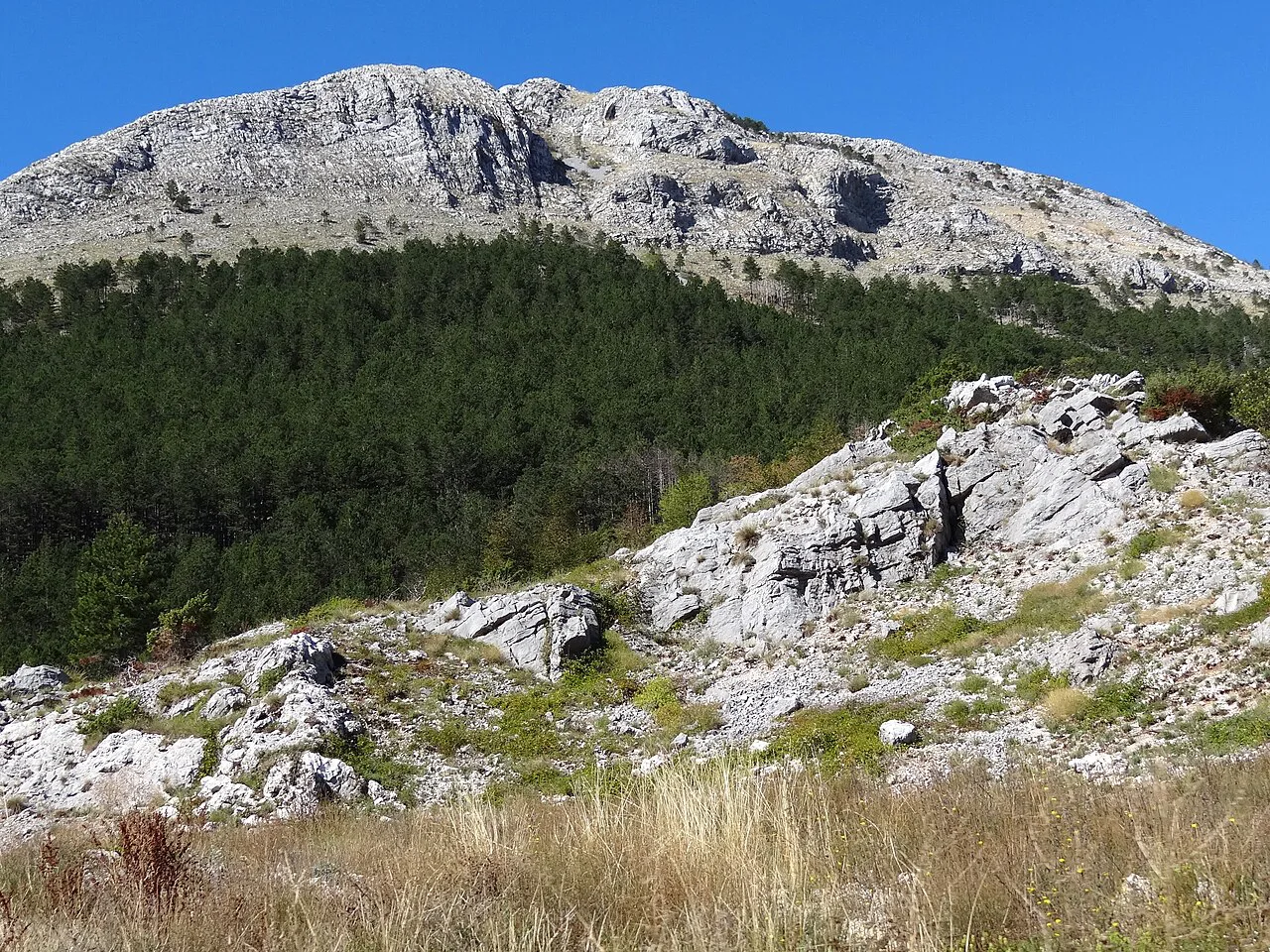
The character of the ham comes from geography as much as technique. Njeguši's altitude and its exposure to the Bura, the cold dry wind that blows from the north-east off the Dinaric Alps, create curing conditions that producers at lower elevations on the Adriatic coast can imitate but not match exactly. Cold mountain air lets beech smoke penetrate slowly into the meat over months instead of treating only the surface.
Is njeguški pršut very salty? It is a salted ham, but the excess salt is washed off after curing and the long maturing period mellows it. Serving it at room temperature with bread and cheese balances the salt further.
Can I take njeguški pršut home in hand luggage? Vacuum-packed slices are the practical choice for travel. Check your airline's and destination country's rules on bringing cured meat across borders before you pack it.
Where can I buy njeguški pršut? You can buy it in Njeguši itself, and vacuum-packed slices are sold at the Kotor waterfront market. Market stalls north of the Sea Gate are closer to direct farm sellers than the packs sold near the gate, so ask where the ham was cured before you pay.
Traditional production keeps the process simple and slow: sea salt, beech wood and time in a dark, airy curing room. There is no shortcut that produces the same depth of smoke through the cut.
How it's made: salting, pressing, cold smoking and maturing
Production starts with the hind leg, trimmed to a neat oval with the skin and fat layer left on and the inner fat largely removed so salt can penetrate. Only sea salt is used, rubbed over every surface including the skin, and the legs then sit in containers for four to five weeks depending on size, with the brine drained and the meat re-salted at least three times.
Next comes pressing, with the legs stacked and weighted, knuckle down, for two to three weeks until the released juices have drained and the ham has taken a flat shape. The legs are then washed, dried and moved to the smokehouse.
Cold smoking over beech runs for 30 to 40 days, with the smouldering wood kept at 12–16°C so the meat cures rather than cooks; on damp days the fire burns continuously, on dry days only for a few hours. Once smoking ends, ground red paprika is rubbed over the surface, partly to deter moths and insects.
Maturing then continues in a dark room until the ham loses enough moisture and develops its aroma. In practice the whole process runs six to twelve months depending on the size of the cut.
Pork or lamb: the two versions and how they differ
Njeguši produces both pork and lamb pršut. The lamb version, jagnjeći pršut, is made in smaller quantities, has a more intense flavour, and often appears only on request rather than on a printed menu. If you see it, it is worth ordering for the contrast with the pork ham.
Both versions are eaten the same way, so the choice is about flavour rather than occasion. Ask what the kitchen has before you commit to a board.
How to eat it: the standard opening plate, with smoked sheep's cheese, bread and olives
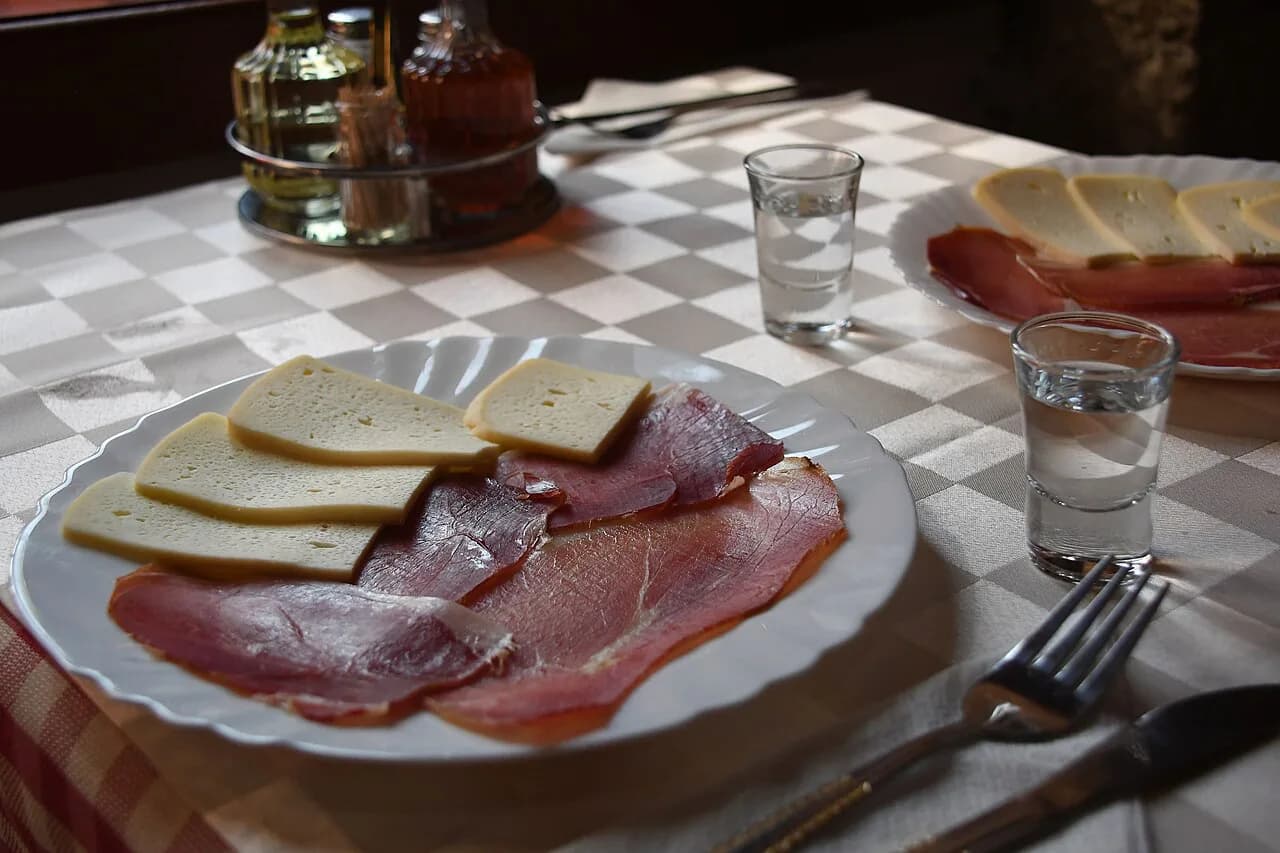
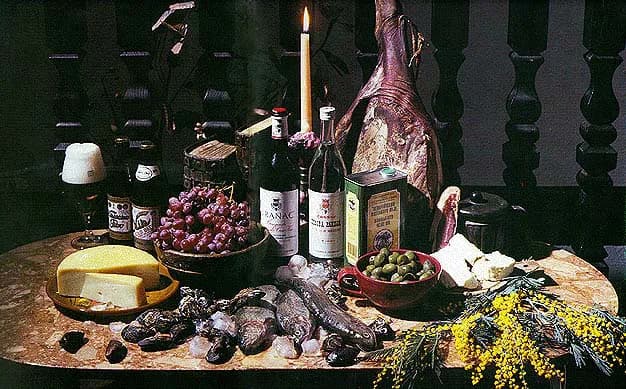
The classic serving is a board of thinly sliced pršut fanned out with smoked sheep's cheese, olives and house-made bread. The smoked cheese is the obligatory partner, and the two together are the standard introduction to a Montenegrin table.
It should reach you at room temperature, never straight from a refrigerator, because the fat needs to soften for the smoke and cure to read properly. If a plate arrives cold, let it sit a few minutes before you start.
Look at the slices before you eat: translucent red-pink meat with clear fat marbling is what you want, and the smoke should run through the whole slice rather than sitting on the rim. That is the visual tell between a properly cold-smoked ham and a surface-treated one.
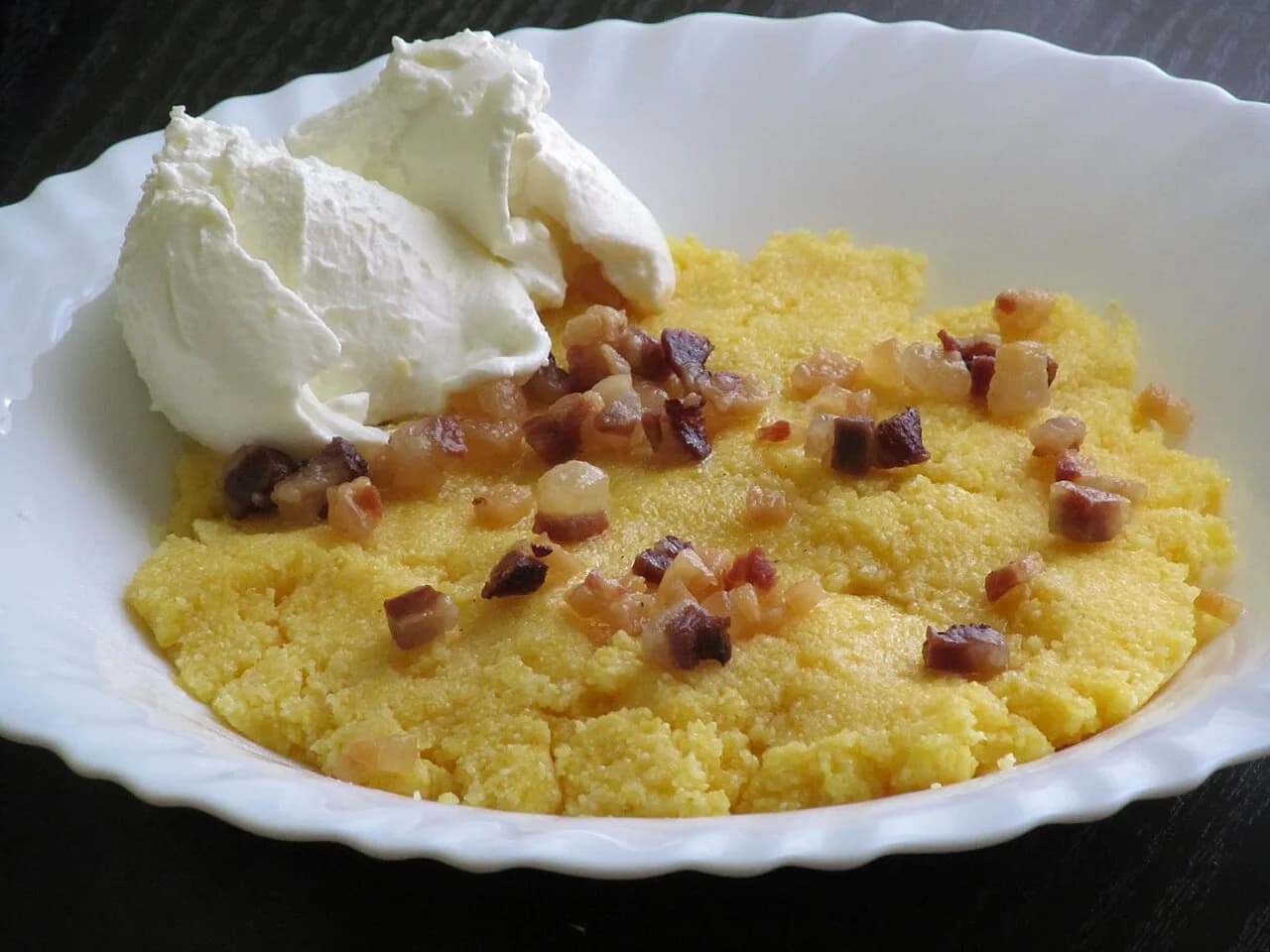
If the table also brings cheese and cornmeal dishes, they pair naturally with the ham; cicvara and similar mountain plates are worth knowing before you order a second round.
What to drink with it: Vranac, local rosé or rakija
Vranac, the dark Montenegrin red, or a local rosé both work with the smoke and salt, and a small glass of rakija is the traditional way to start the meal. Grape rakija, loza, is the most common pour, with other fruit versions close behind.
Portonovi's guide to the ham describes it as an appetiser served with homemade bread, cheese and olives or a fresh salad from local producers, with Montenegrin wine or rakija alongside. That is a fair picture of how it turns up on the table.
Buying it: the village of Njeguši, vacuum-packed for travel, and what to look for
You can buy pršut in Njeguši itself, and vacuum-packed slices are sold at the Kotor waterfront market for carrying home. Vendors who bring produce down directly from the village trade more consistently at weekends in spring and autumn, so a weekday visit may offer less choice.
The trade-off is simple. Vacuum-packed packs near the Sea Gate come from distributors rather than from Njeguši, while the market stalls north of the gate are closer to direct farm sellers. If the origin matters to you, ask where the ham was cured before you pay.
Smoked sheep's cheese from the same mountain is the natural second purchase, and it is what usually accompanies the ham on the board at home.
How it compares to Italian and Croatian prosciutto
Set a slice beside Parma or San Daniele and the difference is the smoke. Italian prosciutto is not smoked at all, while Istrian pršut from Croatia is lightly smoked on the surface; njeguški pršut is cold-smoked through the entire cut, which gives it a deeper, more savoury flavour.
Tasting the three side by side is the quickest way to understand how microclimate and smoke shape a cured ham. It also explains why the Montenegrin version stands up to rakija and smoked cheese where a lighter Italian ham would be overwhelmed.
Where to try it in Kotor
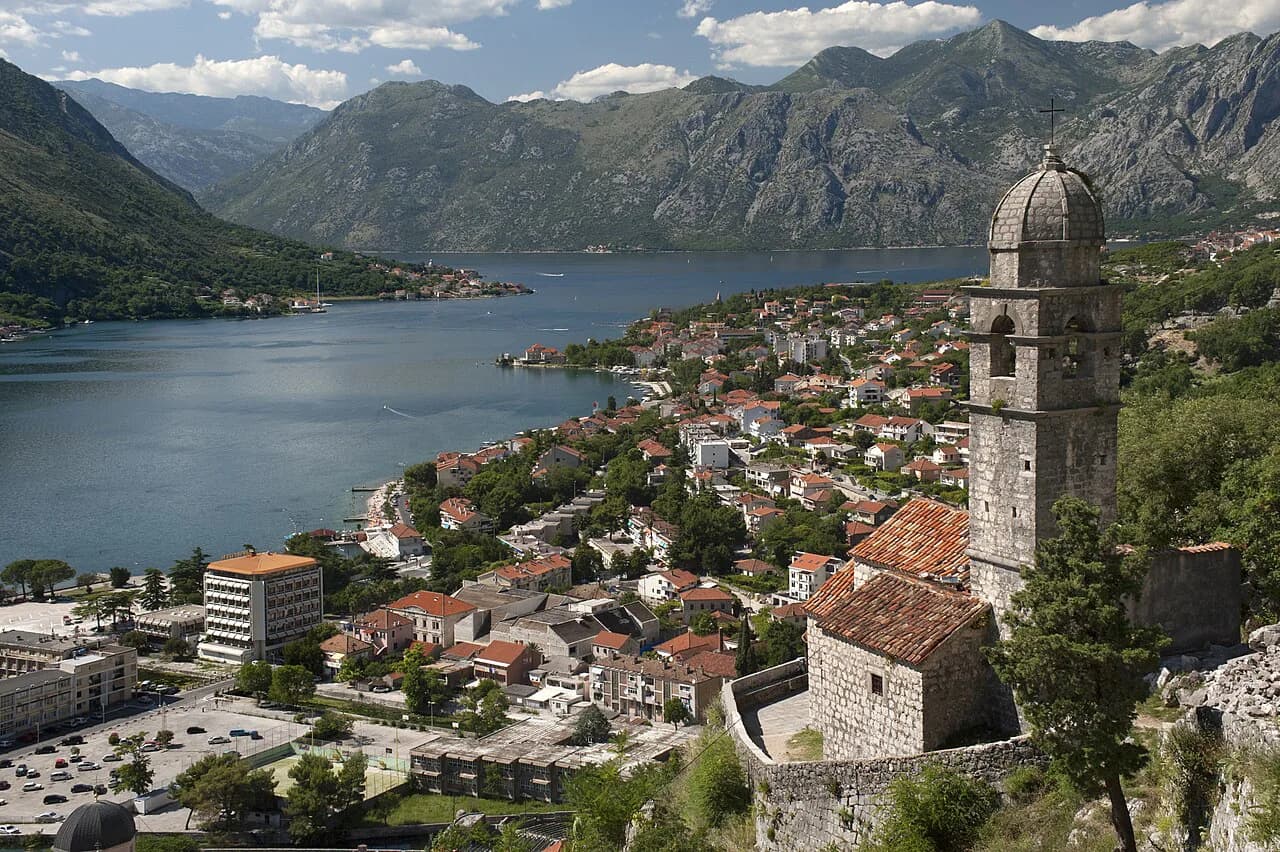
In Kotor, a konoba's opening plate is the easiest introduction. The waterfront market outside the Sea Gate also sells mountain cheese, honey and cured meat from the back of small trucks, so go early before the tour boats arrive.
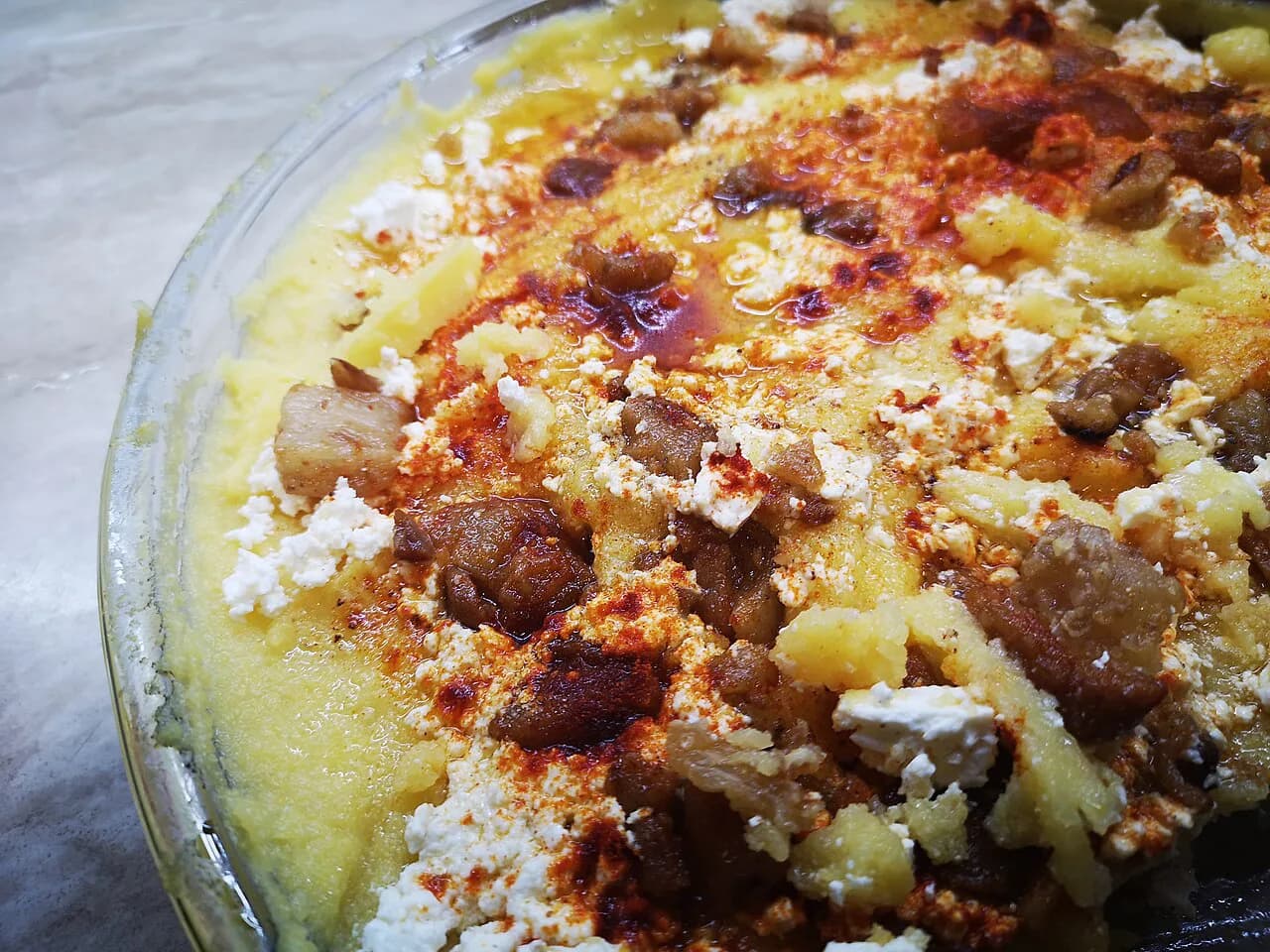
If you are eating your way through the region rather than ordering a single plate, kačamak is the other mountain dish to try while you are in Kotor and the surrounding Bay.
Should you buy a whole ham or a vacuum pack?
For a first taste, order a board in a konoba and decide whether the smoke suits you before buying anything to carry home. If it does, buy from a market stall north of the Sea Gate or in Njeguši itself and ask where the ham was cured.
Vacuum-packed slices travel well but are the weaker option on flavour and provenance; a whole ham is only worth it if you have the space and the patience to slice it properly.
Explore more Montenegro guides
Frequently Asked Questions
Is njeguški pršut very salty?
It is a salted ham, but the excess salt is washed off after curing and the long maturing period mellows it. Serving it at room temperature with bread and cheese balances the salt further.
Can I take njeguški pršut home in hand luggage?
Vacuum-packed slices are the practical choice for travel. Check your airline's and destination country's rules on bringing cured meat across borders before you pack it.
Where can I buy njeguški pršut?
You can buy it in Njeguši itself, and vacuum-packed slices are sold at the Kotor waterfront market. Market stalls north of the Sea Gate are closer to direct farm sellers than the packs sold near the gate, so ask where the ham was cured before you pay.
Sources
Notes for your Montenegro trip
Optional updates to our Montenegro town guides.
You might also like
Continue reading
More guides you'll find useful